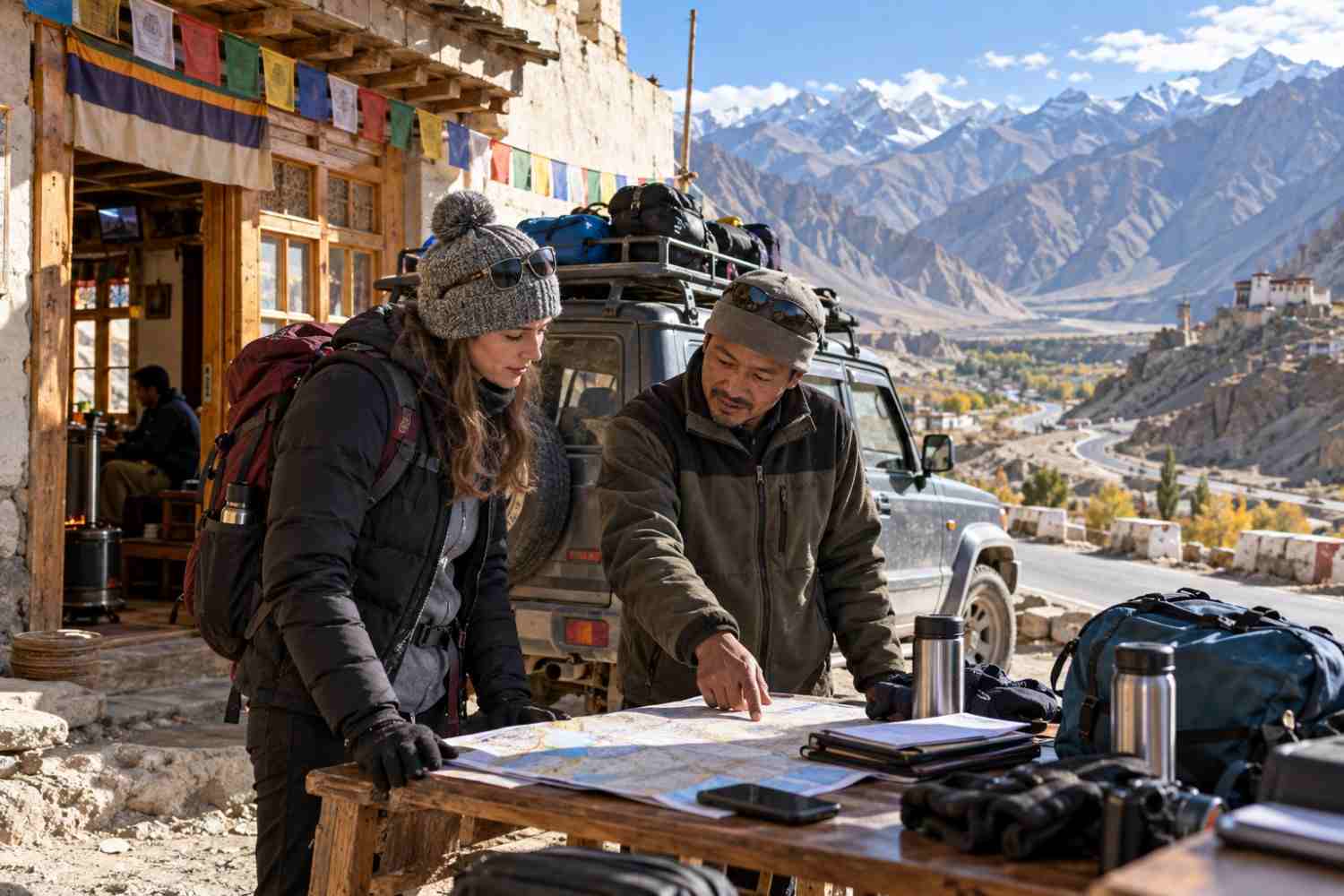
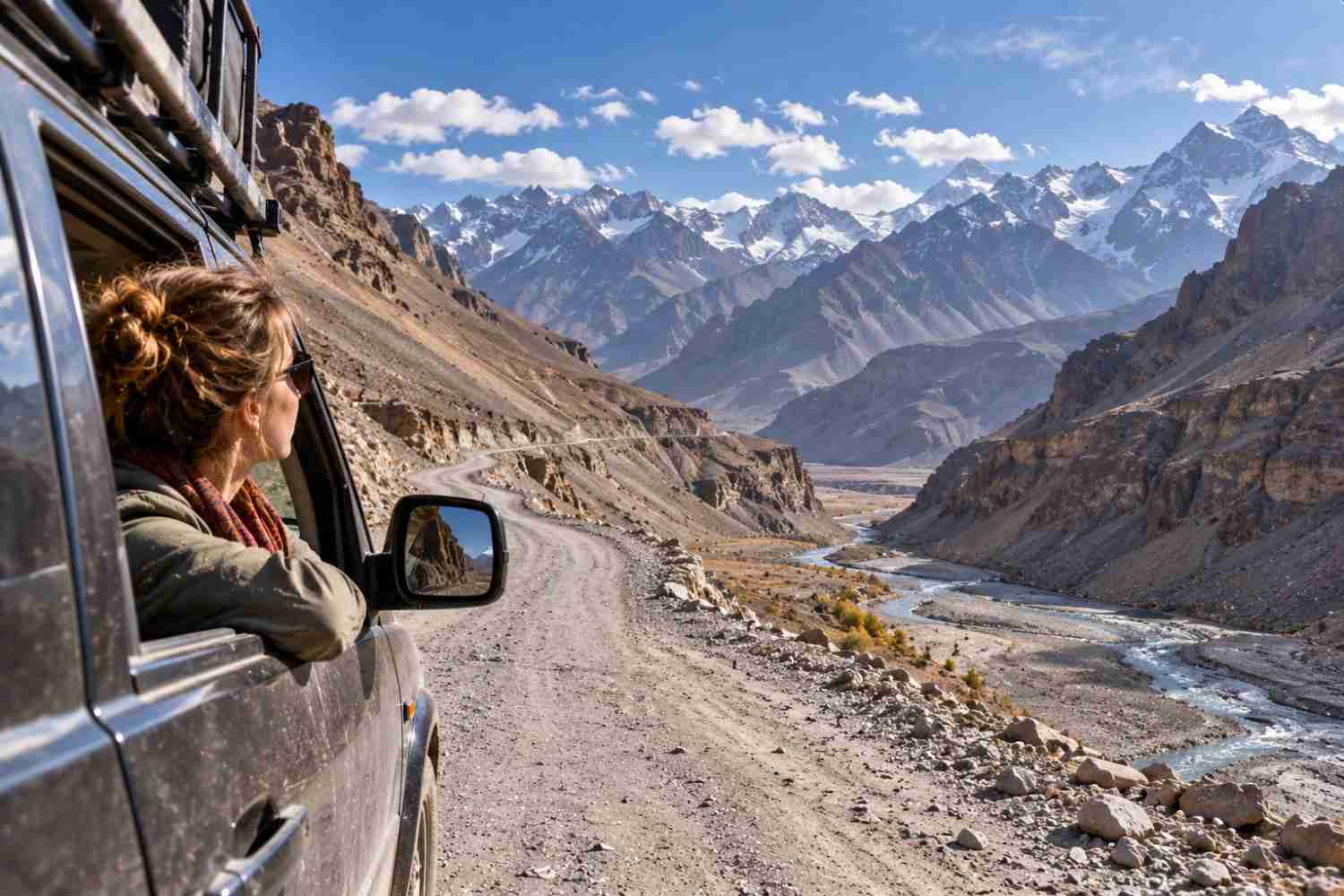
The road out of Manali climbs past the last fuel pump for nearly two hundred kilometres. By the time the bus crests Kunzum Pass, the view has turned to bare rock. A traveller checks her phone for the exchange rate, only to find no signal. The nearest ATM, in Kaza, may have run dry days ago.
This guide covers the places worth making the journey for, the permits foreign travellers need, and the reality of using cash, cards, and mobile connectivity in one of India’s most remote valleys.
Key highlights
- Spiti sits above 3,000 metres in Himachal Pradesh's tribal belt, bordering Tibet.
- The best travel window runs from June to September, when Kunzum Pass and the Atal Tunnel route stay open.
- Foreign travellers entering via Shimla and Kinnaur need an inner-line permit from Reckong Peo.
- Kaza has only two ATMs, run by SBI and UCO, and both regularly run out of cash or lose power.
- Card swipes barely exist beyond Kaza, so cash still carries most of the trip.
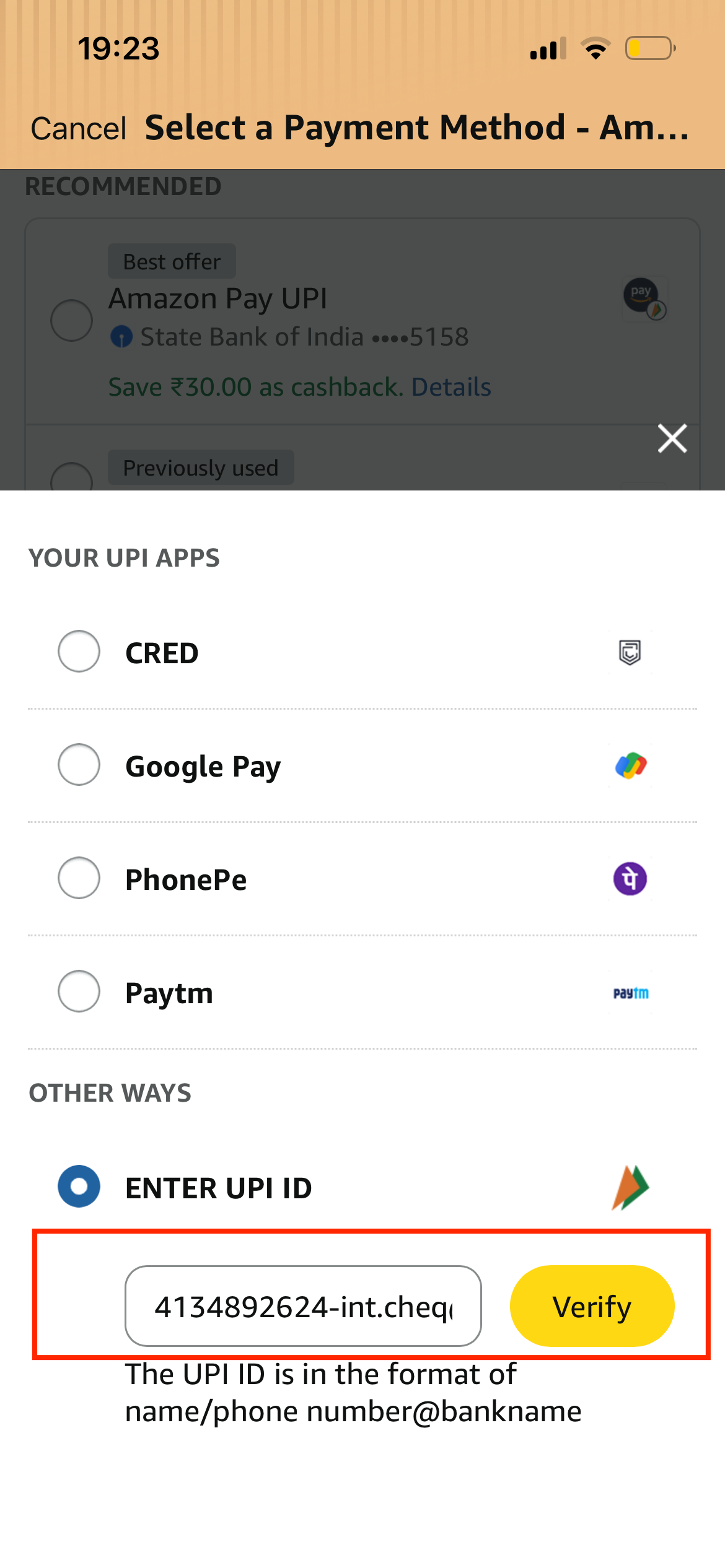
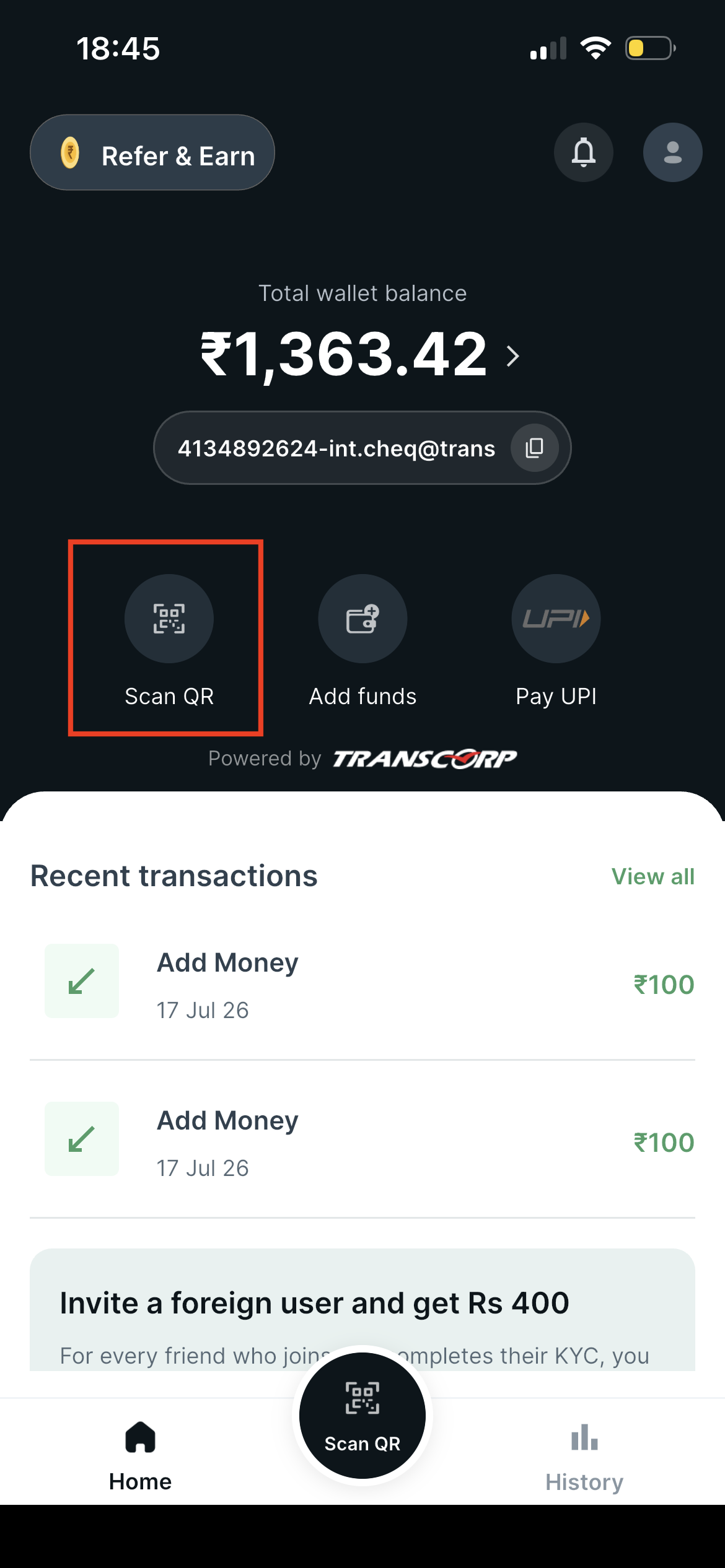
- CheqUPI is free to join for all eligible nationalities, with a loading fee of 2.95% + applicable taxes and 0% merchant payment fee, useful wherever signal and a QR code line up.
- BSNL remains the most dependable network in the valley, though Jio has recently made inroads.
Where Spiti Valley is and how to reach it
Spiti Valley sits in the northeastern corner of Himachal Pradesh, in the Lahaul and Spiti district that borders Tibet. Two road routes lead in, one through Manali and Kunzum Pass, the other through Shimla and the Kinnaur valley.
TThe Manali route is faster during peak season but usually closes earlier when snowfall begins. The Shimla-Kinnaur route stays open for longer and climbs more gradually, which can make a difference when adjusting to the altitude. State buses and private taxis operate from both cities, and the journey to Kaza takes around twelve hours either way. Once you’re in Himachal Pradesh, this guide to safe and affordable transport in Himachal breaks down which options work best for foreign travellers.
Best time to visit Spiti Valley
The best time to visit runs from June through September, when roads are open and weather is stable. Winter transforms Spiti into a snow-locked cold desert, with only the Shimla route staying passable.
Peak summer brings the biggest crowds and the least reliable ATM cash, since demand spikes faster than the machines can refill. Late June and early September offer a quieter middle ground, with clearer roads and thinner tourist traffic.
Top places to see in Spiti Valley
Key Monastery
Perched on a volcanic-shaped hillock near Kaza, Key Monastery is one of the oldest in the region, with a fort-like structure and dim, winding corridors. Its Buddha shrine draws visitors even on short itineraries.
Chandratal Lake
Named for its crescent-moon shape, Chandratal is a high-altitude lake best reached via the Manali route. Camping here is popular, but the site closes to overnight stays outside peak summer months.
Kaza and the high villages
Kaza is Spiti's administrative hub and its only real town, with a market, bank, and post office. Nearby Langza, Hikkim, and Komik hold the region's highest motorable roads and postboxes.
Dhankar and Tabo monasteries
Dhankar Monastery sits dramatically on a cliff edge above the confluence of the Spiti and Pin rivers. Tabo, often called the Ajanta of the Himalayas, holds murals dating back over a thousand years.
Permits foreign travellers need for Spiti
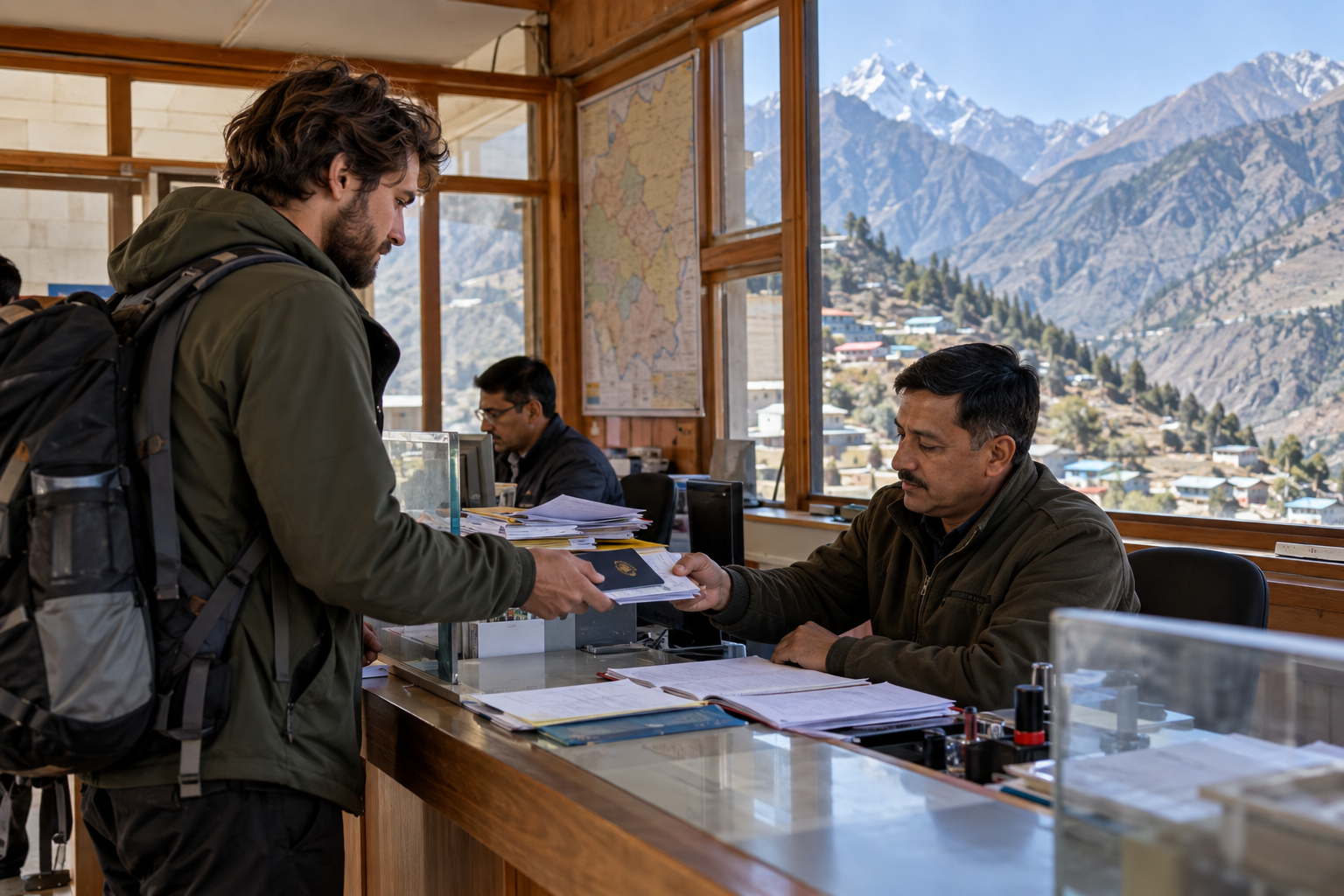
Indian citizens need no permit to enter Spiti, but foreign travellers taking the Shimla-Kinnaur route must carry an inner-line permit. This route runs close to the Tibetan border, which triggers the requirement.
The permit is issued at the Inner Line Permit Office in Reckong Peo, Kinnaur, and processing is quick once a passport is presented. Carry printed and digital copies of your passport, since patchy internet can make last-minute digital retrieval difficult. Before you travel, it also helps to run through common tourist scams in this guide on scams foreign travellers should watch for, since remote regions attract their own version of overcharging.
Cash, cards and UPI in Spiti Valley: what actually works
Cash is the backbone of Spiti travel, and you should plan accordingly. Kaza has just two ATMs, and both can run out of cash or lose power during peak season. Beyond Kaza, in places like Tabo, Dhankar, and the higher villages, working ATMs are extremely hard to find.
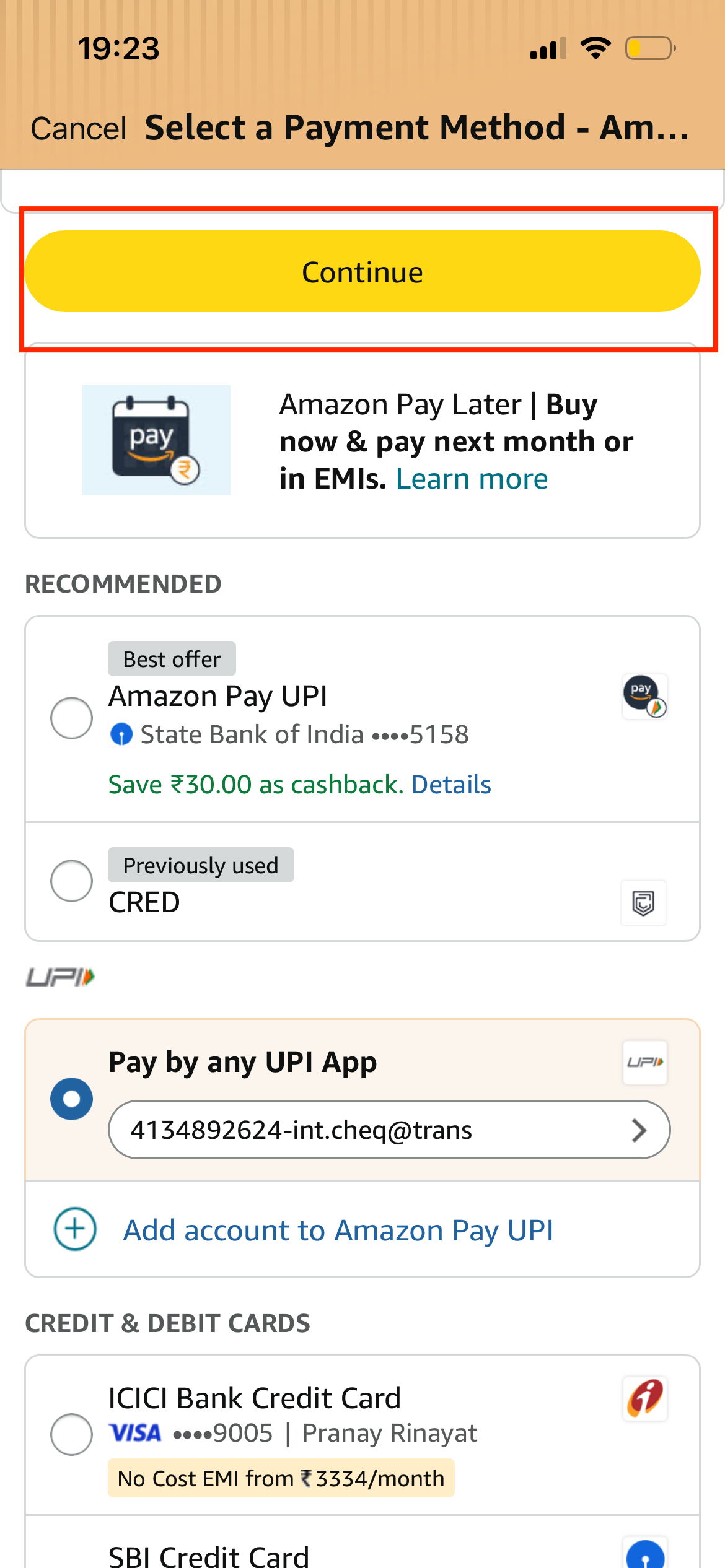
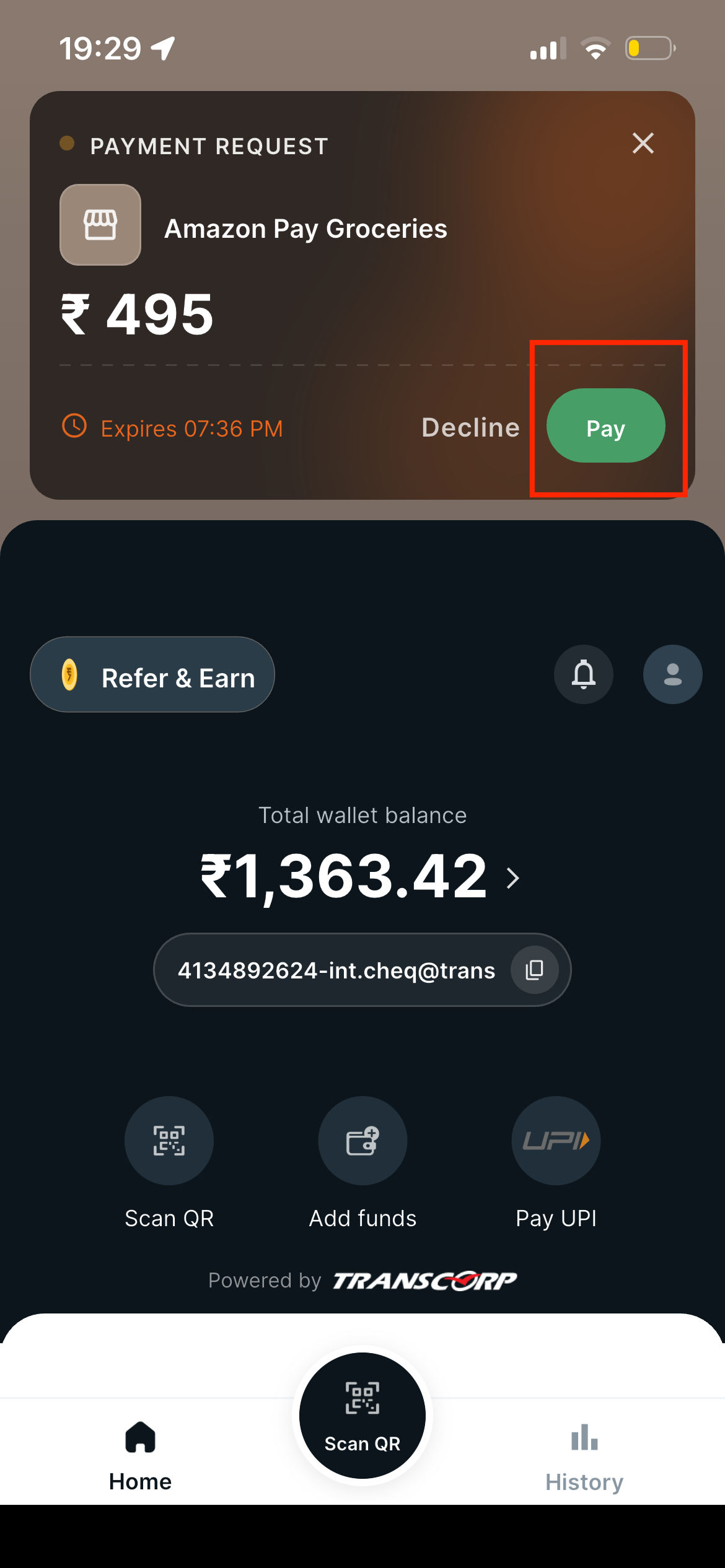
Card machines are rare outside a handful of shops in Kaza, so relying on a card alone can leave you stuck. Where a shop or homestay has a working QR code and a stable connection, UPI payments through an app like CheqUPI can be made without an Indian bank account or SIM. You will need an internet connection and location access, though, and in Spiti, neither is guaranteed. Learn more in this UPI payment guide for foreign tourists in India, which covers how the setup works before you even land.
Here’s how the payment methods in Spiti compare.
| Payment method | Works in Kaza | Works beyond Kaza | Best use |
| Cash | Yes | Yes | Primary method everywhere |
| Card swipe | Rarely | Almost never | Backup only, in Kaza |
| UPI or QR (CheqUPI) | Where signal allows | Rarely | Homestays and shops with connectivity |
| Foreign card at ATM | Unreliable | No | Do not rely on this in Spiti |
Plan to carry more cash than you would for a typical Indian city trip, since refilling anywhere past Kaza can be difficult. Treat digital payments as a backup rather than something to rely on.
Network and power: plan to disconnect
BSNL remains the most consistent network across Spiti, though even it flickers in and out at higher elevations. Jio has started reaching some villages, but coverage stays patchy and unpredictable through most of the valley.
Download offline maps before you leave Manali or Shimla, since live navigation will fail in most of Spiti. Carry a power bank too, because outages are common and there is no guarantee of charging access in remote homestays.
Where to stay and what to eat
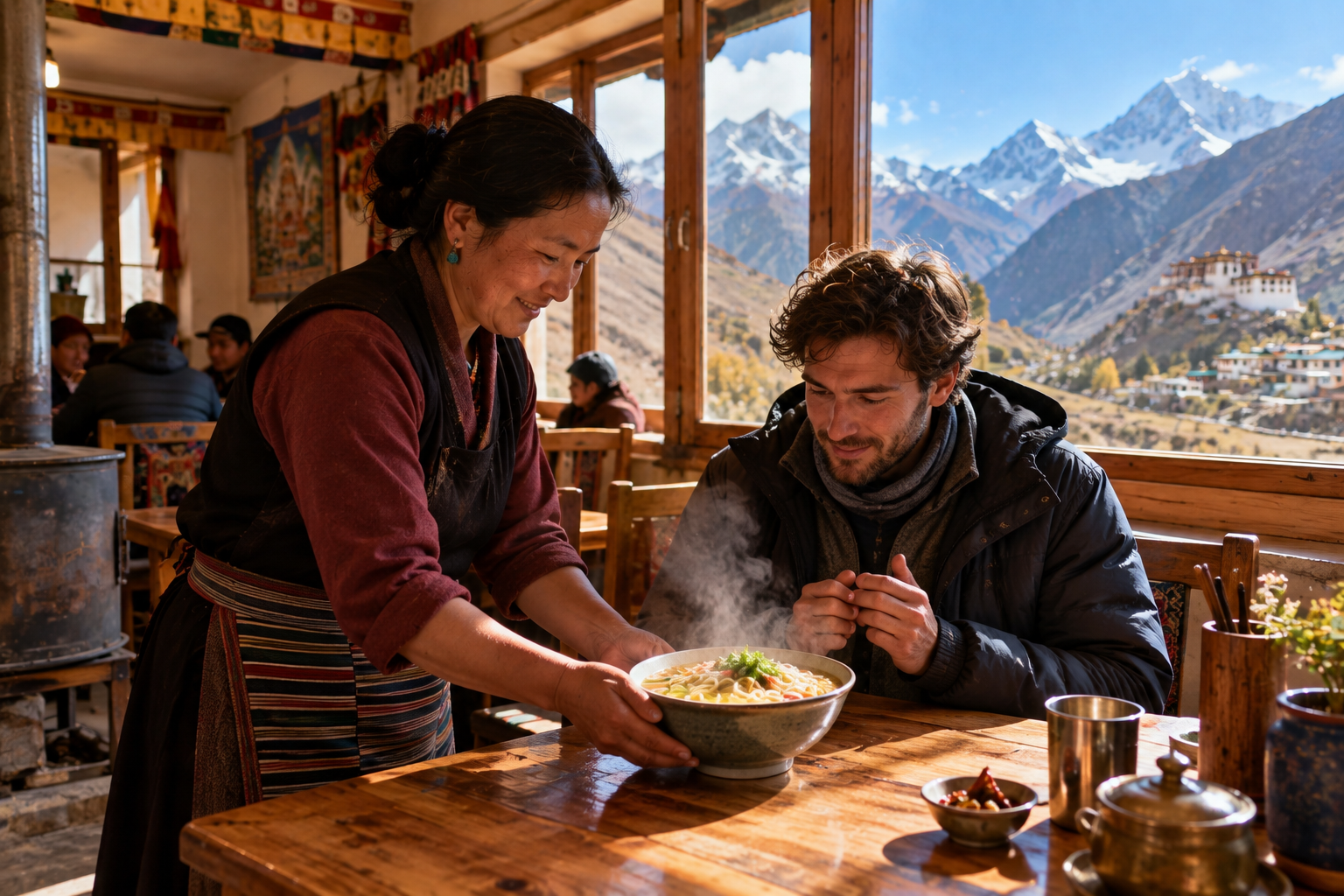
Homestays outnumber hotels across most of Spiti, and they offer the most reliable way to experience village life. Kaza has more formal guesthouse options if you prefer a private room with attached facilities.
Street food barely exists here, since roads and footfall are too thin to support it. Thukpa, a warming Tibetan noodle soup, is the standard meal across the valley and a welcome relief from the cold.
Altitude and packing tips for Spiti
Spiti sits above 3,000 metres for most of its length, and altitude sickness is a real risk for unacclimatised travellers. Travellers with lung or heart conditions are often advised to take the Shimla-Kinnaur route, since its gradual ascent eases the adjustment compared to the steeper Manali side. Consult a doctor before travel if you have heart or lung conditions.
Pack layered clothing regardless of season, since temperature swings are extreme between day and night. Sunscreen, lip balm, and a refillable water bottle matter more here than almost anywhere else in India, given the thin air and intense UV exposure.
Conclusion
Spiti rewards travellers who plan ahead rather than improvise on arrival. Permits, cash, and a realistic view of connectivity matter as much as the monasteries and mountain passes themselves. Treat the valley as a place to disconnect, carry more cash than feels necessary, and let any digital payment option work only when it genuinely can.
FAQs
1.Do foreign tourists need a permit for Spiti Valley?
Only if entering via the Shimla-Kinnaur route, which requires an inner-line permit from Reckong Peo because of its proximity to the Tibetan border.
2.Are there ATMs in Spiti Valley?
Kaza has two ATMs, from SBI and UCO, and both often run out of cash or lose power. Beyond Kaza, working ATMs are rare.
3.Can I use a credit or debit card in Spiti?
Card swipe facilities are rare outside parts of Kaza. Cash remains the primary payment method across the valley.
4.Does UPI work in Spiti Valley?
UPI works where a shop has a working QR code and internet signal, mostly limited to parts of Kaza with connectivity.
5.Which mobile network works best in Spiti?
BSNL remains the most reliable network across the valley, though signal is inconsistent even for BSNL users.
6.What is the best time to visit Spiti Valley?
June through September offers open roads and stable weather, with late June and early September seeing thinner crowds.
7.How do I reach Spiti Valley from Delhi?
Travel to Manali or Shimla first, then continue by state bus or private taxi, a journey of close to twelve hours to Kaza.
8.Is Spiti Valley safe for solo foreign travellers?
Spiti is generally considered safe, though remote conditions call for extra planning around cash, permits, and altitude.
9.What should I pack for Spiti Valley?
Layered clothing, sunscreen, lip balm, a power bank, and offline maps downloaded before you lose signal.
10.Can altitude sickness be a problem in Spiti?
Yes, since most of the valley sits above 3,000 metres. Gradual ascent via Shimla-Kinnaur is often recommended over the steeper Manali route.
“Download CheqUPI and have a UPI payment option ready for those moments when a QR code works but your foreign card doesn't.”