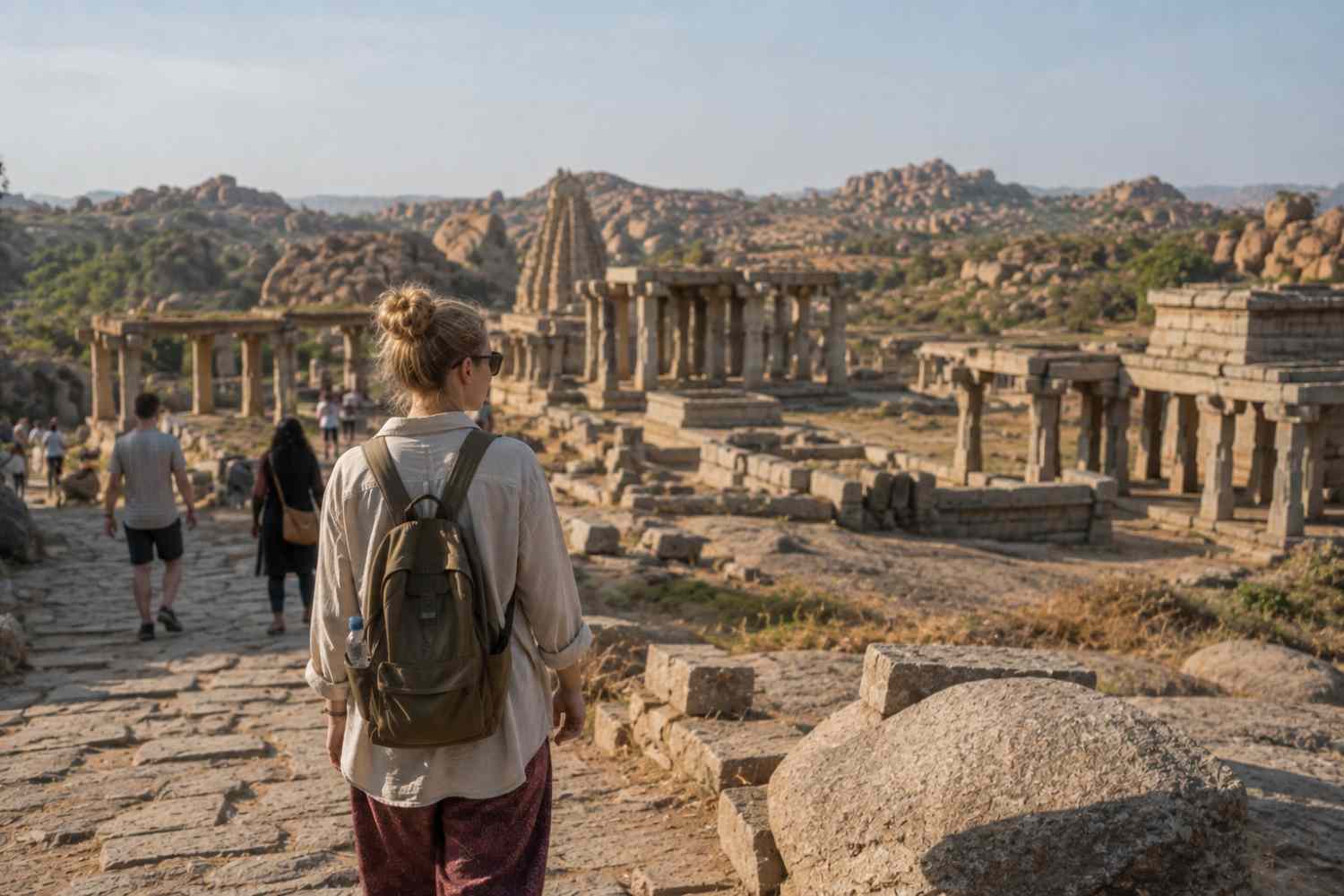
Hampi is one of India's most remarkable UNESCO (United Nations Educational, Scientific, and Cultural Organization) World Heritage Sites, where ancient temples, royal ruins, and giant granite boulders stretch across a dramatic landscape. From the iconic Stone Chariot to sunrise views over Matanga Hill, the city offers one of South India's most memorable travel experiences.
Knowing when to visit, how to get around, and how to manage payments before you arrive helps you spend more time exploring and less time searching for cash or an ATM.
Key highlights
- Hampi is a UNESCO World Heritage Site, once the Vijayanagara capital and one of the largest medieval cities in the world.
- Entry to Vittala Temple costs Rs 600 (approx $6) for foreign tourists; most other temples are free to enter.
- Hampi has very limited ATMs. Withdraw cash in Hospet or Bangalore before you arrive.
- October to February is the best season: temperatures stay between 15°C and 30°C, and all sites are accessible.
- A two-day visit covers the main highlights; three days lets you explore at a relaxed pace.
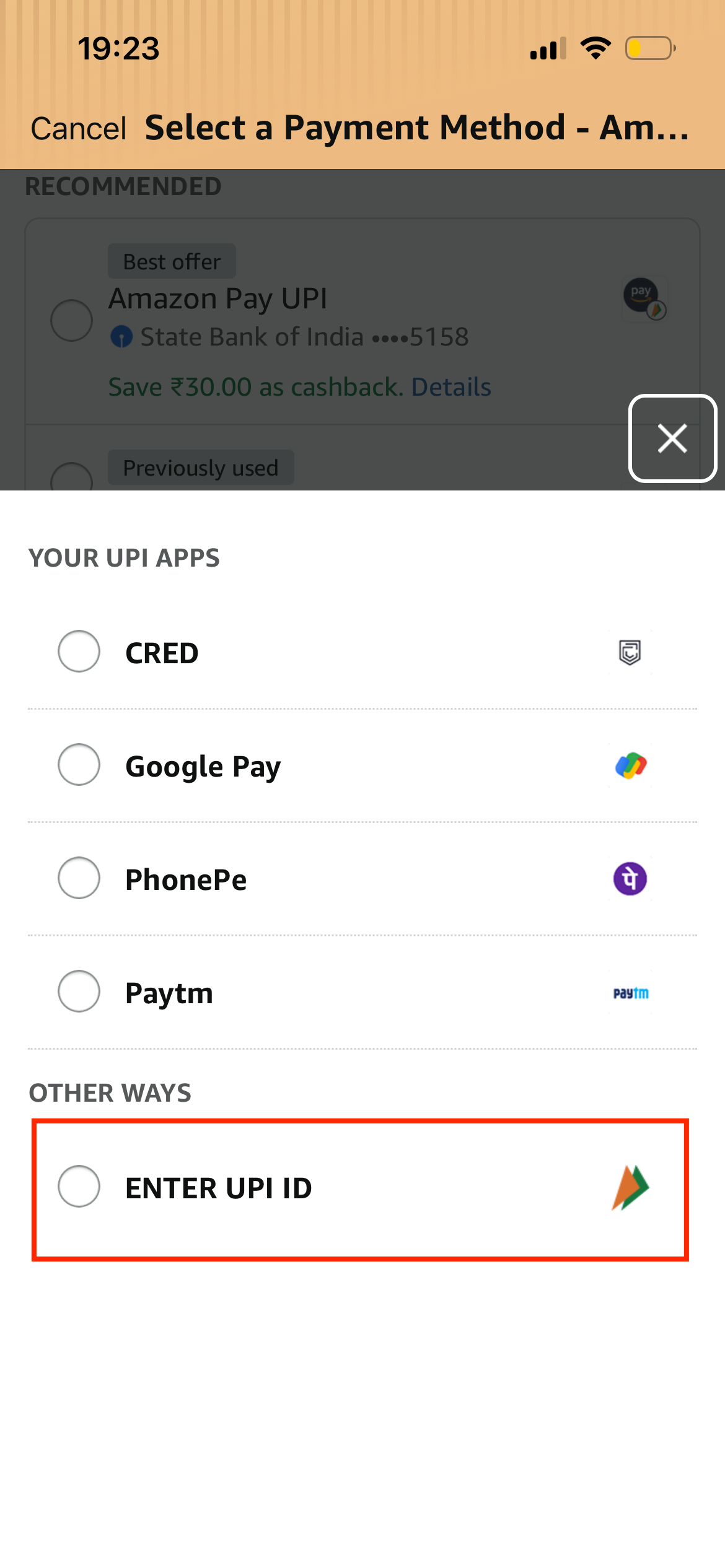
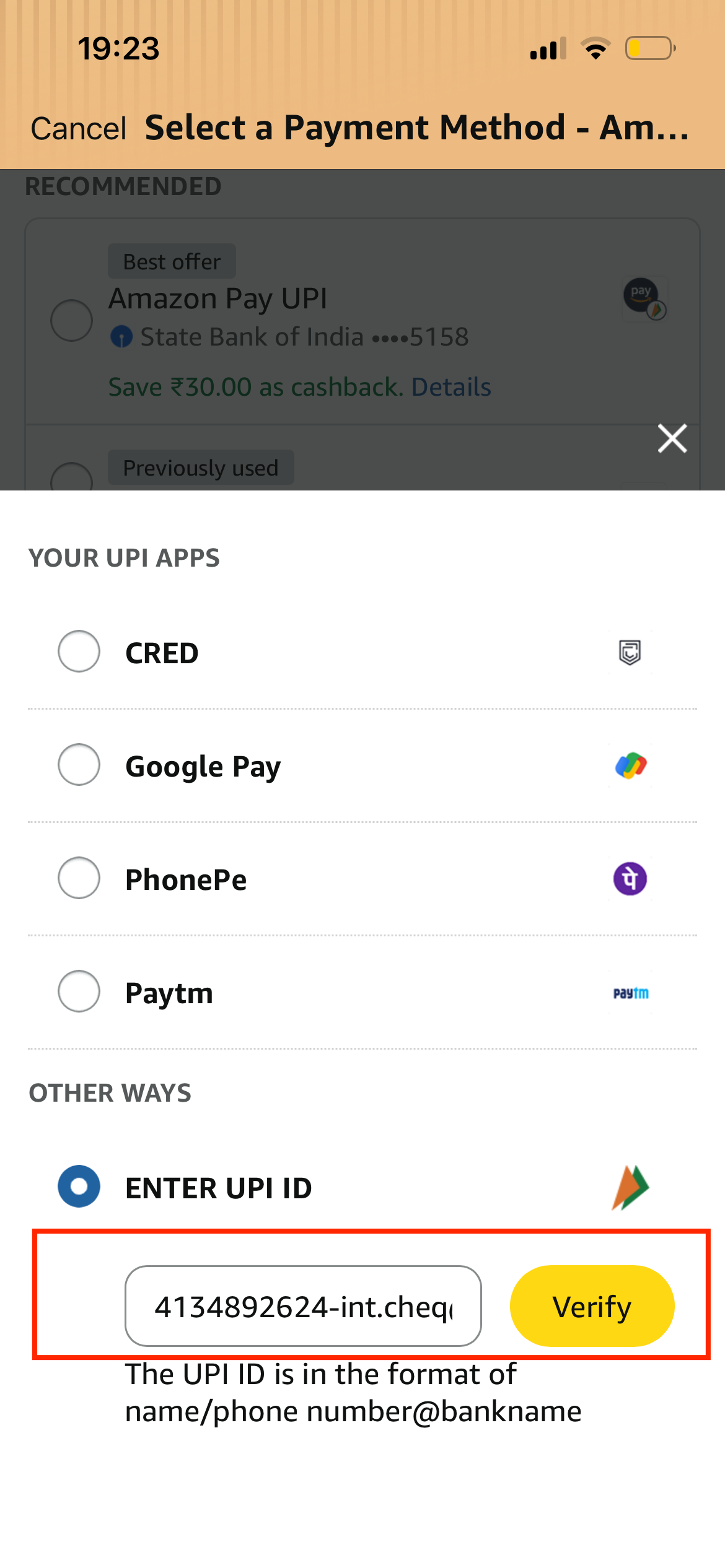
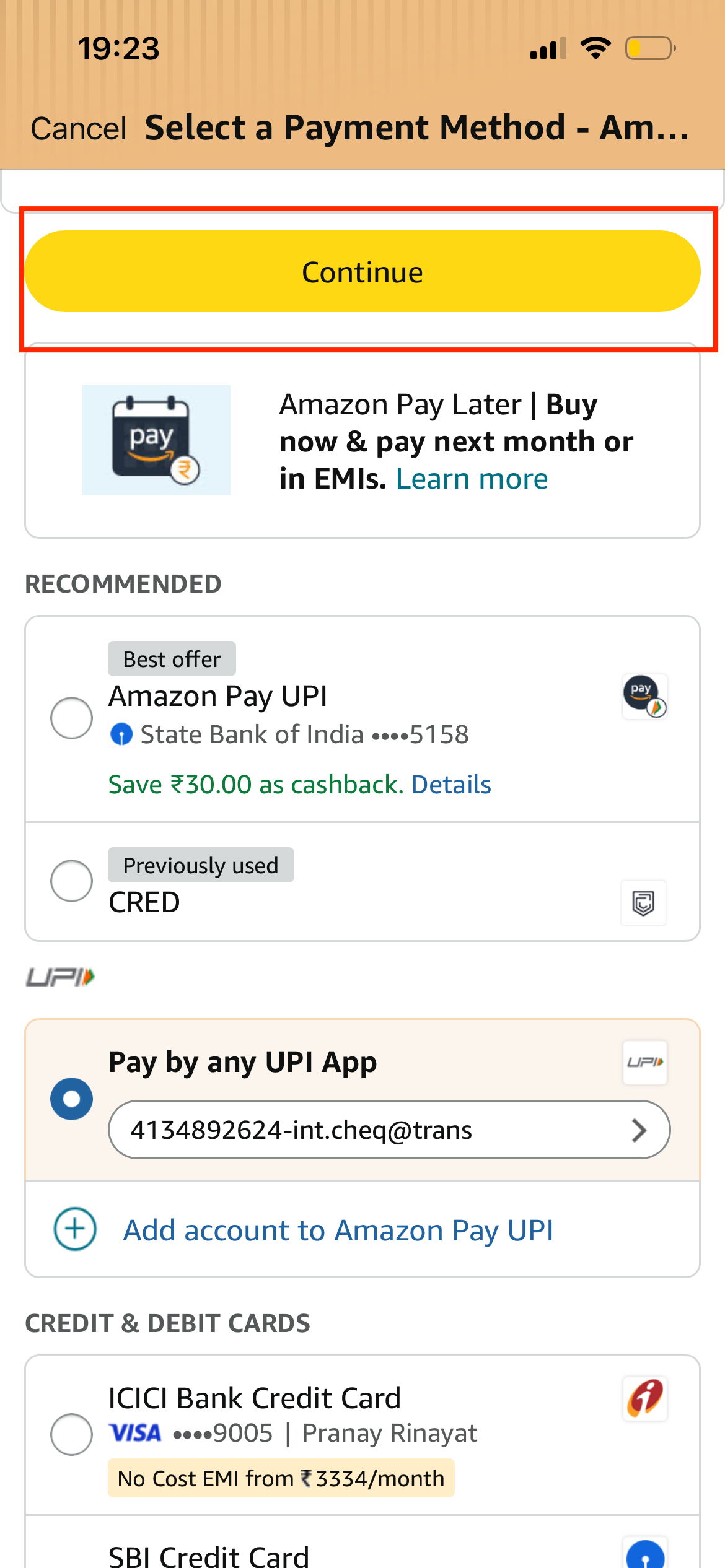
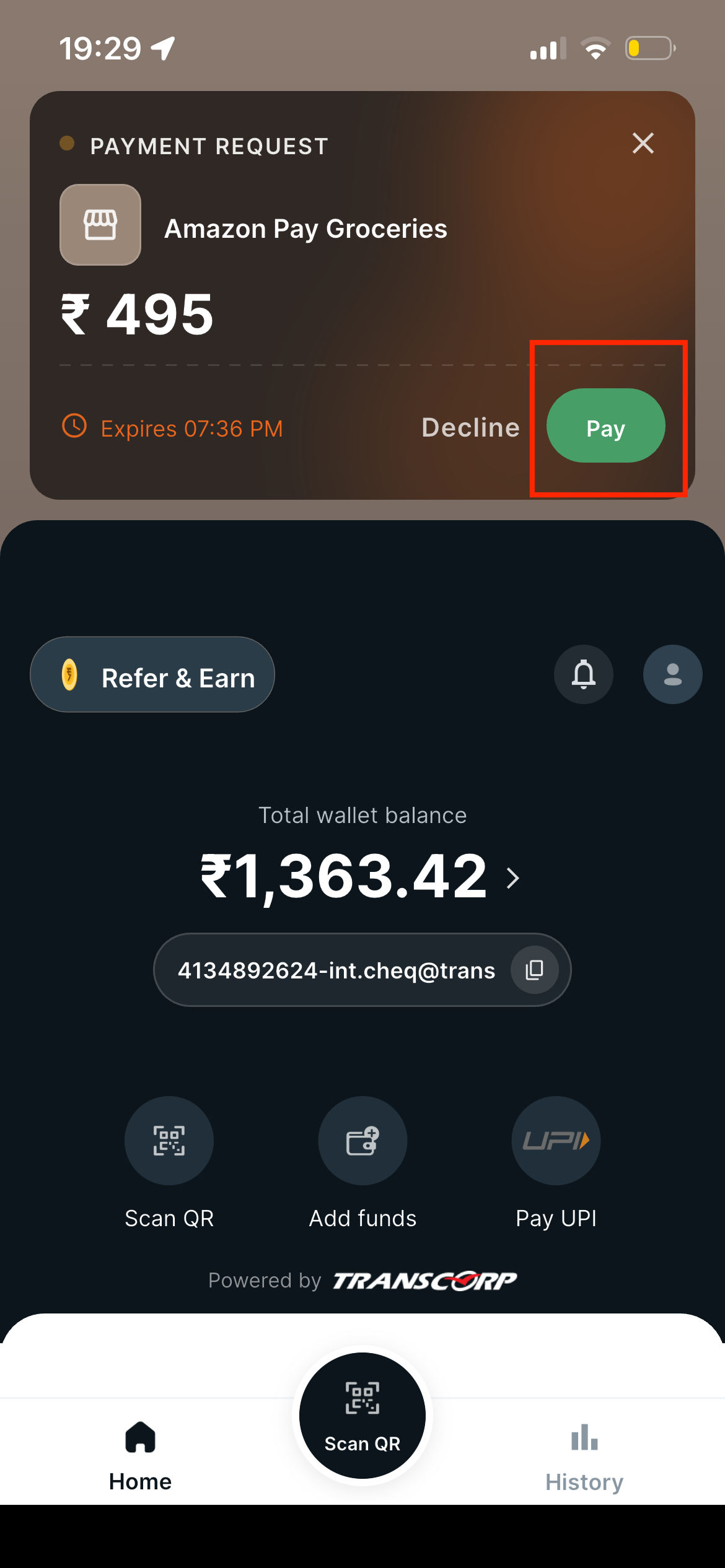
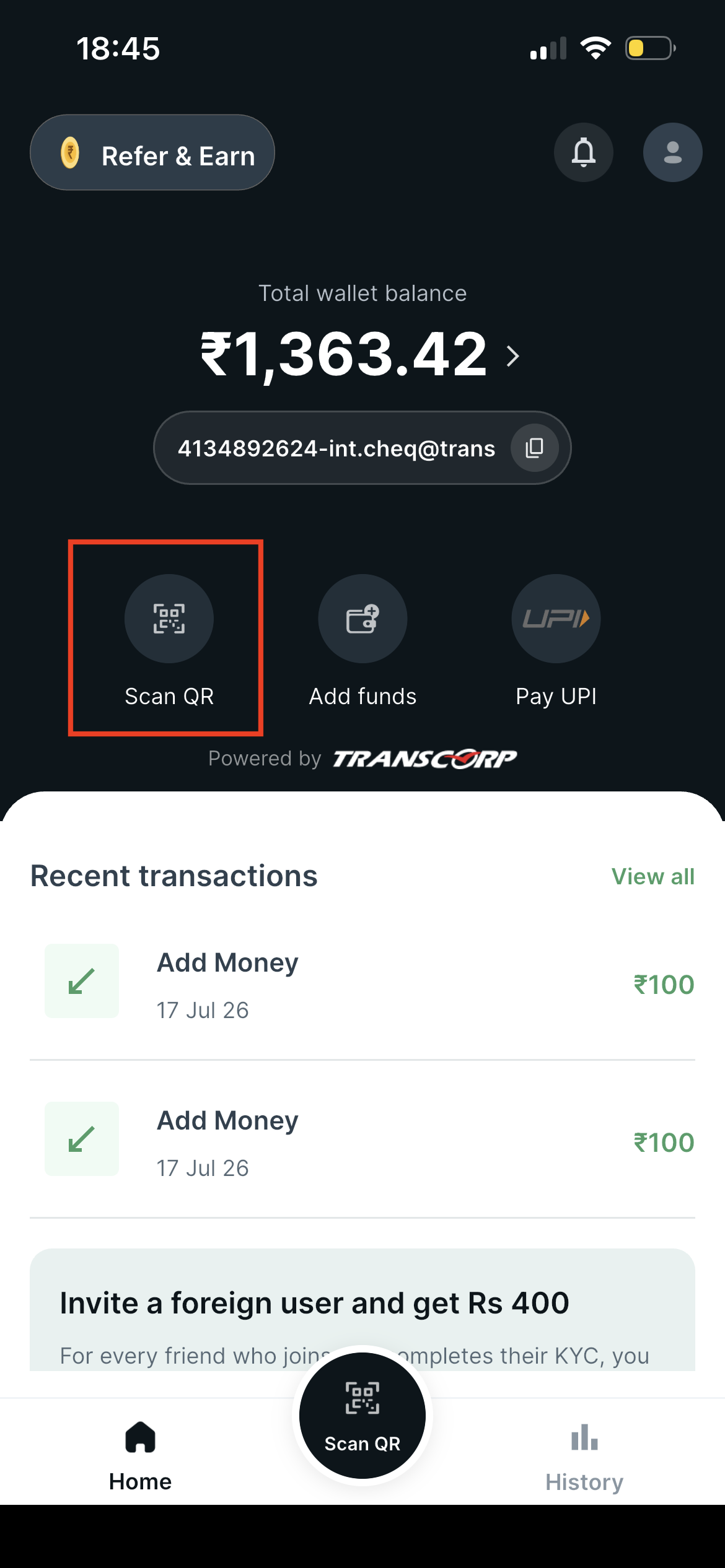
- QR-based UPI payments work at many cafes, guesthouses, and stalls in Hampi, making a UPI wallet a practical alternative to cash.
- CheqUPI is free to join for all eligible nationalities, with a loading fee of 2.95% + taxes and a 0% merchant payment fee.
What makes Hampi worth the journey
Hampi is unlike any other destination in India. The ruins cover 41 square kilometers, spread across a boulder landscape that looks more like a film set than a real place. The empire made this city one of the wealthiest in the world during the 14th to 16th centuries.
Foreign tourists often describe the experience as disorienting in the best way. Ancient temples sit between massive granite formations that look arranged by hand. The Tungabhadra River runs along the northern edge, dotted with circular bamboo boats called coracles.
History, landscape, and mythology overlap at every turn. Most foreign tourists visit as part of a South India circuit alongside Bangalore, Mysore, or Goa. Hampi rewards travellers who slow down and spend at least two full days walking between sites.
Best time to visit Hampi
October to February is when Hampi is most comfortable for foreign tourists, with manageable heat and all paths and monuments fully accessible.
October to February
Temperatures sit between 15°C and 30°C during the day. This is peak season, so book accommodation several weeks in advance, especially around the Hampi Utsav festival in November. Mornings are ideal for site visits; afternoons are warm but walkable.
March to May and monsoon
March to May brings temperatures above 40°C. Start all site visits before 8am and finish by 11am. Accommodation costs drop and crowds thin considerably. The monsoon runs from June to September; some paths become slippery and a handful of sites close. The landscape turns green and dramatic, but plan for disruption.
How to get to Hampi
The closest major railhead is Hosapete Junction (Hospet), 13 kilometers from Hampi. Overnight trains run from Bangalore, Hyderabad, and Goa. The journey from Bangalore takes roughly seven to eight hours by train.
From Hospet, auto-rickshaws and local buses run directly to Hampi Bazaar. An auto-rickshaw from Hospet costs around Rs 200 to 300 (approx $2 to $3) and takes 20 minutes.
Taxis from Bangalore take six to seven hours by road and cost Rs 3,500 to 5,000 (approx $37 to $52). Hampi has no commercial airport of its own; the nearest is Jindal Vijayanagar Airport (VDY) at Toranagallu, about 40 kilometers away, though it operates very limited scheduled flights, mostly connecting to Bangalore.
For more reliable flight options, most travelers fly into Hubli, about 160 kilometers away, or route through Bangalore's better-connected airport.
Top things to do in Hampi
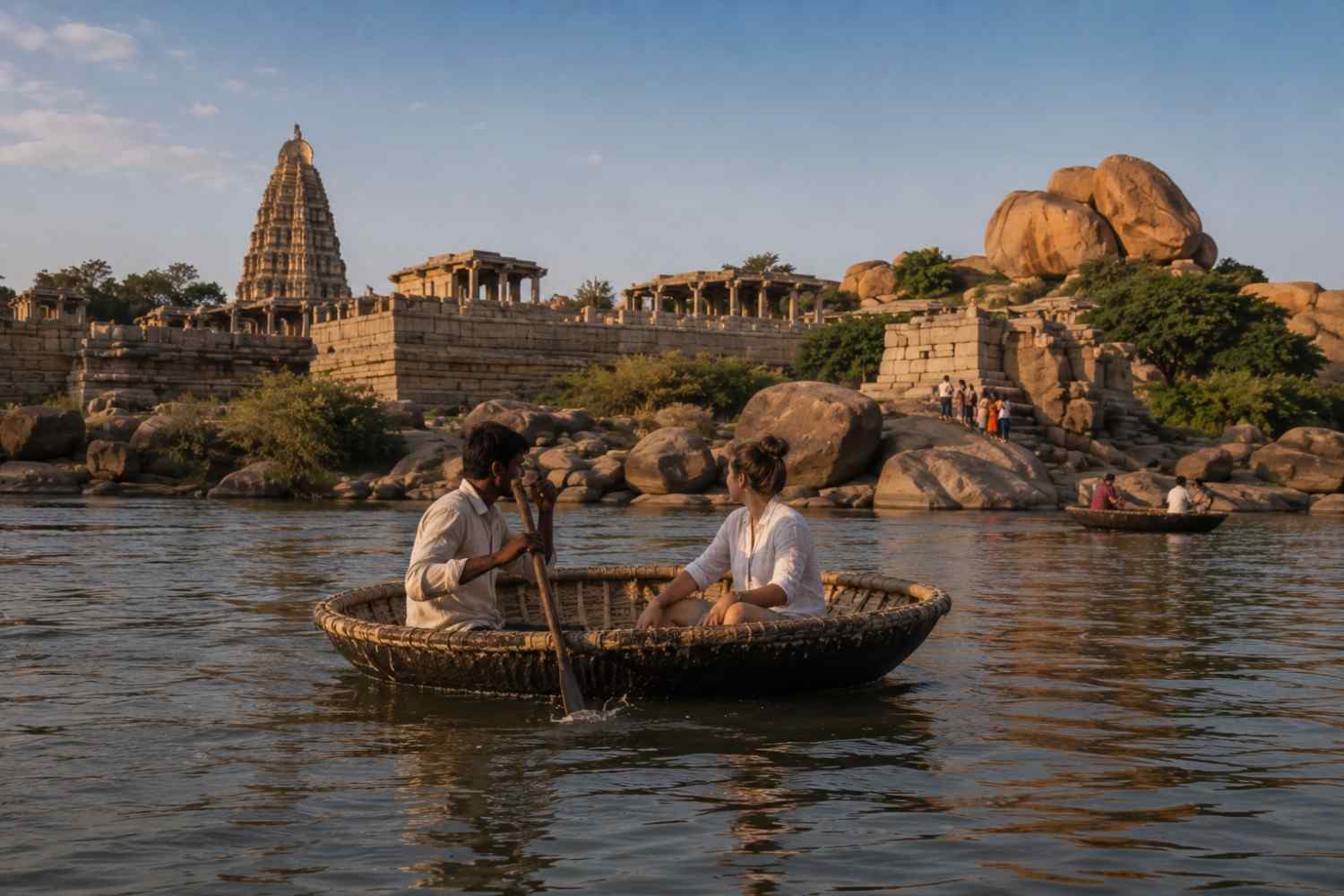
Hampi's sites divide across two banks of the Tungabhadra. The southern bank holds most of the major ruins. The northern bank, often called Hippie Island or Virupapur Gaddi, has a quieter character with guesthouses and cafes.
Vittala Temple and the Stone Chariot
Vittala Temple is the architectural centerpiece of Hampi. Its Stone Chariot is carved from a single granite block and stands as one of the finest examples of Vijayanagara craftsmanship. Entry costs Rs 600 (approx $6) for foreign tourists. Arrive before 9am to visit in quiet light and cooler air.
The famous musical pillars inside the main hall are known for their resonant sounds, though visitors should not strike the protected stonework themselves. Archaeologists believe the entire complex was never fully completed, which adds to the sense of frozen time you feel walking through it.
Virupaksha Temple
Virupaksha is a living temple where active religious worship continues today. It is one of the oldest continuously functioning temples in India, dedicated to Lord Shiva. Entry is free.
Dress modestly and cover shoulders and knees. The temple elephant, Lakshmi, offers blessings in the morning for a small donation. Remove shoes at the entrance.
Royal Enclosure and Lotus Mahal
The Royal Enclosure is where the Vijayanagara kings held court. The Hazara Rama Temple here has walls covered in carved Ramayana scenes. Entry costs Rs 600 (approx $6) for foreign tourists and covers both the Royal Enclosure and the nearby Zenana Enclosure.
The Zenana Enclosure houses the Lotus Mahal, a two-story pavilion that blends Hindu and Indo-Islamic styles. The Mahanavami Dibba platform and Queen's Bath are also inside the enclosure complex.
Matanga Hill and Hemakuta Hill
Matanga Hill offers the best sunrise view in Hampi. The climb takes 20 to 25 minutes and rewards with a panoramic spread of ruins, boulders, and the river. Hemakuta Hill is better for sunset and holds a cluster of early Vijayanagara temples.
Both hills are free to access. Go early for Matanga and time Hemakuta for the last 45 minutes of daylight.
Coracle ride on the Tungabhadra
A coracle is a small circular boat woven from bamboo and coated with tar. Rides cross the Tungabhadra between the southern and northern banks and cost Rs 300 to 500 (approx $3 to $5) per crossing. Boatmen congregate near the Virupaksha Temple ghat.
The ride takes five to ten minutes and gives a different perspective on the boulder-and-temple skyline. It is the simplest way to reach the northern bank without hiring a scooter.
Practical tips for foreign tourists in Hampi
Hampi is safe for foreign tourists, but a few basics make the difference between a smooth visit and an avoidable headache.
Dress modestly when entering temples. Remove shoes at all temple entrances. Shoulders and knees should be covered inside active temples like Virupaksha.
Sunscreen, sunglasses, and a hat are essential from March onwards. The ruins offer almost no shade, and the granite boulders reflect heat. Carry a refillable water bottle and drink at least two liters per day in warm weather.
Mobile connectivity is patchy across the ruins, particularly on the northern bank. Download offline maps before leaving your accommodation. A local SIM from Hospet gives better coverage than an international roaming plan.
For common scams to avoid in India, read our guide on scams that foreign tourists need to be aware of.
Money and payments in Hampi
Hampi has very limited ATMs. This is the one practical detail most travel guides skip, and it catches foreign tourists off guard. The nearest reliable ATMs are in Hospet town, 13 kilometers away.
Withdraw Rs 5,000 to 10,000 (approx $52 to $104) in cash in Hospet or your last major city before arriving. Cash handles temple donations, auto-rickshaw fares, coracle rides, and small local purchases. Many vendors also refuse older-series or soiled banknotes, so ask for clean, current-series notes when exchanging currency.
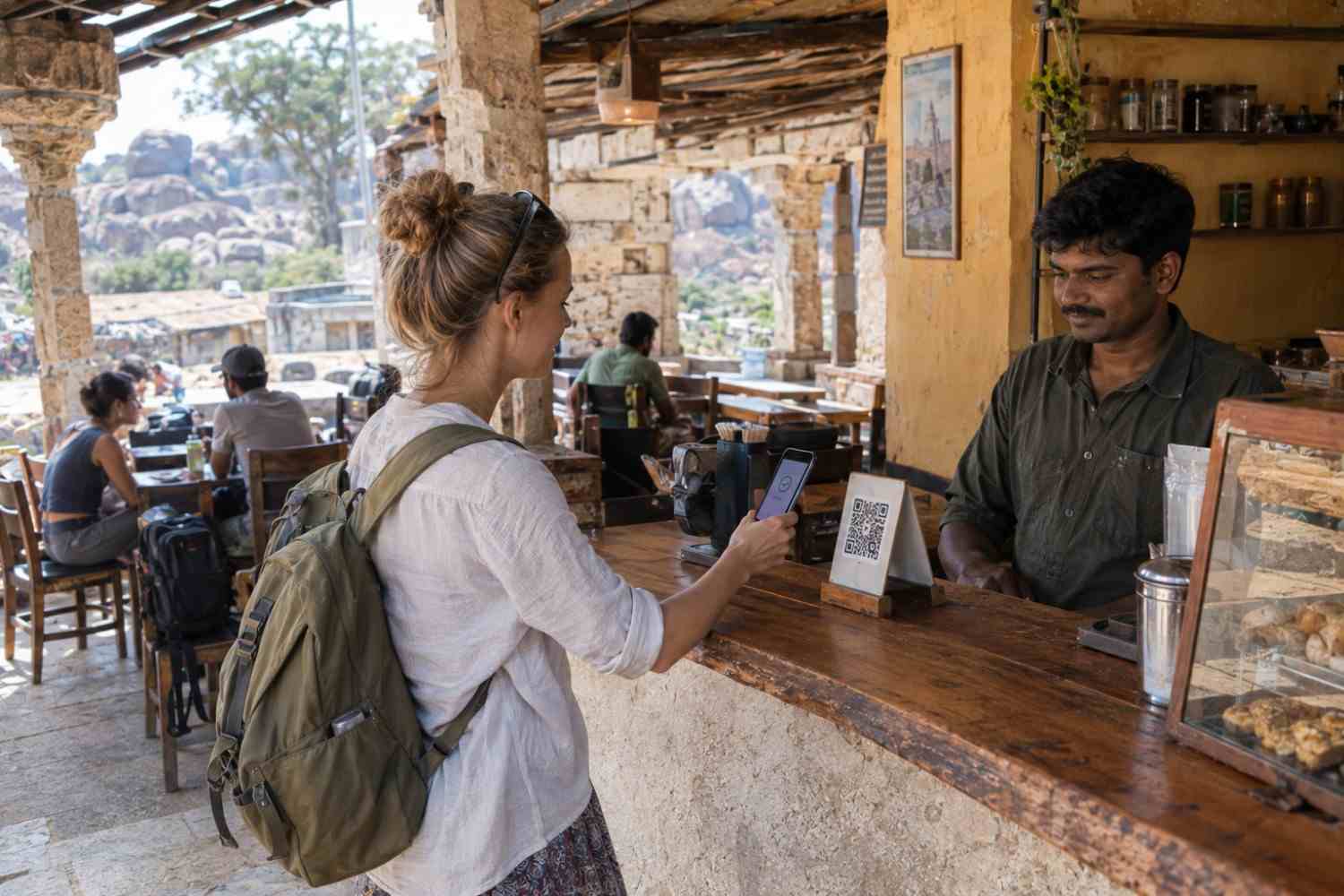
Many guesthouses and restaurants in Hampi Bazaar now display UPI QR codes. QR-based payments work reliably where internet connectivity is available. A UPI wallet lets you pay at many cafés, guesthouses, and shops that accept merchant UPI QR codes, reducing the need for repeat trips to Hospet just to withdraw cash.
Foreign tourists cannot legally bring physical Indian rupees into India. The Rs 25,000 import and export limit on physical INR applies only to Indian residents and NRIs. Plan to withdraw or exchange on arrival in India, not before.
For a full breakdown of cash challenges, read our guide on problems with carrying cash in India for foreign visitors.
For a complete walkthrough on UPI payments as a foreign tourist, see our UPI payment guide for foreigners in India. No Indian bank account or Indian SIM card is needed. An internet connection and location access are required.
Conclusion
Hampi takes most foreign tourists by surprise. The ruins and the boulder landscape make Hampi one of the most rewarding two to three days in South India. Come in the cooler months, arrive before 9am, sort your cash in Hospet, and carry a UPI wallet for daily spending. The 13-kilometre return trip to find an ATM is not how you want to spend your afternoon here.
FAQs
1. Is Hampi worth visiting for foreign tourists?
Yes. Hampi is a UNESCO World Heritage Site and one of the most intact medieval ruins in Asia. Two days covers the highlights; three days allows a more relaxed pace.
2. What is the entry fee at Hampi for foreign tourists?
Vittala Temple and the Royal Enclosure each charge Rs 600 (approx $6) for foreign tourists. Most other temples and sites in Hampi are free to enter.
3. Are there ATMs in Hampi?
Hampi has very limited ATMs. Withdraw Rs 5,000 to 10,000 (approx $52 to $104) in cash in Hospet or your last major city before arriving.
4. What is the best time to visit Hampi?
October to February offers the most comfortable weather, with temperatures between 15°C and 30°C. Book accommodation in advance during this peak season.
5. How do I get to Hampi from Bangalore?
Take an overnight train from Bangalore to Hosapete Junction (Hospet). From Hospet, an auto-rickshaw to Hampi takes 20 minutes and costs around Rs 200 to 300 (approx $2 to $3).
6. Can foreign tourists use UPI in Hampi?
Yes. Many guesthouses, cafes, and stalls in Hampi display UPI QR codes. A foreign tourist UPI wallet like CheqUPI lets you pay by scanning those codes without needing an Indian bank account.
7. How many days should I spend in Hampi?
Two full days cover all major sites. Three days gives you time for the northern bank, a sunrise on Matanga Hill, and a coracle ride without rushing.
8. Is Hampi safe for solo foreign travelers?
Hampi is generally safe. Stick to well-lit and populated areas after dark and avoid isolated spots at night, as you would in any unfamiliar destination.
9. What should I wear at Hampi's temples?
Cover shoulders and knees inside active temples like Virupaksha. Remove shoes at all temple entrances. Lightweight, modest clothing works well for the heat.
10. Can I rent transport in Hampi?
Yes. Bicycles, scooters, and auto-rickshaws are available near Hampi Bazaar and Hospet. Scooters give the most flexibility for covering the spread-out sites on both river banks.
“Hampi's ruins deserve your attention, not repeated trips to an ATM. Download the CheqUPI app before your trip, then complete activation after arriving in India to pay UPI merchants with confidence.”