
Your flight home is booked, your bags are half packed, and there's still a balance sitting in your wallet app. You start wondering what happens to that money once your visa officially expires and whether the account just vanishes along with it. That uncertainty is common, and it deserves a straight answer instead of vague reassurance.
This guide explains exactly what happens to a foreign tourist wallet at visa expiry, how to recover your balance, and what changes if you return to India later.
Key highlights
- Your wallet does not close instantly the moment your visa expires; it moves into a frozen state.
- Any remaining balance is refunded to your source account when you request it, not automatically.
- A wallet left unused for 365 days or more gets frozen separately and needs re-KYC.
- Reactivation after dormancy typically takes 24 to 48 hours.
- There is no closure fee for winding down your account.
- CheqUPI is free to join for all eligible nationalities, with a loading fee of 2.95% + applicable taxes and 0% merchant payment fee.
What happens to your wallet the moment your visa expires
Your wallet freezes once your visa expires, and no further transactions go through. This is a compliance step under RBI rules, not a punishment or an error on your part.
The freeze stays in place until a valid visa is provided again. Your balance is not lost, deleted, or forfeited during this period. It simply sits in the wallet, inaccessible for spending until the status is resolved.
If you need more time in India, apply for a visa extension through the Foreigners Regional Registration Office (FRRO) before your current visa lapses. Once your extension is granted, update your new visa details in the app so the wallet can be unfrozen.
Getting your balance back
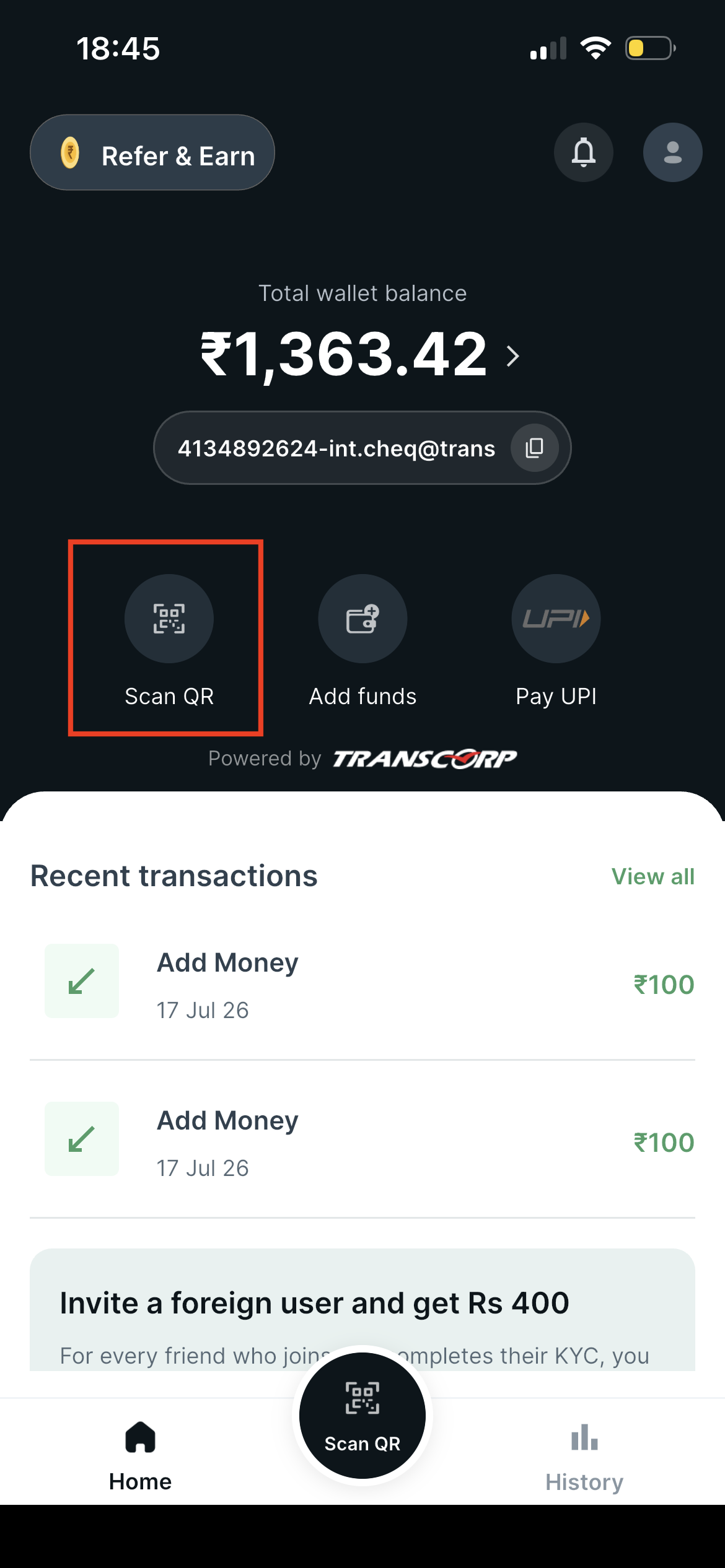
You can request a refund of any unused balance to your original funding source. This process is not automatic, so you need to initiate it yourself before or after your visa lapses.
CheqUPI runs on RBI-regulated infrastructure, the same one covered in this guide to how the UPI wallet works for tourists. Refund requests go through CheqUPI support directly, either over WhatsApp or by email at contactus@terrafin.tech.
Keep your transaction history and any load receipts on hand when you request a refund. Recourse and processing move faster with proof of the original funding source attached.
What if your wallet has been sitting unused

A separate rule applies if your wallet stays untouched for 365 days or longer, regardless of visa status. The account gets frozen for inactivity, and you will need to complete re-KYC to reactivate it.
This dormancy freeze is unrelated to visa expiry itself. It exists purely to keep inactive accounts from sitting open indefinitely without fresh verification.
Once re-KYC is submitted, reactivation typically takes 24 to 48 hours. You do not need to create a new account or start the setup process over.
Coming back to India on a new visa
If you plan to return to India, your existing wallet can usually be reactivated rather than replaced. Update your visa details in the app once your new travel documents are ready.
Before heading out again, it helps to review common risks tourists face while traveling, covered in this guide on staying alert to common tourist scams. A working wallet from day one keeps your trip moving smoothly.
Avoiding a frozen wallet mid-trip

A few simple habits prevent surprises around your visa's expiry date. Build these into your pre-departure routine.
- Note your visa expiry date and set a reminder a week ahead.
- Spend down or plan a refund request before that date arrives.
- Keep your transaction receipts saved until any refund clears.
- Update your visa details promptly if you extend your stay through FRRO.
Conclusion
A frozen wallet at visa expiry is a compliance step, not a loss of funds. Your balance stays safe and recoverable through a simple refund request. Planning around your expiry date keeps the whole process painless.
FAQs
1. Does the wallet close automatically when my visa expires?
No. It freezes and stays frozen until a valid visa is provided or a refund is requested.
2. How long does a refund take after visa expiry?
Timelines vary, so contact CheqUPI support directly for an estimate on your specific request.
3. Can I still see my balance after my visa expires?
Yes, your balance remains visible in the app even while the wallet is frozen.
4. Does the app get deleted from my phone?
No. The app stays installed; only transaction access is restricted during the freeze.
5. Can I top up my wallet after my visa expires?
No. Loading funds is not possible while the wallet is in a frozen state.
6. What documents does reactivation need?
A valid passport and current visa are required to lift a visa-related freeze.
7. Does my unused balance expire over time?
No, but a separate 365-day inactivity rule can freeze the account for dormancy.
8. Can a family member access my frozen wallet?
No. Wallets are tied to individual KYC and cannot be accessed by others.
9. Is there a fee to close my account?
No. There is no closure fee for winding down a CheqUPI wallet.
10. What if I overstay my visa unintentionally?
Contact CheqUPI support for your wallet. Immigration matters such as overstay, penalties or exit permissions are handled separately by the FRRO, so reach out to them directly.
"Download CheqUPI and register before your flight. You can complete verification at your earliest convenience after reaching your hotel or by visiting a city branch so you can start paying like a local and manage your wallet smoothly throughout your stay in India."