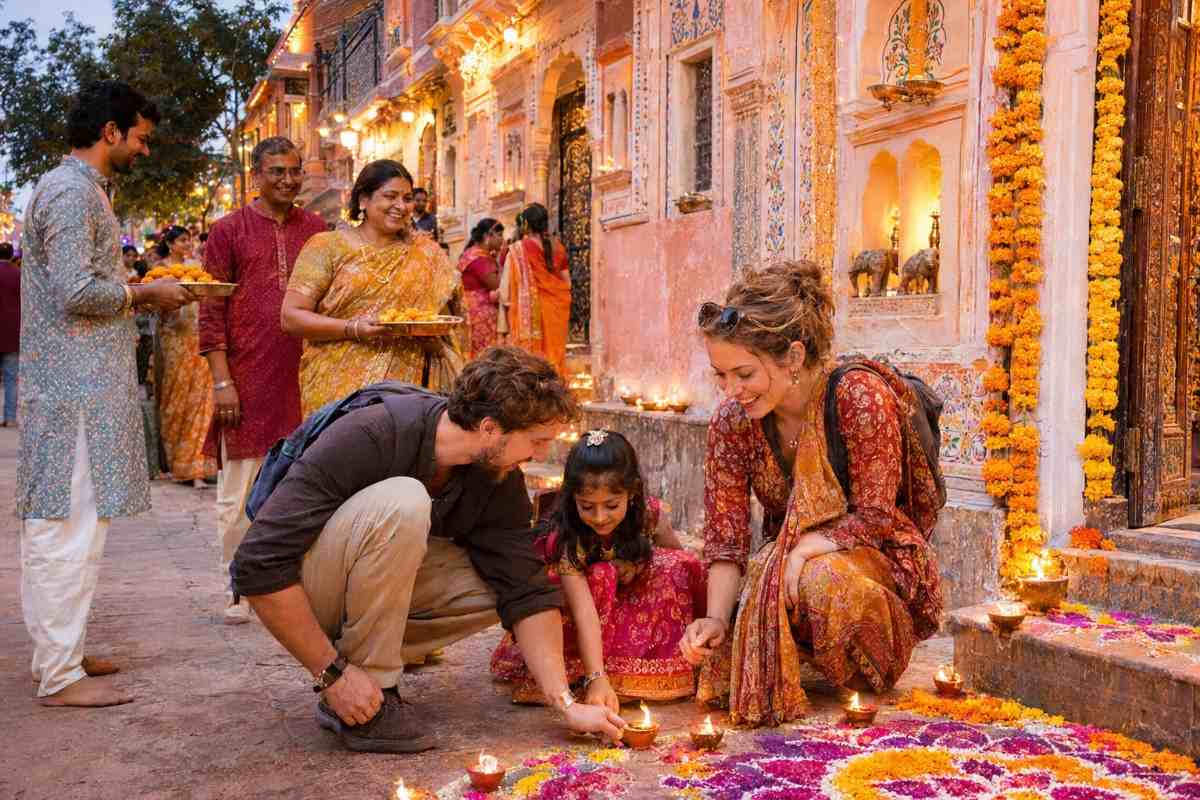
The invitation arrives on a note slipped under a guesthouse door in Jaipur: puja at seven, please come. A traveller from Lisbon reads it and wonders what to expect. Downstairs, the owner's daughter is decorating the doorstep with pink rangoli. The lane is filled with the smell of ghee, marigolds and firecrackers. By evening, the traveller has a few questions. What should she wear? Should she bring something? And why did the sweet shop wave away her card and point at a QR code?
Most first-timers land in the middle of Diwali in India with these exact questions. Here's what the festival means, how its five days unfold and what happens at a family puja. You'll also see where it shines brightest and how to pay your way.
Key highlights
- Diwali runs from 6 to 11 November, with Lakshmi Puja, the main night, on Sunday 8 November.
- Diwali, the festival of lights in India, celebrates light winning over darkness for Hindus, Sikhs and Jains.
- Ayodhya, Varanasi, Amritsar, Jaipur, Kolkata and Goa each celebrate it differently.
- Banks, offices and many shops close for the Diwali holiday, so book travel weeks ahead.
- Carry Rs 5,000 to 10,000 (approx $53 to $106) in small notes, and scan UPI QR codes for the rest.
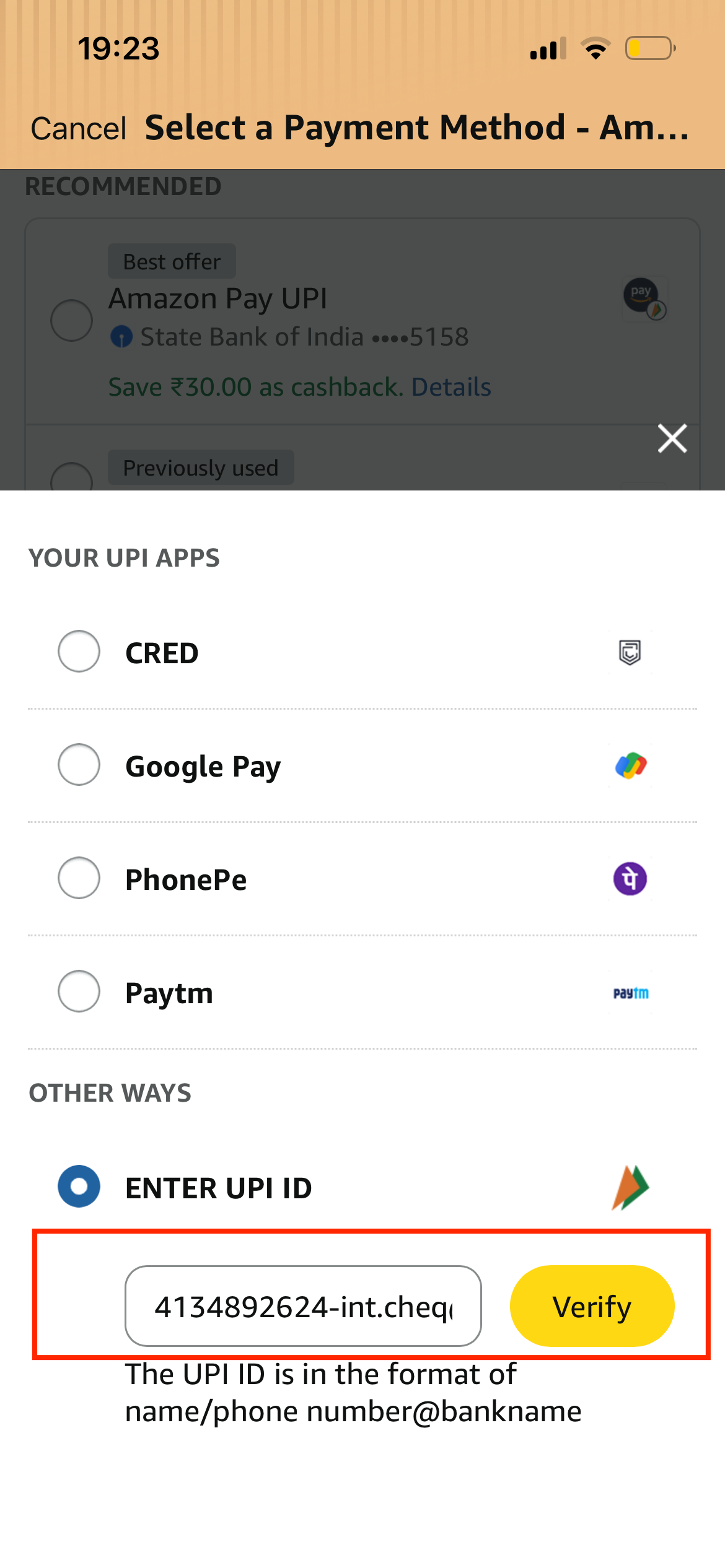
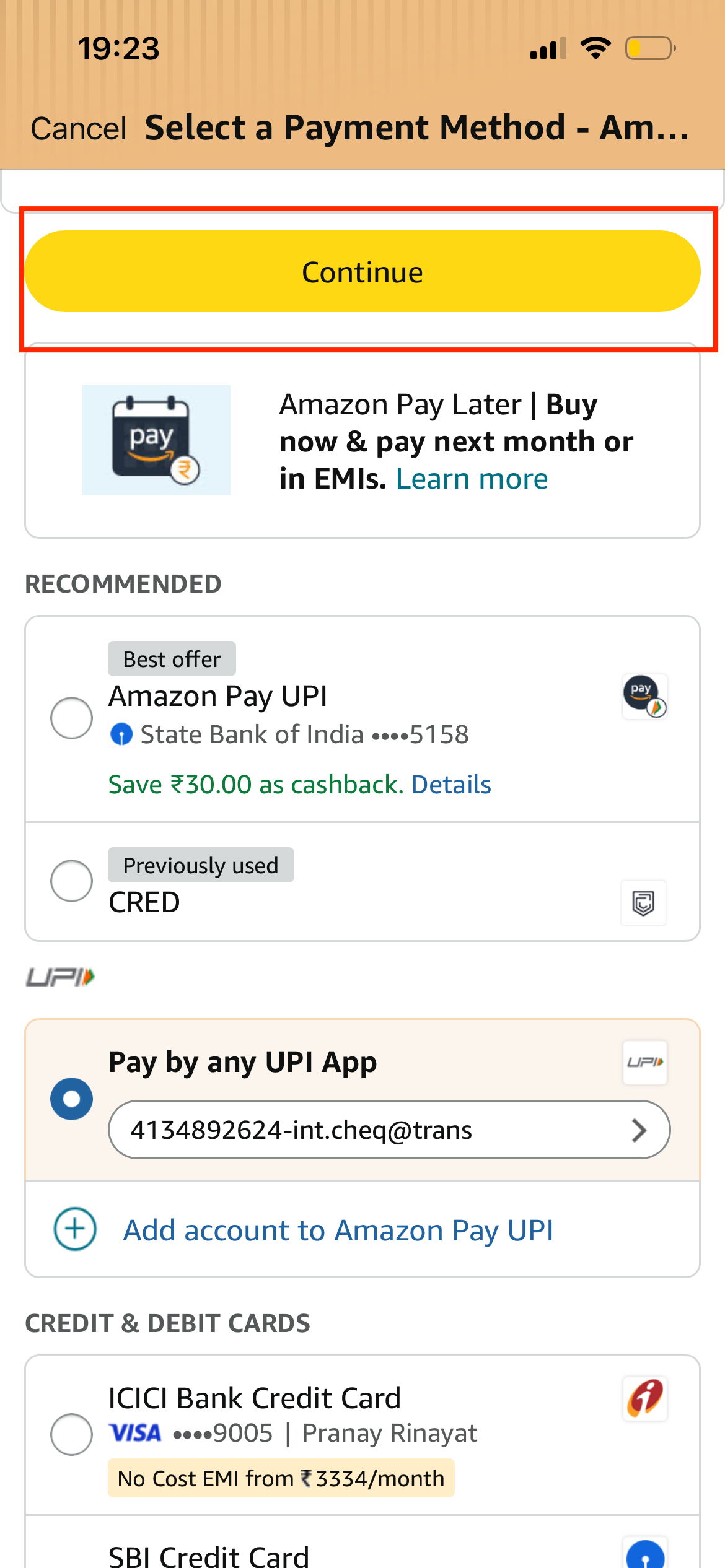
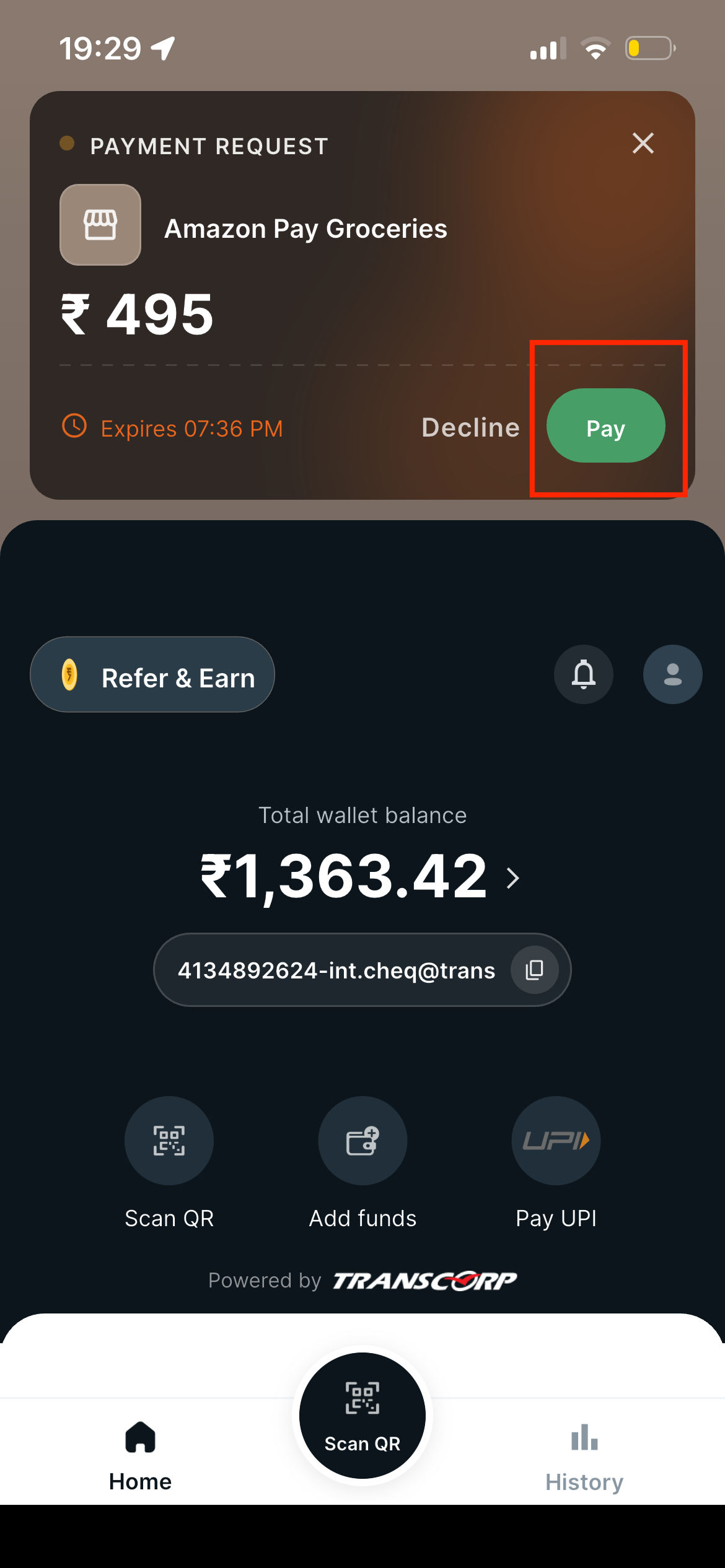
- CheqUPI is free to join for all eligible nationalities, with a loading fee of 2.95% + applicable taxes and 0% merchant payment fee.
What is Diwali, the festival of lights in India?
Diwali is a five-day Hindu festival that celebrates light over darkness and good over evil. The name comes from the Sanskrit word "deepavali", meaning a row of lamps. Many people in south India still call it Deepavali.
Families clean their homes, light clay lamps called diyas and pray for a prosperous year. For a visitor, it feels like the year's biggest family reunion spilling onto the road.
Why is Diwali celebrated? The history behind it
Diwali has no single origin story. Each region honours its own legend, and each one ends with light returning.
- Rama's return: In north India, it marks Lord Rama's homecoming to Ayodhya after 14 years of exile, lit by rows of lamps.
- Krishna and Narakasura: In the south and Goa, Krishna defeats the demon Narakasura.
- Goddess Lakshmi: Many believe the goddess of wealth emerged from the cosmic ocean on this night.
- Bandi Chhor Divas: Sikhs remember Guru Hargobind's release from Gwalior Fort in 1619.
- Mahavira's nirvana: Jains mark Lord Mahavira's liberation.
When is Diwali?
Diwali follows the Hindu lunar calendar, so its dates move between October and November. This year it runs from 6 to 11 November, and each day has its own significance.
Day 1: Dhanteras, Friday 6 November
Families buy gold, silver or a new steel utensil for luck. Jewellery shops stay open late.
Day 2: Choti Diwali, Saturday 7 November
People rise early for a scented oil bath and light the first lamps. In Goa, giant Narakasura effigies burn before dawn.
Day 3: Lakshmi Puja, Sunday 8 November
This is the main night. Homes hold the puja after sunset, then diyas and fireworks take over the streets.
Day 4: Govardhan Puja, Tuesday 10 November
Families offer mounds of food to Krishna. Many Gujarati families also welcome their new year.
Day 5: Bhai Dooj, Wednesday 11 November
Sisters pray for their brothers' well-being, and brothers return the love with gifts. Some regions shift a day by one date, so confirm timings locally.
Diwali rituals and the Lakshmi puja
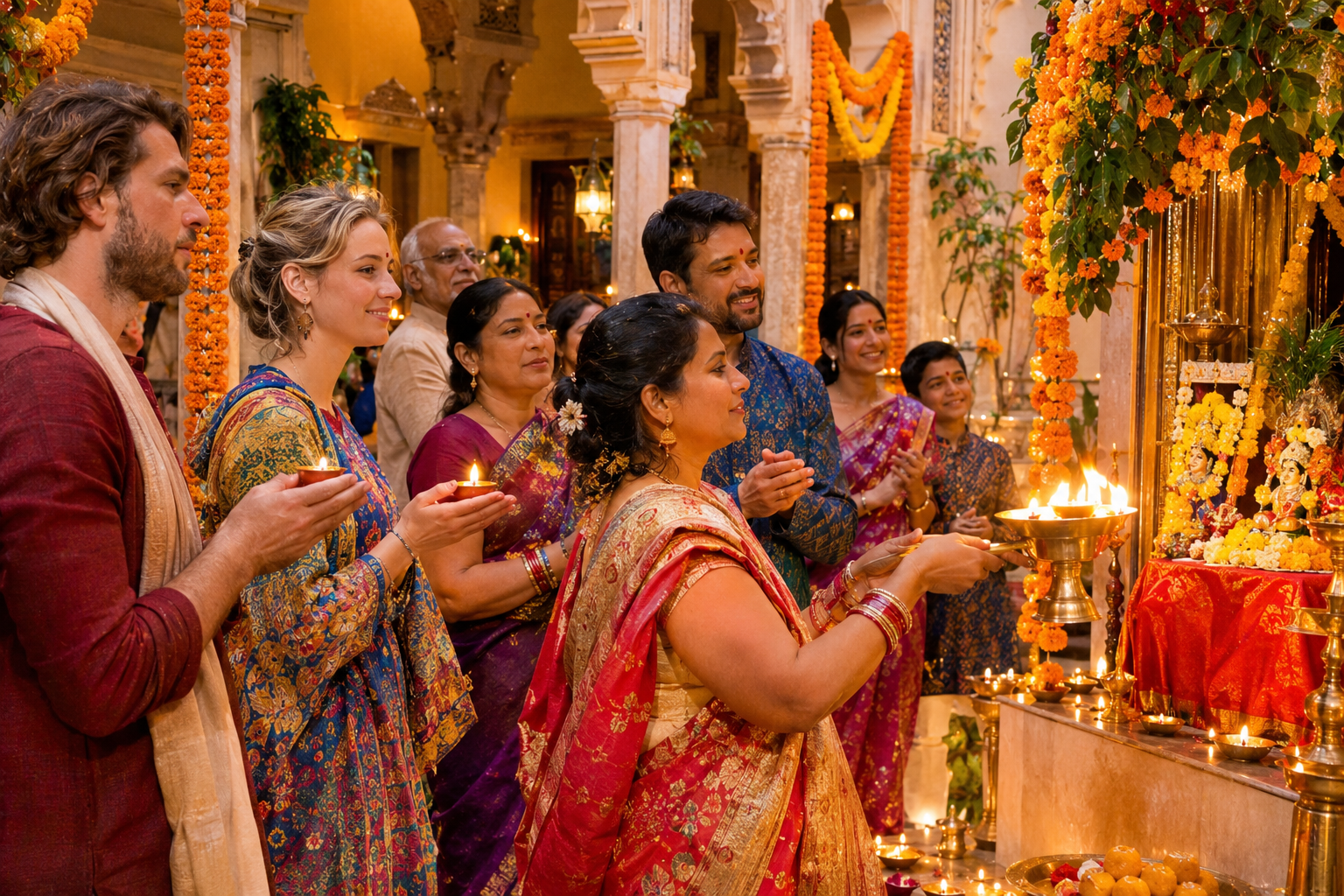
The heart of Diwali is the Lakshmi puja, held at home and in shops on the main evening. Families invite Lakshmi, the goddess of wealth, along with Lord Ganesha, the remover of obstacles.
- Cleaning: Homes get scrubbed for days, since Lakshmi is believed to enter only clean homes.
- Rangoli: Families draw doorway patterns with coloured powder or flower petals.
- The altar: Idols of Lakshmi and Ganesha sit on a red cloth with coins, rice, flowers and sweets.
- The aarti: The family sings and circles a lit lamp before the idols.
- Prasad and lamps: Blessed sweets get shared, and diyas go on every doorstep and ledge.
If a host invites you in, take your shoes off at the door. Accept the prasad with your right hand, as refusing it may be considered impolite.
Everything on that altar comes from roadside stalls selling marigolds, clay diyas and incense. Few shops accept foreign cards, but most display a UPI QR code. With CheqUPI, a small puja set for your hosts is one scan away.
If the family's driver or cook looks after you that evening, you can refer to this guide to tipping in India.
How India's Diwali celebration plays out
Away from the altar, Diwali is loud, bright and generous. Sweets travel between neighbours, and firecrackers often run past midnight, so pack earplugs.
Planning around the Diwali holiday
Lakshmi Puja is a public holiday in most states, and many shops shut early that evening. Trains and flights fill up weeks ahead as millions travel home. With banks shut, a loaded CheqUPI wallet saves you a hunt for a working ATM.
In Delhi-NCR, the Supreme Court has allowed only green crackers, on 7 and 8 November. Delhi's air quality often drops sharply around Diwali, so check the AQI before long evenings outdoors.
Packed markets also bring overcharging, so read up on common scams foreign tourists face in India.
Where to find the best Diwali celebration in India
The best Diwali celebration in India depends on what you want to feel.
Ayodhya
Ayodhya's Deepotsav runs from 5 to 7 November, with about 33 lakh (3.3 million) diyas along Ram Ki Paidi. Expect heavy security and long walks.
How to reach: Ayodhya's own airport (AYJ) has limited flights. Lucknow (LKO), about 135 km away, is the more reliable gateway.
Varanasi
On Diwali night, lamps line the ghats and the Ganga aarti draws huge crowds. About two weeks later, on 24 November, Dev Deepawali lights almost every ghat. On a boat, wear the life jacket and skip overloaded ones. Assi Ghat usually feels calmer than Dashashwamedh.
How to reach: Fly into Varanasi (VNS), or take an overnight train from Delhi.
Amritsar
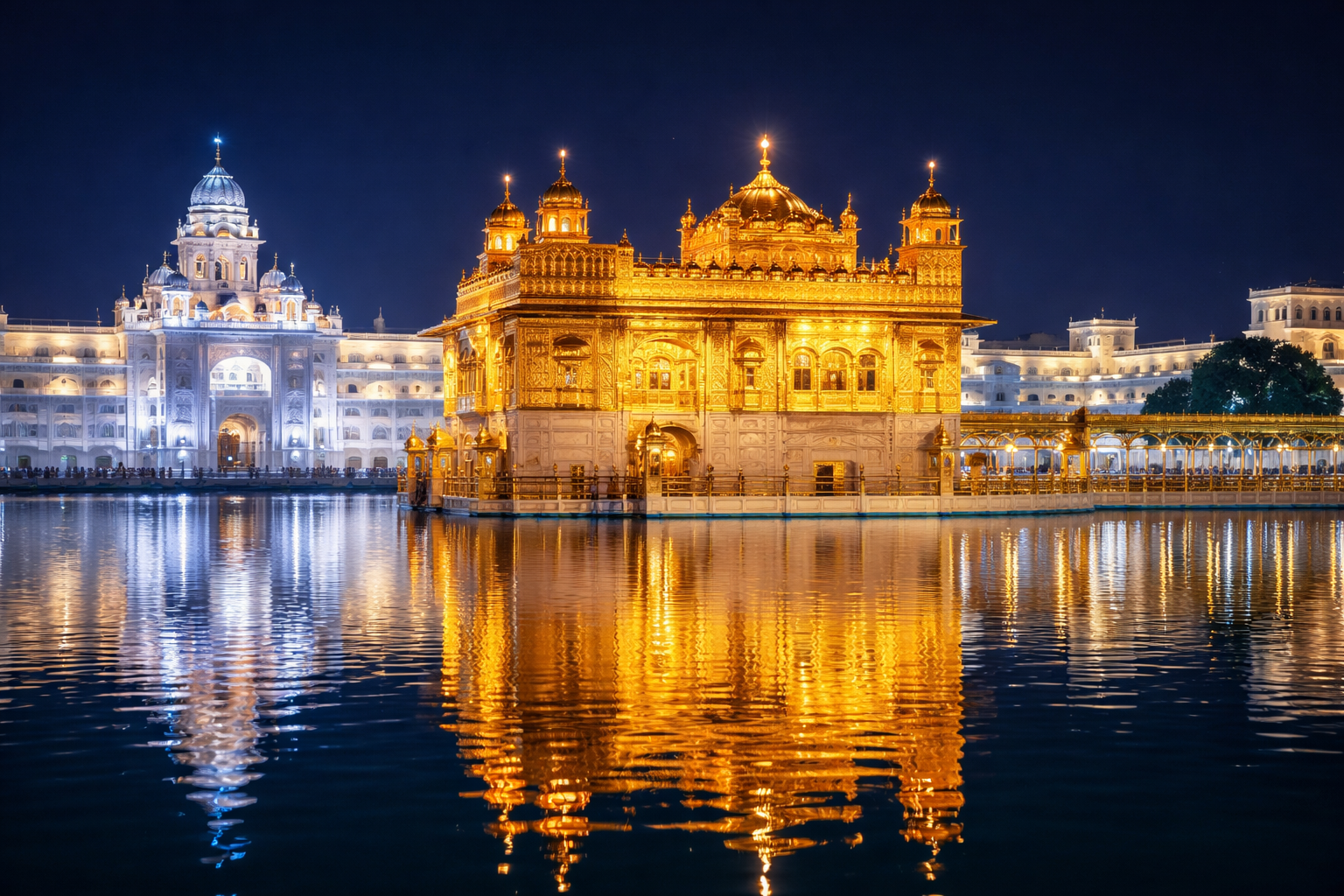
The Golden Temple glows for Bandi Chhor Divas, with fireworks reflected in the sacred pool. Arrive early with your head covered. CheqUPI has a branch in Amritsar if you'd like to finish verification in person.
Our Golden Temple guide covers timings and etiquette.
How to reach: Amritsar's airport (ATQ) has international flights, and fast trains run from Delhi.
Jaipur
Johari Bazaar and Bapu Bazaar glow end to end, and the pink walls turn gold after dark. Most bazaar stalls accept QR code payments, making CheqUPI a convenient way to pay for purchases such as bangles, lamps and block prints. For smaller crowds, try Udaipur's lakeside.
If you add Udaipur to the trip, start with this Udaipur guide for first-timers.
How to reach: Fly into Jaipur (JAI), or drive about five hours from Delhi.
Kolkata
Bengal worships Goddess Kali on Diwali night, not Lakshmi. Kalighat and Dakshineswar temples draw long queues, so visit them separately.
How to reach: Kolkata's airport (CCU) has wide international and domestic connecting flights.
Goa
Goa's Diwali peaks before sunrise on 7 November, when towering Narakasura effigies go up in flames across its villages.
How to reach: Mopa (GOX) serves north Goa and Dabolim (GOI) the south. Uber, Ola and Rapido don't operate in Goa, so use GoaMiles, the local taxi app.
Paying for sweets, lamps and rides during Diwali
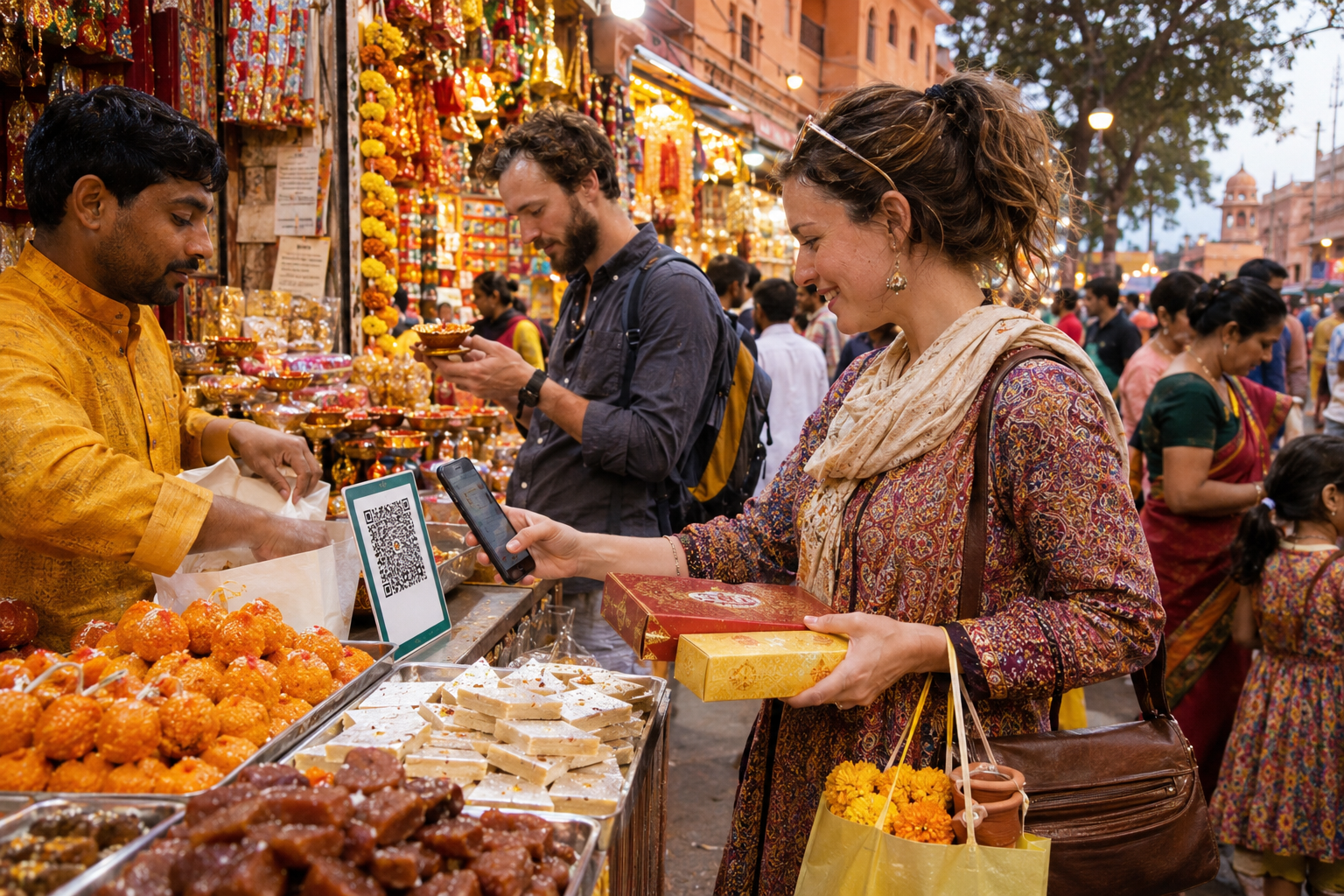
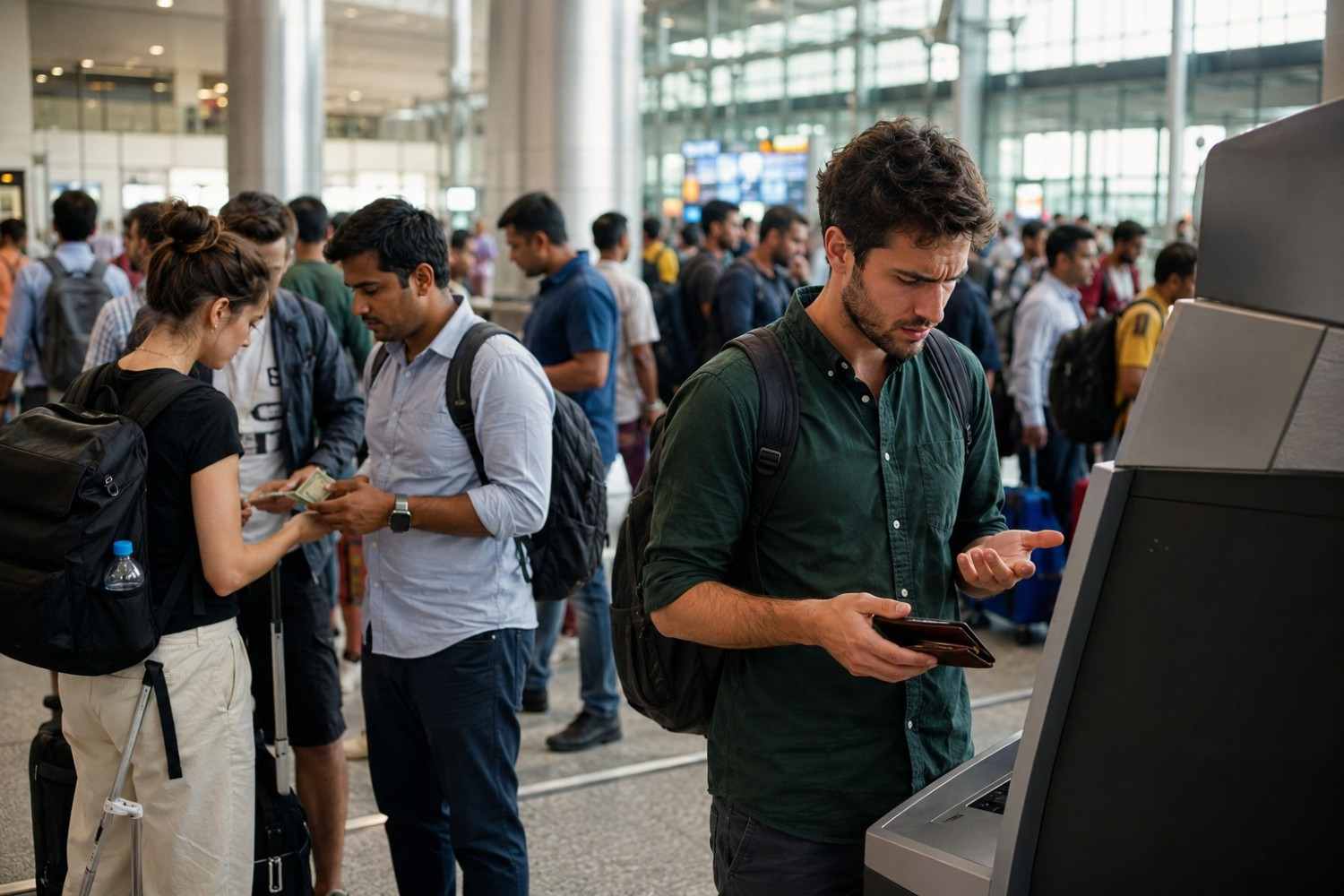
Keep Rs 5,000 to 10,000 (approx $52 to $104) in small notes for temple donations. Airport money changers often add a markup of around 8-9%.
For everything else, here's how to pay in India as a foreign tourist.
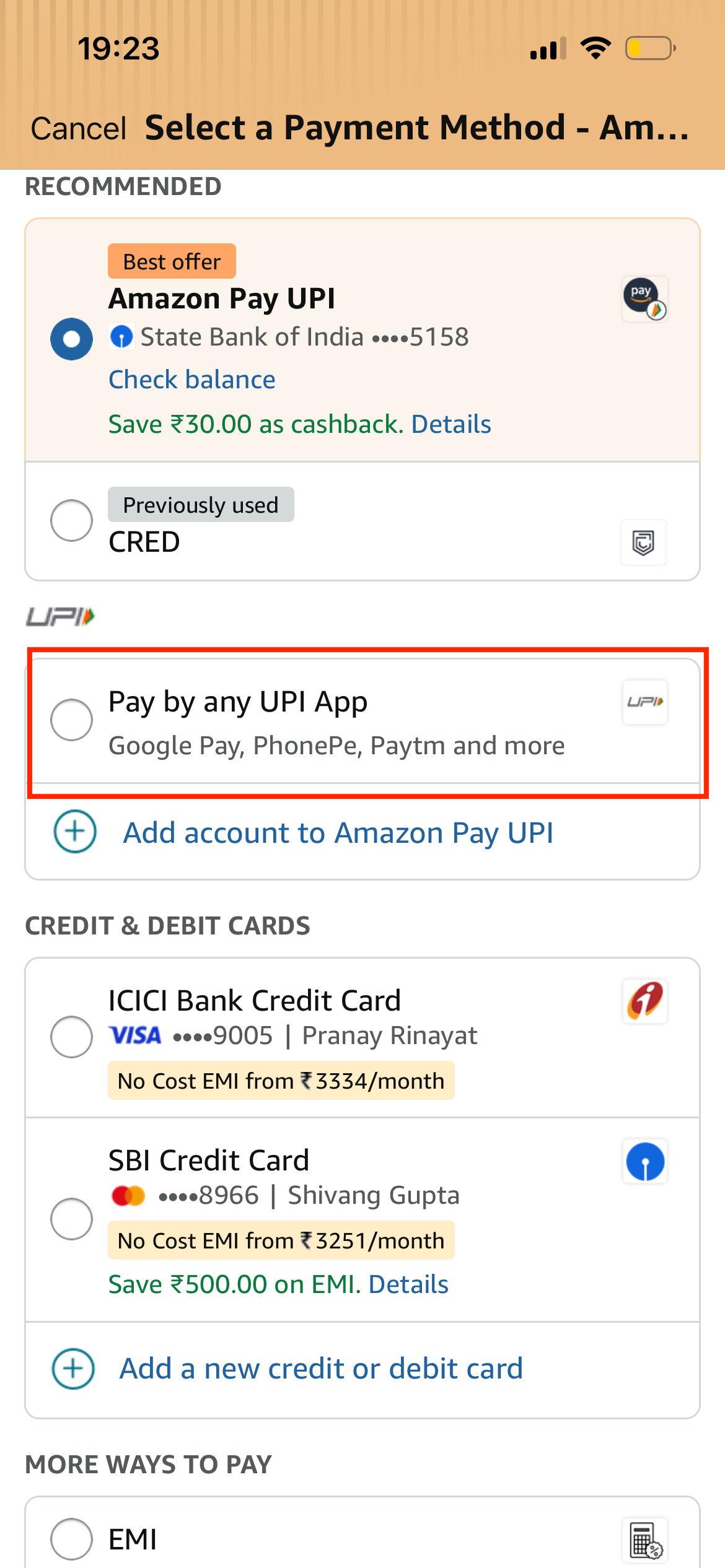
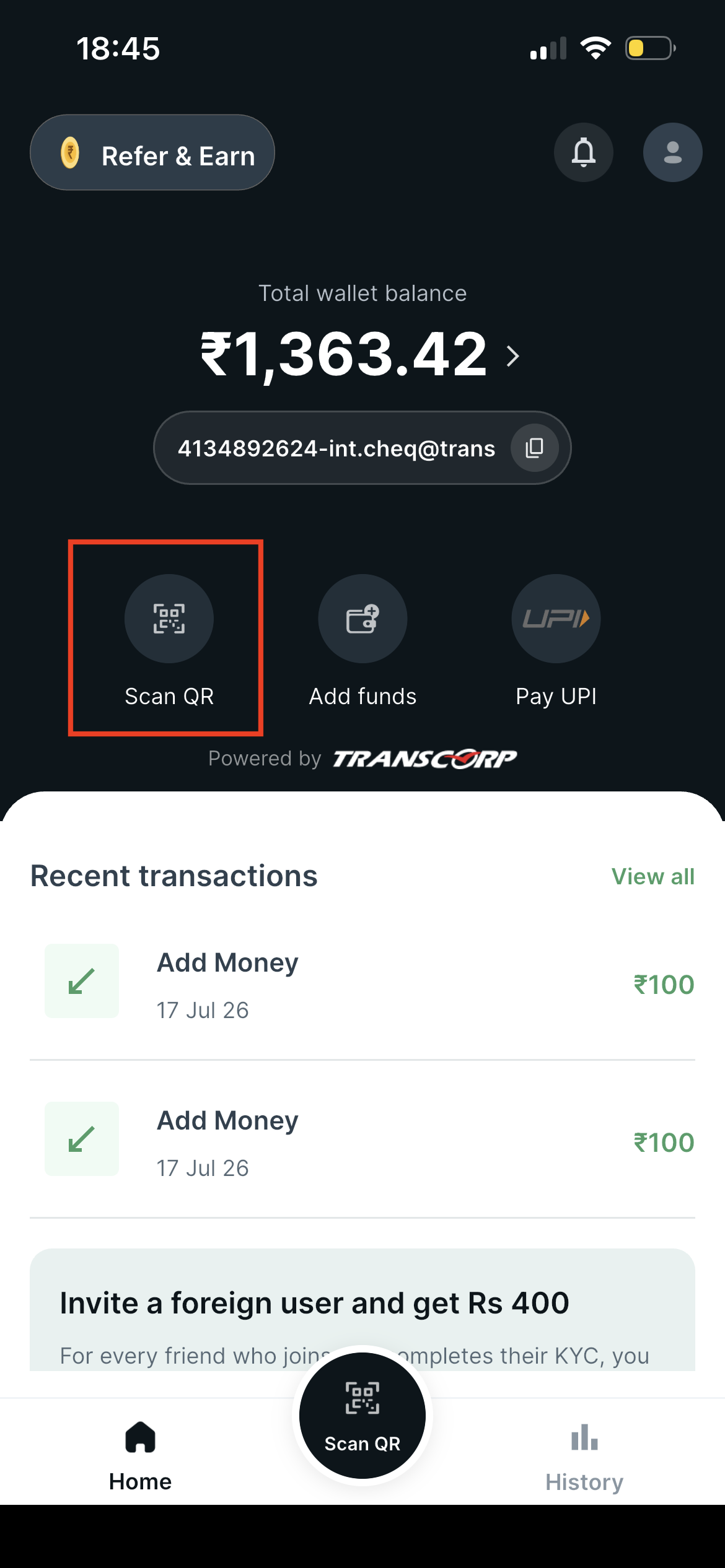
CheqUPI is a prepaid UPI wallet for foreign travellers and NRIs. You don't need an Indian bank account or SIM. An internet connection and location access are required. CheqUPI is free to join for all eligible nationalities, with a loading fee of 2.95% + applicable taxes and 0% merchant payment fee.
You can set it up from home before your flight and complete verification at your earliest convenience after reaching your hotel or by visiting a city branch.
Uber doesn't accept CheqUPI yet, as it takes only regular UPI. Rapido does, through a balance top-up.
Conclusion
Diwali is less a show to watch and more a celebration you get pulled into. Pick one city to celebrate Diwali in India, arrive before the main night and accept every sweet you're offered. Learn why the lamps are lit, follow your hosts' lead and sort your payments before you land. Do that, and you'll fly home with new friends, not just photos.
FAQs
- What is Diwali and why is it celebrated?
Diwali is India's festival of lights. It celebrates good over evil, marked by Rama's return to Ayodhya, Krishna's victory over Narakasura and prayers to Lakshmi. Sikhs and Jains celebrate it for their own reasons. - How many days is Diwali celebrated?
Diwali lasts five days. It starts with Dhanteras, peaks with Lakshmi Puja on the third day and ends with Bhai Dooj. Markets and decorations build up for a week or two before. - How do you wish someone a happy Diwali?
You can say "Happy Diwali" or "Shubh Deepavali", which means auspicious Diwali. In the south, "Happy Deepavali" is common. A smile, folded hands and a box of sweets make the wish even warmer. - Can foreign tourists celebrate Diwali in India?
Yes. Foreign tourists can celebrate Diwali in India freely, from temple aartis to lamp-lit ghats. Families often welcome guests warmly. Remove your shoes indoors, dress modestly and accept sweets with your right hand. - Where is the best Diwali celebration in India?
Ayodhya has the biggest lamp display, Varanasi the most atmospheric ghats and Amritsar the glowing Golden Temple. Jaipur suits first-timers who want markets and lights. Kolkata and Goa add distinct regional twists. - Is Diwali a public holiday in India?
Yes. The Diwali holiday falls on Lakshmi Puja in most states. Banks, offices and many shops close that day, and some stay shut longer. Book trains, flights and hotels weeks ahead. - What should I wear for Diwali?
Wear something new and festive, like a kurta or a salwar suit. Choose cotton over synthetic fabric near lamps and fireworks. Cover your shoulders and knees when visiting temples or gurdwaras. - What gifts are given on Diwali?
Boxes of sweets and dry fruits are the classic Diwali gift. Diyas, candles, silver coins and home decor are popular too. If a family invites you, sweets from a local shop are a perfect gesture to bring the hosts.
CTA
The lamps are lit, the sweets are boxed and every stall has a QR code waiting. Download CheqUPI before you fly and verify once you land.