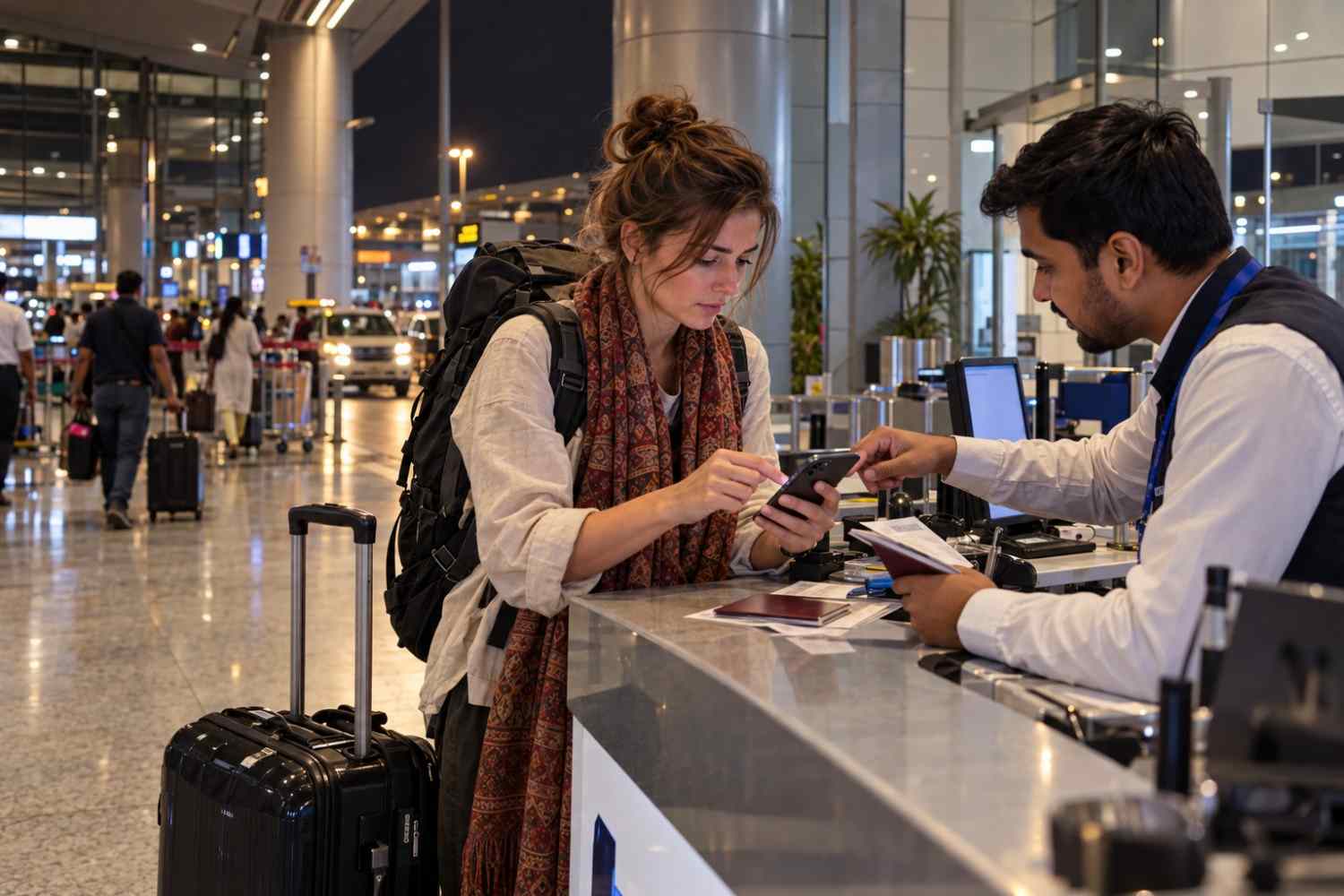
A traveller lands at Delhi airport at 2 a.m., phone at 40 percent battery, no local number, and a cab driver who only speaks Hindi waiting somewhere past a wall of signs. Google Maps needs data. The hotel confirmation needs an OTP. The ride-hailing app needs a working phone number just to load. Every small task that felt automatic at home suddenly depends on one thing: a working SIM.
Getting connected in India does not have to eat into the first day of a trip. This guide walks you through eSIM and physical SIM options, what each one costs in INR and USD, the documents foreign tourists need, and where the rules get stricter so you can choose the right option before you land.
Key highlights
- eSIMs can be bought and activated online before departure, often for $3 to $15 depending on data volume.
- Physical SIM cards typically cost Rs 200 to 500 (approx $2 to $5) for a starter pack with data.
- Passport, visa, and a photo are mandatory for any physical SIM purchase as a foreign tourist.
- Prepaid SIMs from outside Jammu & Kashmir and Ladakh do not work inside those regions.
- CheqUPI is free to join for all eligible nationalities, with a loading fee of 2.95% + applicable taxes and 0% merchant payment fee.
- CheqUPI works without an Indian bank account or SIM card. An internet connection and location access are required.
eSIM vs physical SIM: which one fits your trip
An eSIM suits short stays and travelers who want connectivity the moment they land. A physical SIM suits longer trips where local calling and cheaper long-term data matter more than instant setup.
eSIMs offer instant activation without the KYC paperwork that physical SIMs require, which is the biggest single advantage for a first-time visitor. The tradeoff is price per gigabyte, which tends to run higher than a local prepaid plan. For a trip under two weeks focused on sightseeing, an eSIM alone often covers everything needed. Here is a quick comparison between an eSIM and a physical SIM card.
| Factor | eSIM | Physical SIM |
| Setup time | Minutes, before departure | 15-60 minutes, after landing |
| Documents needed | None for purchase | Passport, visa, photo |
| Typical cost | $3 to $15 | Rs 200 to 500 (approx $2 to $5) |
| Best for | Short trips, instant setup | Longer stays, heavier data use |
| Local number | Rarely included | Yes, Indian mobile number |
How to get an eSIM for India before you fly
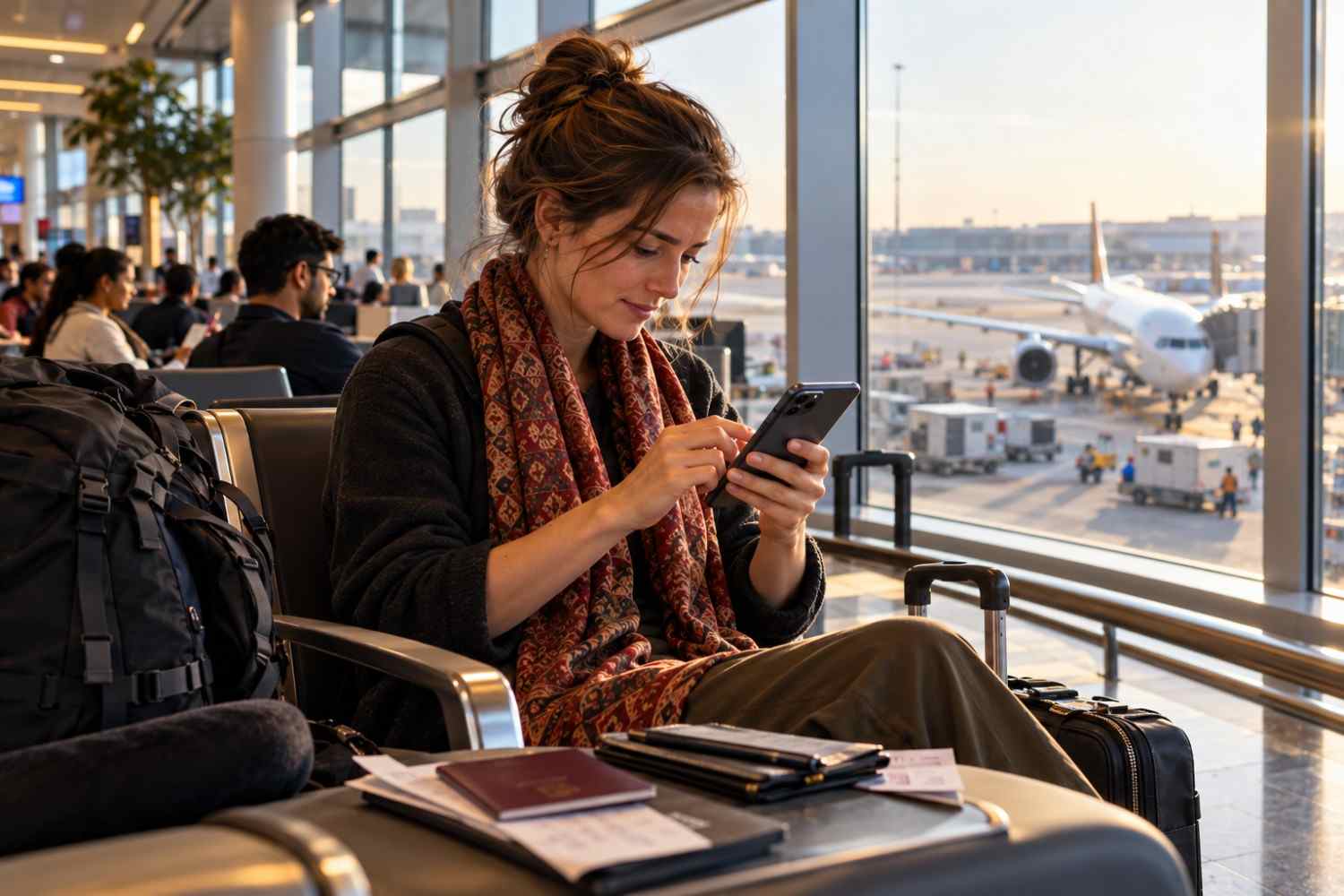
Airalo is one of the most used marketplaces for an India eSIM, letting travellers pick a data plan on the app, pay, and get a QR code to scan days before departure. Download and install it before you land. India delisted Airalo and similar apps from its stores in 2024, blocking access or top-ups from inside the country.
The eSIM stays inactive until data roaming is switched on after landing, so it does not interfere with a home SIM in a dual-SIM phone. A local eSIM from Jio, Airtel, or Vi still needs the same in-person Indian KYC as a physical SIM, but an international travel eSIM like Airalo runs on a foreign operator’s roaming profile instead, which is why it skips that step.
Check that the phone is eSIM-compatible and carrier-unlocked before buying. Most dual-SIM smartphones allow the primary SIM to stay active while the India eSIM handles data, which keeps WhatsApp and other numbers working normally throughout the trip.
How to buy a physical SIM card after landing
Physical SIMs are sold at airport kiosks, authorized telecom stores, and some online delivery services within India. Airport kiosks in cities like Delhi connect travellers within two to three hours of landing, though kiosk pricing tends to run higher than a city store for the same plan, since convenience and location come at a cost rather than being a fixed markup.
City stores for Airtel, Jio, or Vi usually take longer on paperwork but often price the same plan more competitively. A short auto ride from the airport to a branded store can be worth the wait for a longer stay.
Documents and KYC rules foreign tourists must meet
Every physical SIM purchase requires original identity proof, not photocopies, plus a photo taken at the point of sale. Tourists must present a passport with the original physical document, a valid Indian visa, proof of local accommodation, and a headshot taken at the store during activation. Tourists staying beyond 180 days must also register with the Foreigners Regional Registration Office, separate from any SIM paperwork. [VERIFY]
Keep the passport and visa on hand at the store, since staff typically photograph the documents directly. Buying a SIM from an unauthorized vendor without this process risks the number being deactivated later, so it is worth checking common scams foreign tourists should watch for before handing over any documents on the street.
Airtel vs Jio vs Vi: picking a network
Airtel, Vodafone Idea, and Jio are the three main tourist SIM providers, available at most convenience stores and airports. Jio generally leads on data speed and 5G rollout in major cities, while Airtel holds a slight edge in hill regions and the northeast.
For most city-to-city tourist routes, either Jio or Airtel works well. Travellers heading into remote hill areas may want to ask locally which network has the strongest signal before committing to a plan.
Cost comparison: eSIM, physical SIM, and roaming
Home-network roaming is almost always the most expensive option, often running several times higher than a local SIM or eSIM for the same data volume. The table below lines up the three main choices for a typical two-week trip.
| Option | Approx cost | Setup effort | Local number |
| Travel eSIM | $10 to $20 for 5-10 GB | Very low, pre-departure | Rarely |
| Physical SIM | Rs 300 to 500 (approx $3 to $5) | Moderate, after landing | Yes |
| Home roaming | Often several times local cost | None | Existing number |
Carrying some cash alongside a working SIM still matters, since not every small vendor takes cards or digital payments. It's worth reading about cash-related problems foreign visitors run into before deciding how much to carry.
Special rules for Jammu & Kashmir and Ladakh
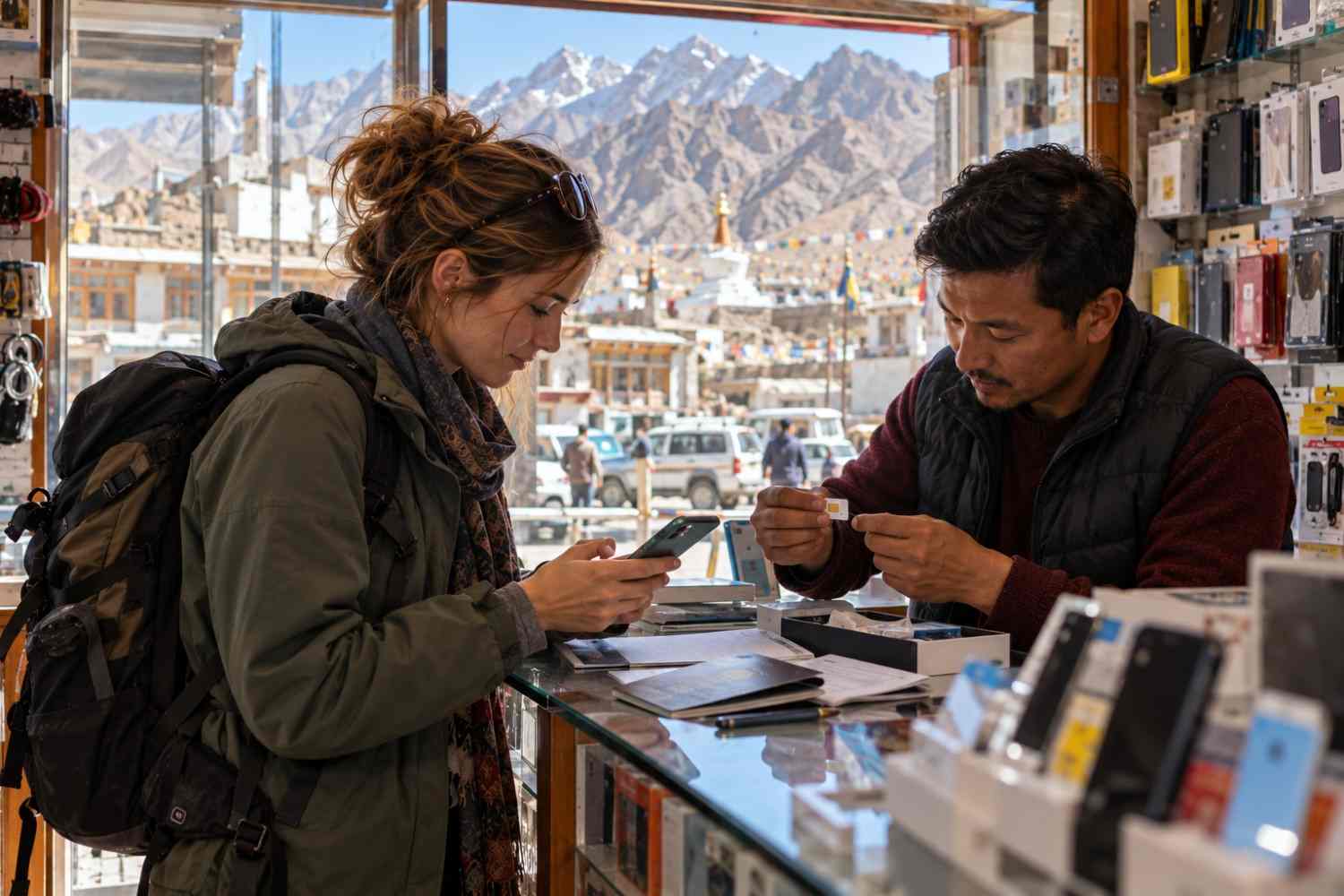
This is the part most SIM guides skip. Prepaid SIM cards issued outside Jammu & Kashmir do not work for data services inside the region, and only postpaid connections function reliably there. The same restriction applies across Ladakh.
Foreign tourists on a visa generally cannot register a postpaid connection, so the practical fix is buying a local prepaid SIM directly in Srinagar, Leh, or Jammu after arrival, rather than relying on a SIM bought elsewhere in India. Travel eSIMs from international providers typically stop working the moment a phone enters these zones too, so plan for a short offline stretch or a local top-up on arrival.
Staying connected for payments once you land
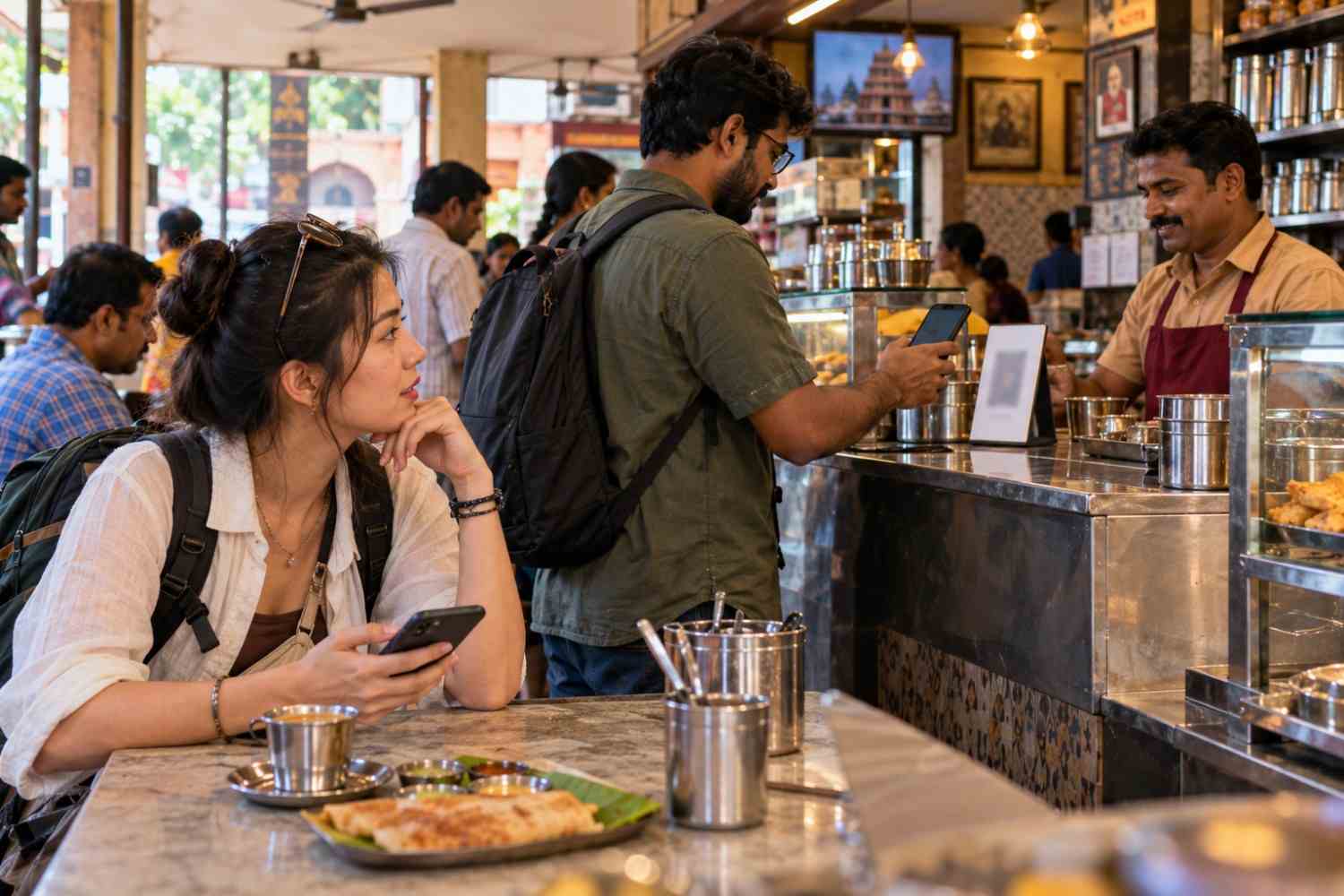
A working number and data connection matter beyond maps and messaging. Most digital payment apps in India, including UPI-based wallets, need a verified phone number and an active internet connection to function. UPI itself runs on NPCI's network, and paying is as simple as scanning the merchant's QR code and confirming the amount.
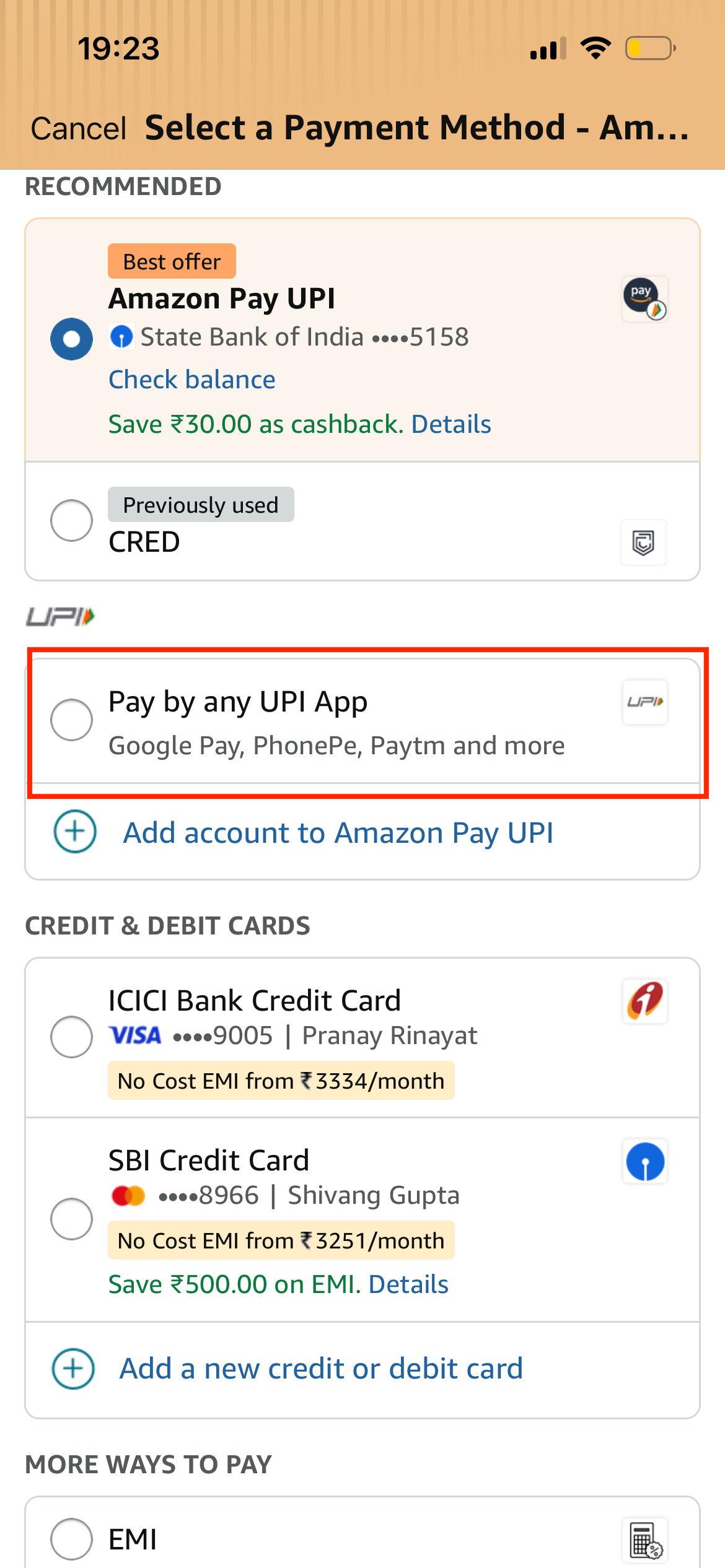
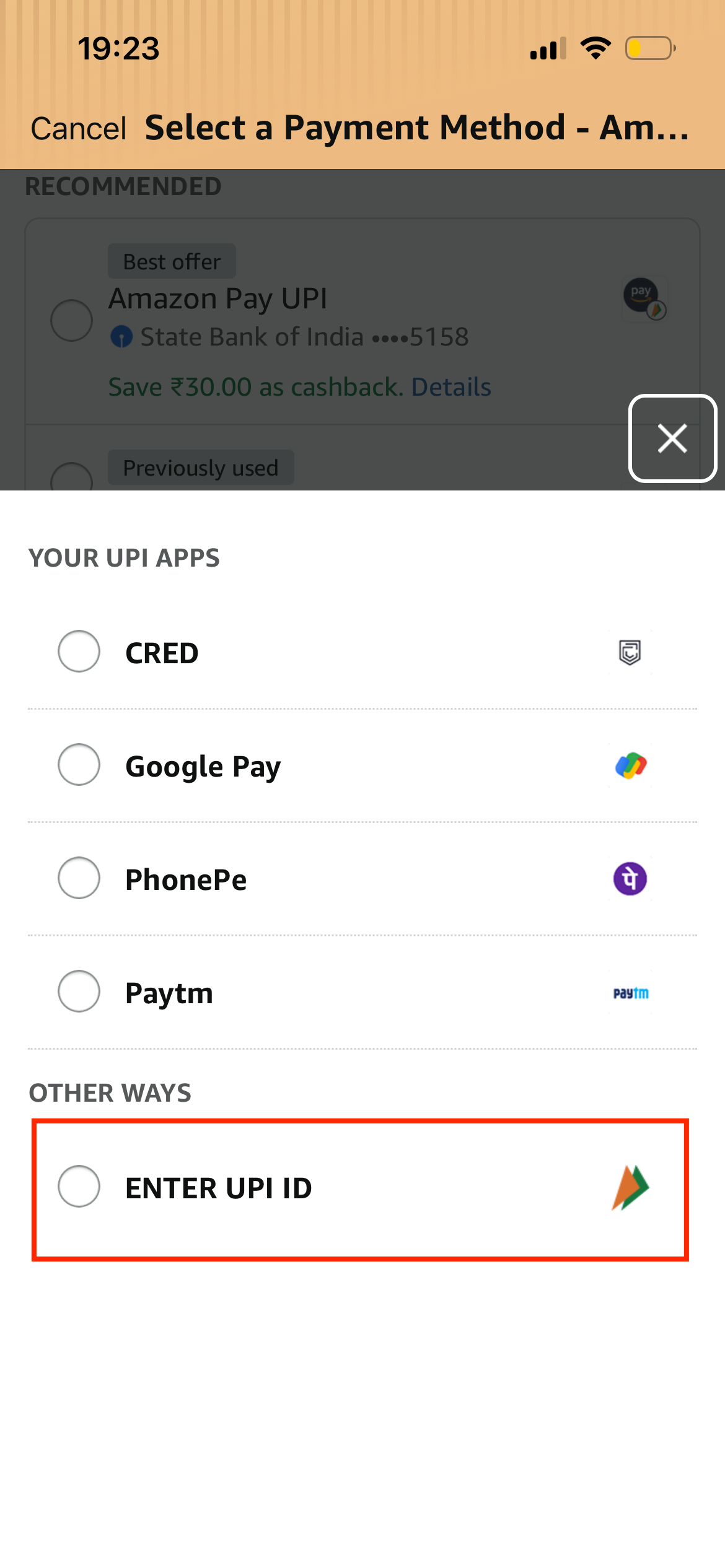
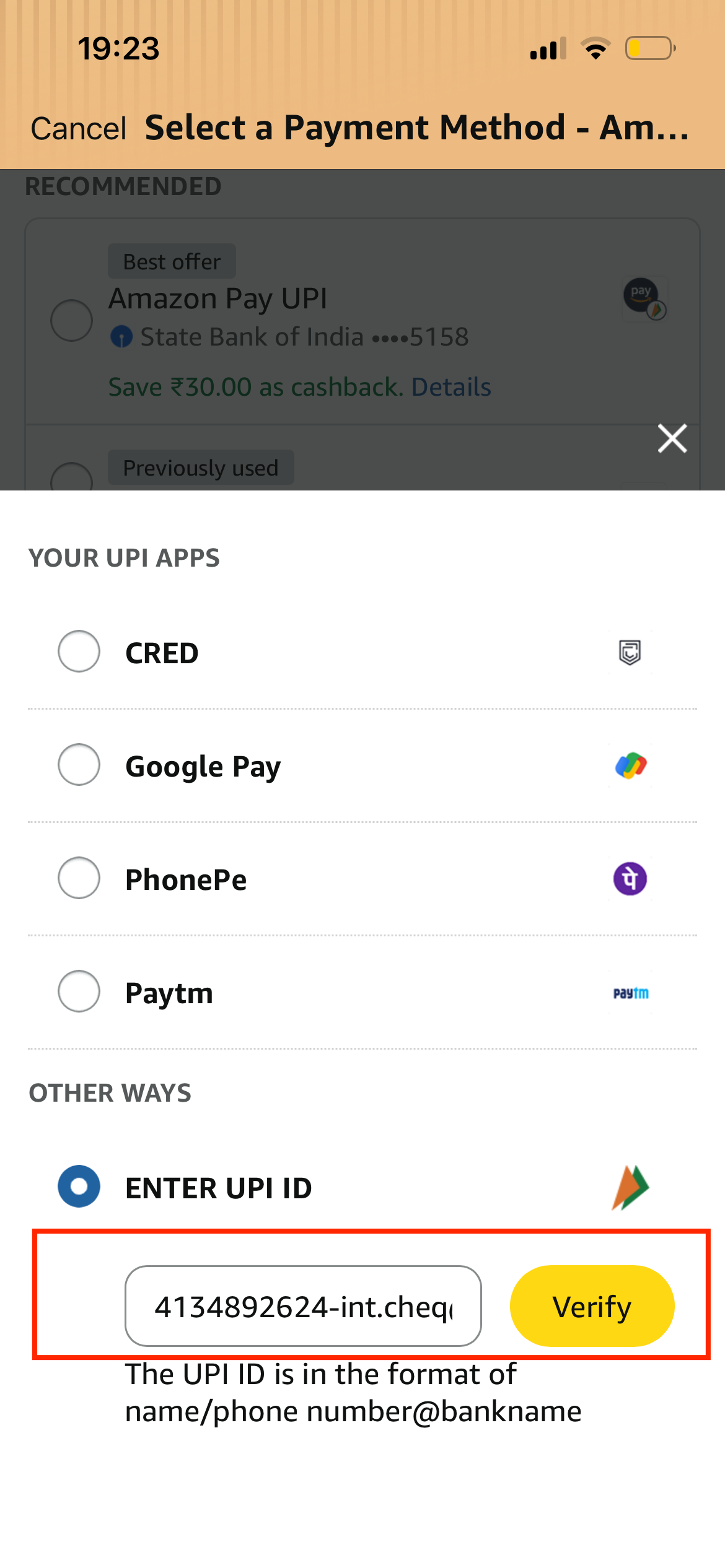
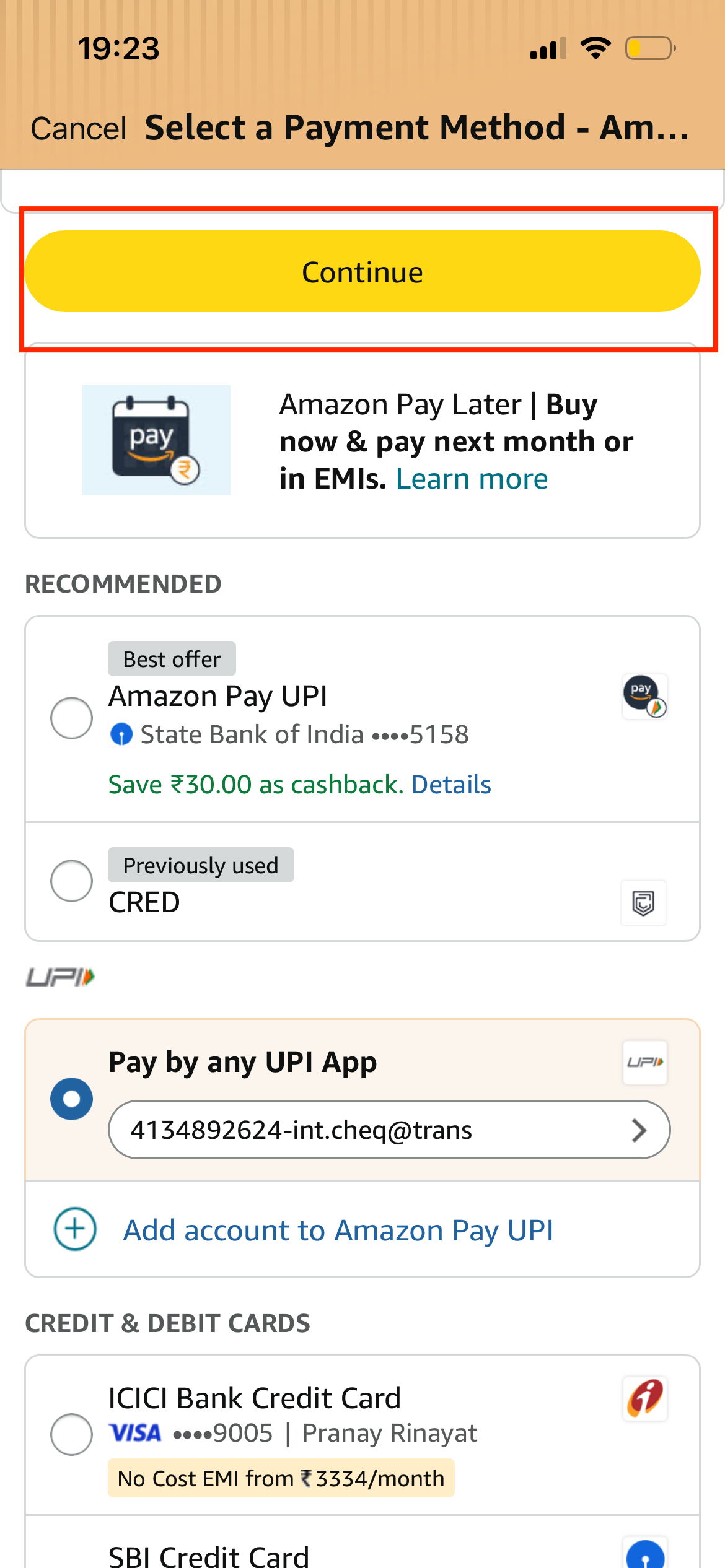
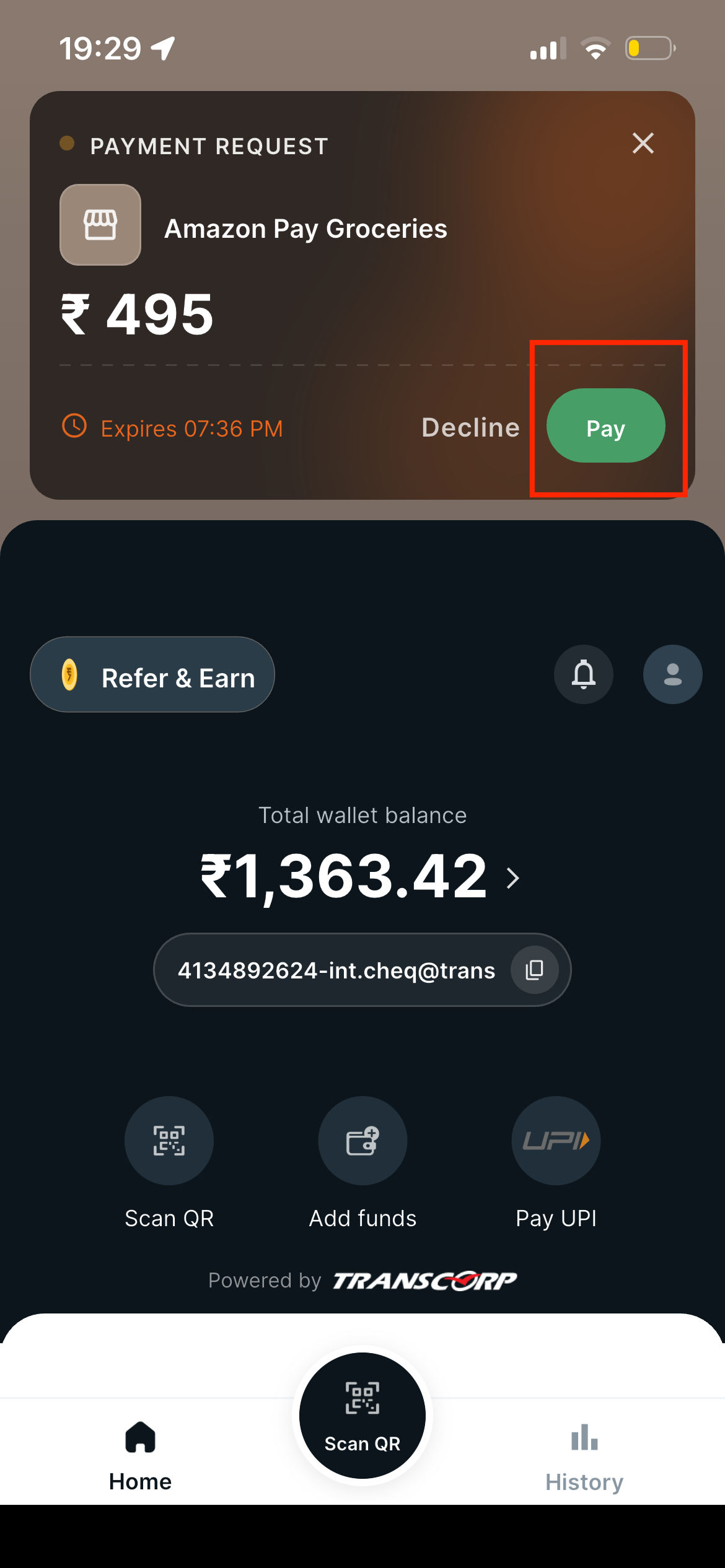
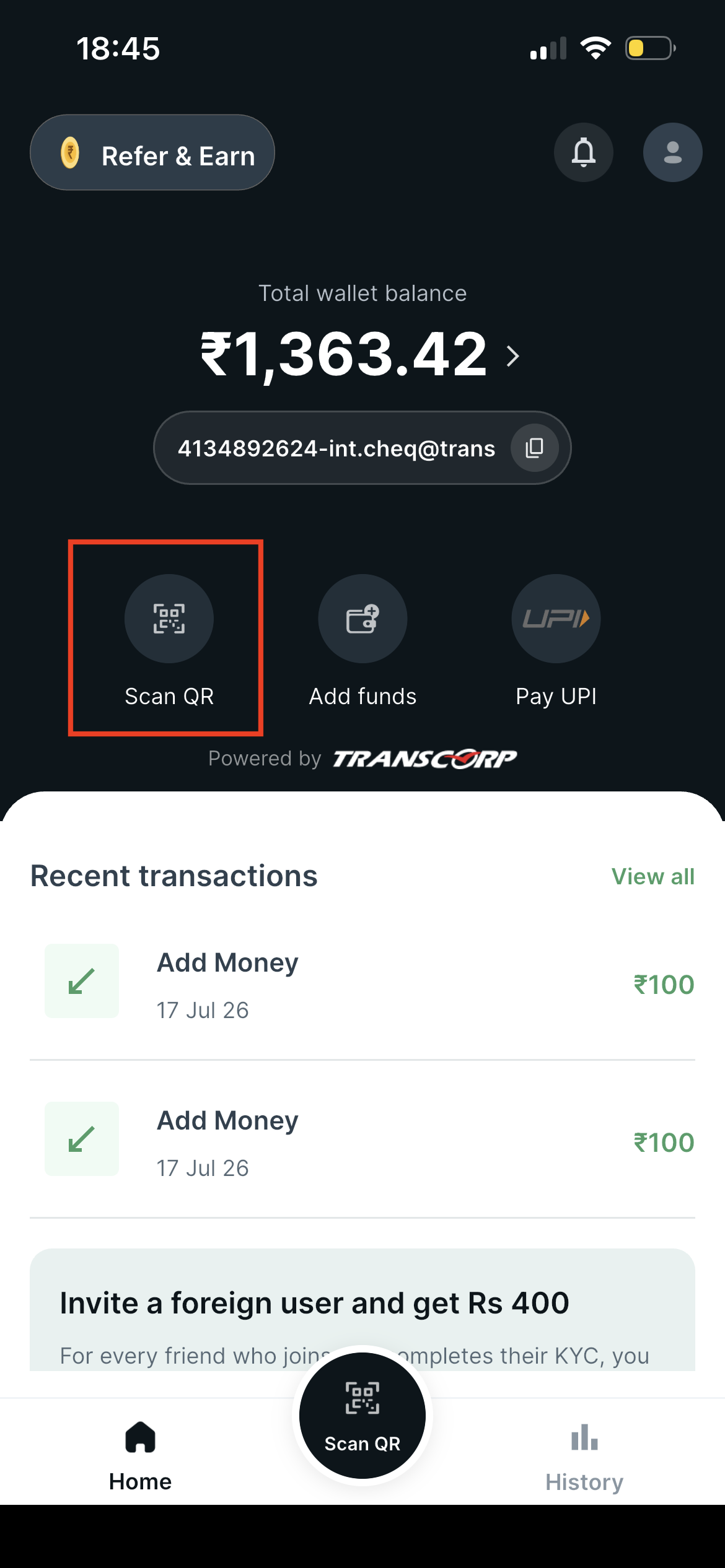
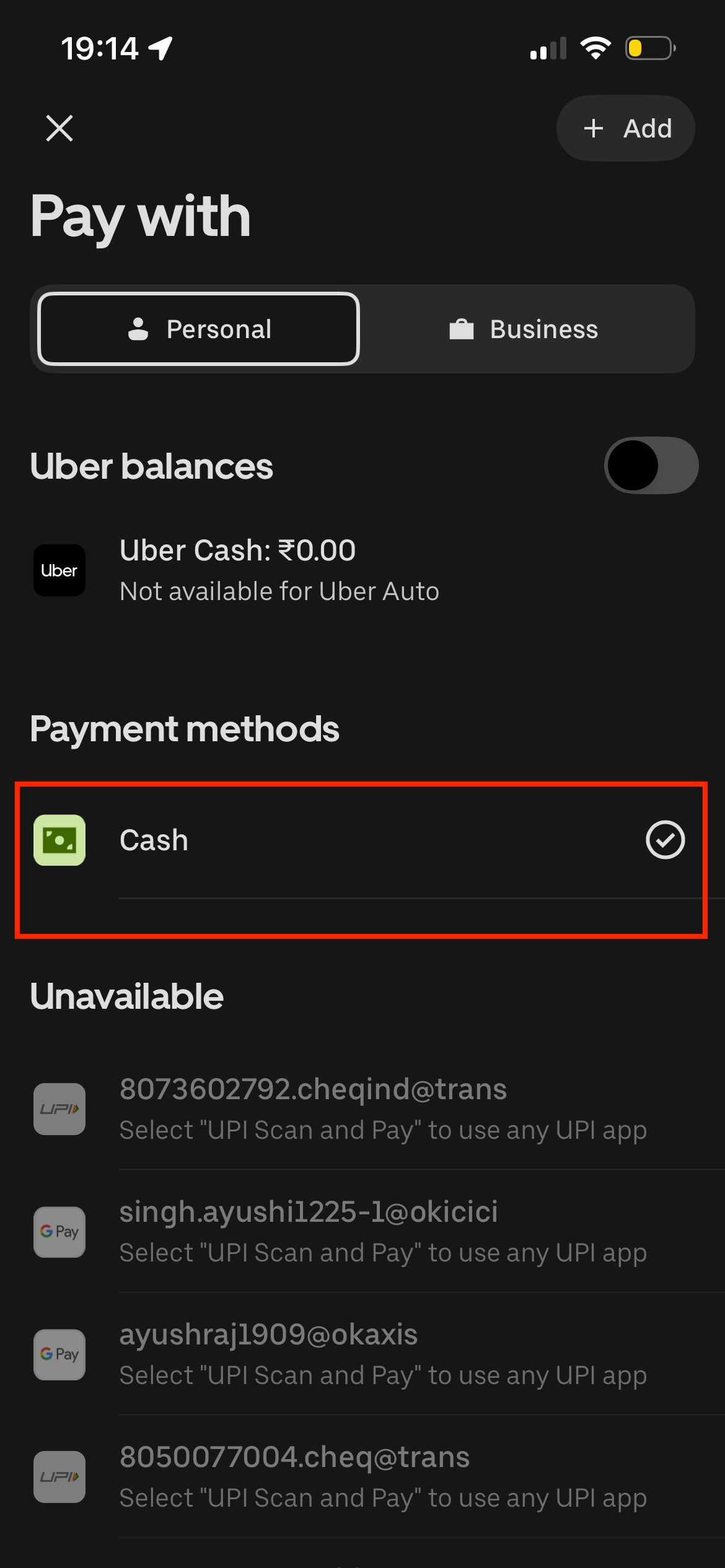
CheqUPI works without an Indian bank account or SIM card. An internet connection and location access are what’s required. You can set it up from home before your flight and complete verification at your earliest convenience after reaching your hotel or by visiting a city branch. Pairing a working eSIM or local SIM with a UPI wallet means small vendors, cafes, and taxis stop being a cash-only guessing game. For a fuller walkthrough of how this works, see the UPI payment guide for foreign tourists.
Conclusion
Getting connected in India comes down to one choice: an eSIM for speed and simplicity, or a physical SIM for longer stays and cheaper data. Either way, sort documents and a plan before landing so the first hours of the trip go smoothly. Pair that connection with a UPI wallet, and the rest of the trip, from cabs to street food, gets a lot easier to pay for.
FAQs
1. Do I need a physical SIM if I already have an eSIM?
No, an eSIM alone covers most short trips. A physical SIM helps only if you need an Indian phone number to make calls or plan to stay longer than a few weeks.
2. Can I buy an Indian SIM card online before I arrive?
Physical SIM registration requires in-person KYC in India, so it cannot be completed remotely. eSIMs are the only option purchasable entirely before departure.
3. What documents do I need for a physical SIM in India?
You need your original passport, a valid Indian visa, and a photo taken at the store. Photocopies alone are not accepted.
4. Will my prepaid SIM work in Kashmir or Ladakh?
No, prepaid SIMs from outside these regions do not work for data there. Buy a local prepaid SIM after arriving in Srinagar, Leh, or Jammu.
5. Which network is best for tourists, Jio or Airtel?
Both work well in most cities. Jio tends to lead in speed, while Airtel often works better than others in hilly and remote regions.
6. How much data do I actually need per day?
Most tourists manage well with 1 to 2 GB per day for maps, messaging, and browsing. Heavier streaming or video calls need more.
7. Can I use my home number for WhatsApp with a new SIM?
Yes, WhatsApp stays linked to your existing number even while using a local SIM or eSIM for data. No need to change your WhatsApp number.
8. Is it cheaper to buy a SIM at the airport or in the city?
Airport kiosks are faster but often cost more for the same plan. A city store usually offers a better rate if you have time to travel there.
9. Do I need a working SIM to use a UPI wallet like CheqUPI?
CheqUPI does not require an Indian SIM card. You only need an active internet connection and location access on your phone.
10. What happens if my eSIM stops working in remote areas?
Global eSIMs can lose signal in restricted zones like Ladakh. Carry a small amount of cash as backup for these stretches.
"Download CheqUPI and register before your flight. You can then complete verification at your earliest convenience after reaching your hotel or by visiting a city branch to start paying like a local, from street vendors to city stores."