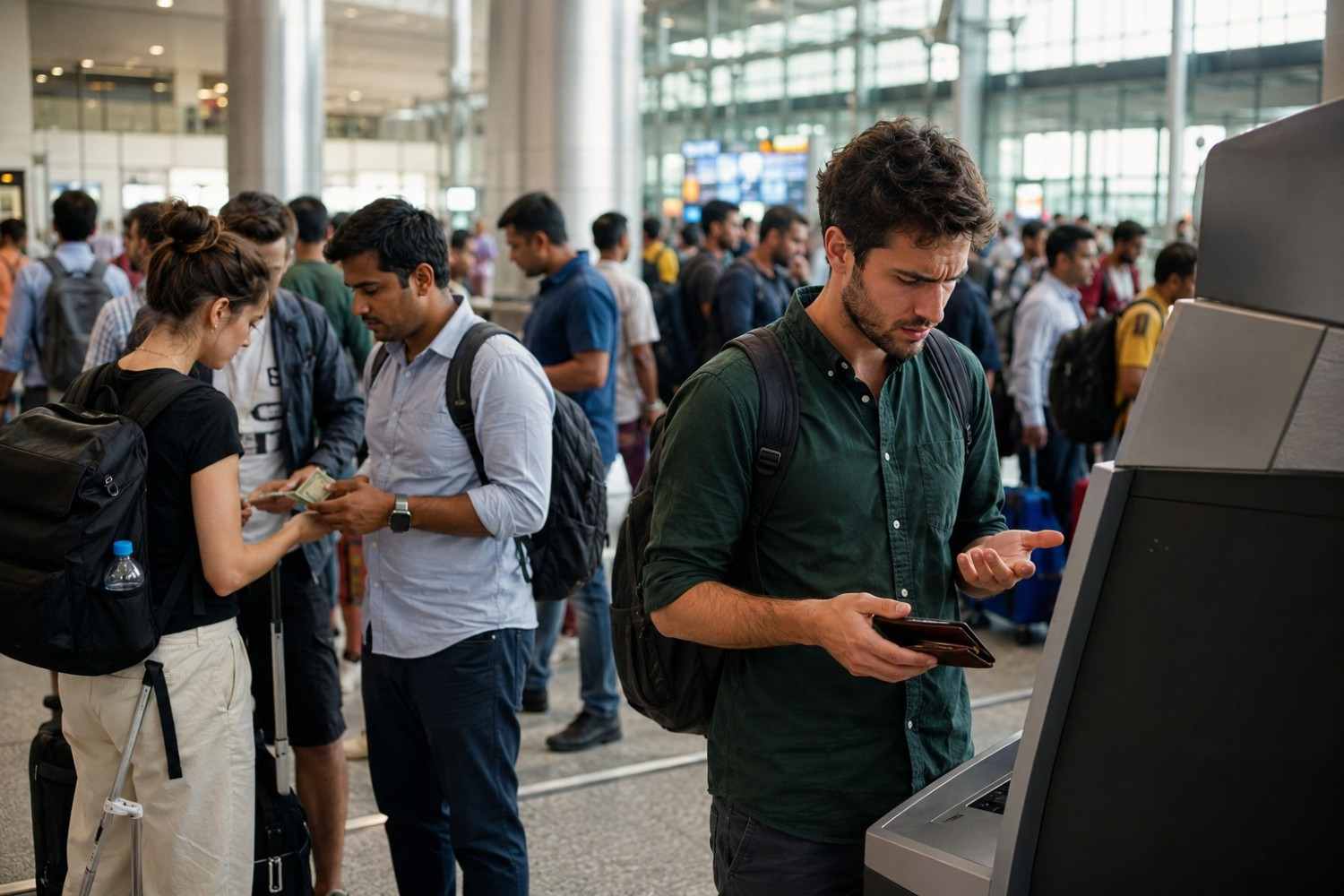

A traveller in Jaipur hands over her Visa card for a Rs 3,000 pashmina scarf. The vendor shakes his head and points to a QR code taped on the counter. Back at the hotel that night, her bank app shows three separate charges for one ATM withdrawal from that morning.
This article takes us through the fees US credit card holders may face when using their cards in India. It also explains where card payments may not work and what to use instead.
Key highlights
- Foreign transaction fees typically add 1% to 3% on every US card swipe in India.
- Dynamic currency conversion can add another 3% to 5% if you accept billing in US dollars.
- Indian ATMs cap foreign card withdrawals at Rs 10,000 to Rs 20,000 (approx $104 to $209) per transaction.
- Private bank ATMs also charge Rs 200 to Rs 335 (approx $2 to $3.5) per foreign card transaction.
- Street stalls, autos, and small shops usually run on UPI QR codes, which a Visa or Mastercard cannot pay directly.
- Uber does not accept CheqUPI or any UPI wallet, but Rapido lets you top up its in-app balance directly through CheqUPI.
- CheqUPI is free to join for all eligible nationalities, with a loading fee of 2.95% + applicable taxes and 0% merchant payment fee.
What "hidden cost" actually means for a US card in India
A US credit card carries at least three separate charges in India. These are a foreign transaction fee, a network conversion spread, and dynamic currency conversion if you accept it. None of these appear as one clear line item on the receipt.
Most travellers only notice the total once the statement lands weeks later. By then, ten or fifteen small charges have already stacked up across the trip. Knowing the three layers in advance can help you spot extra costs before they add up.
The three-layer fee stack
Foreign transaction fee
This is the fee your bank charges for processing a purchase made outside the United States. It typically runs 1% to 3% of the transaction amount, added quietly on top of the sale price. Some travel-focused US cards waive this fee entirely, so it is worth checking your cardmember agreement before you fly.
Dynamic currency conversion
At many Indian terminals and ATMs, you get asked whether to pay in US dollars or Indian rupees. Choosing dollars hands the exchange rate to the merchant's bank. That usually adds another 3% to 5% on top of the standard rate.
This extra margin generates additional revenue for the parties involved in the conversion, not for you. The local currency option is almost always the cheaper one. Decline the dollar prompt every single time, at ATMs and at checkout counters alike.
Currency conversion spread
Even without DCC, your card network still converts INR to USD at its own rate. That rate typically sits 1% to 2% above the interbank rate. This spread is separate from the foreign transaction fee, and it applies to every swipe.
| Fee layer | Typical range | When it applies |
| Foreign transaction fee | 1% to 3% | Every card purchase |
| Currency conversion spread | 1% to 2% | Every card purchase |
| Dynamic currency conversion | 3% to 5% extra | Only if you accept billing in USD |
| Private bank ATM fee | Rs 200 to Rs 335 (approx $2 to $3.5) | Every foreign-card ATM withdrawal |
What it costs to withdraw cash from an Indian ATM
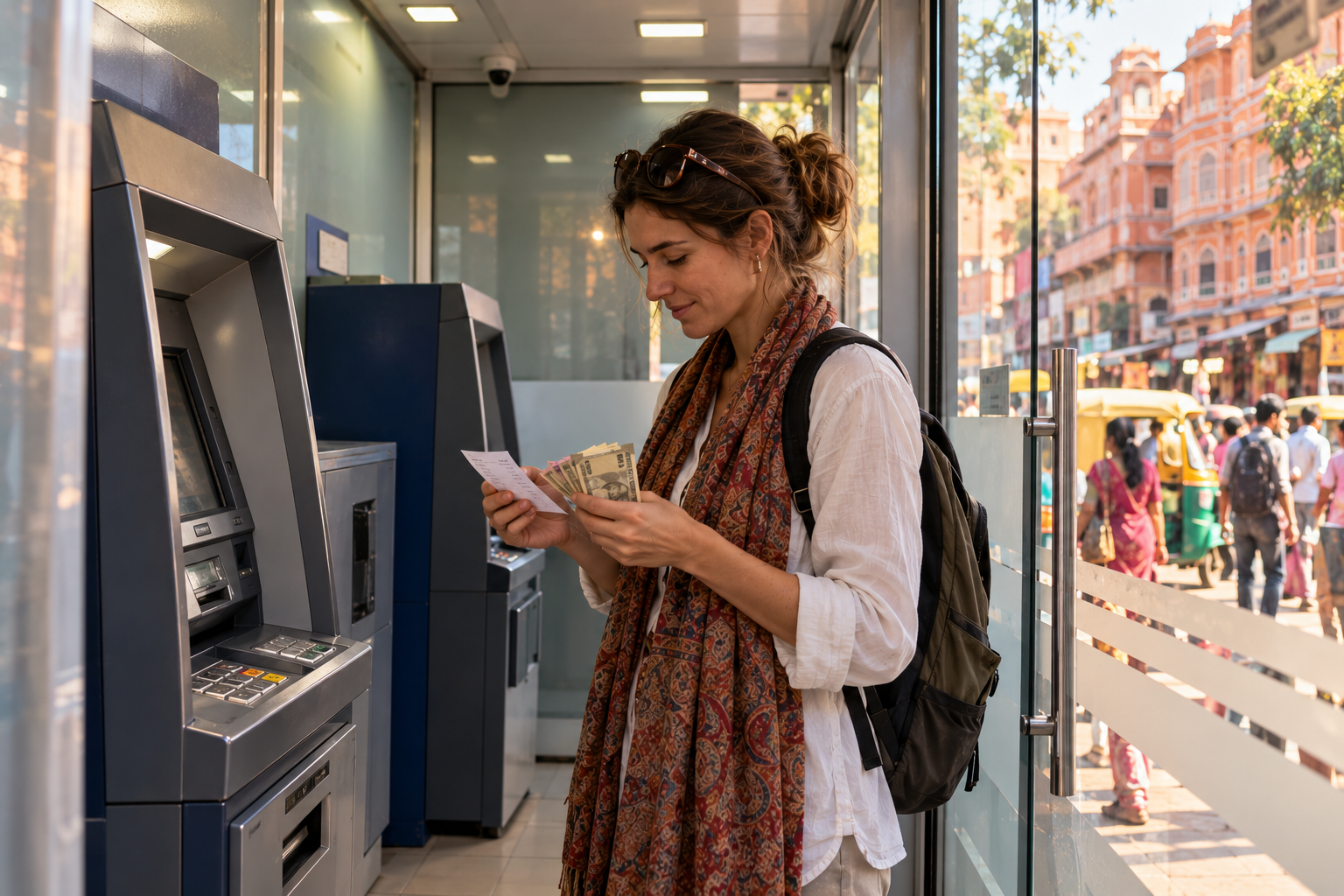
Withdrawing cash adds a second, separate layer of cost on top of card swipes. Indian ATMs cap foreign card withdrawals at Rs 10,000 to Rs 20,000 (approx $104 to $209) per transaction. A bigger cash need simply means more withdrawals and more fees stacked on top of each other.
Private bank ATMs from HDFC, ICICI, and Axis charge Rs 200 to Rs 335 (approx $2 to $3.5) per transaction. That sits on top of your home bank's own foreign transaction fee and conversion spread. Public sector ATMs like SBI often skip the access fee.
Our full breakdown of ATM withdrawal costs for foreign cards takes you through this math line by line. The ATM problems guide covers what else can go wrong at the machine itself.
Where a US card stops working completely
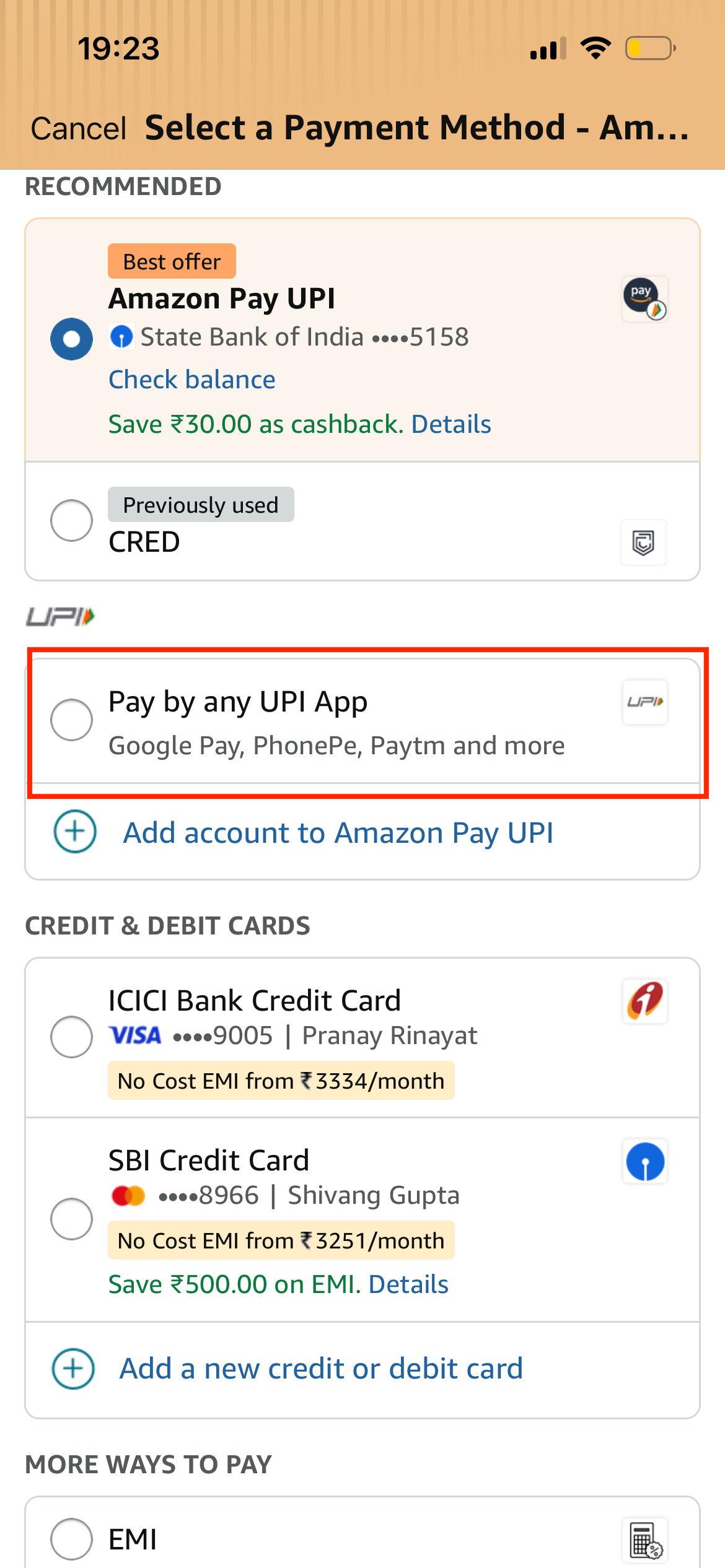
Plenty of everyday Indian spending will not accept a foreign card at all. UPI QR codes now run most street stalls, small restaurants, autos, and market vendors. A Visa or Mastercard simply cannot pay a UPI QR code directly, no matter the issuer.
Our piece on why Visa and Mastercard fail at Indian QR codes explains the technical reason behind this gap. It comes down to how the two networks are built, not a limit on any one card.
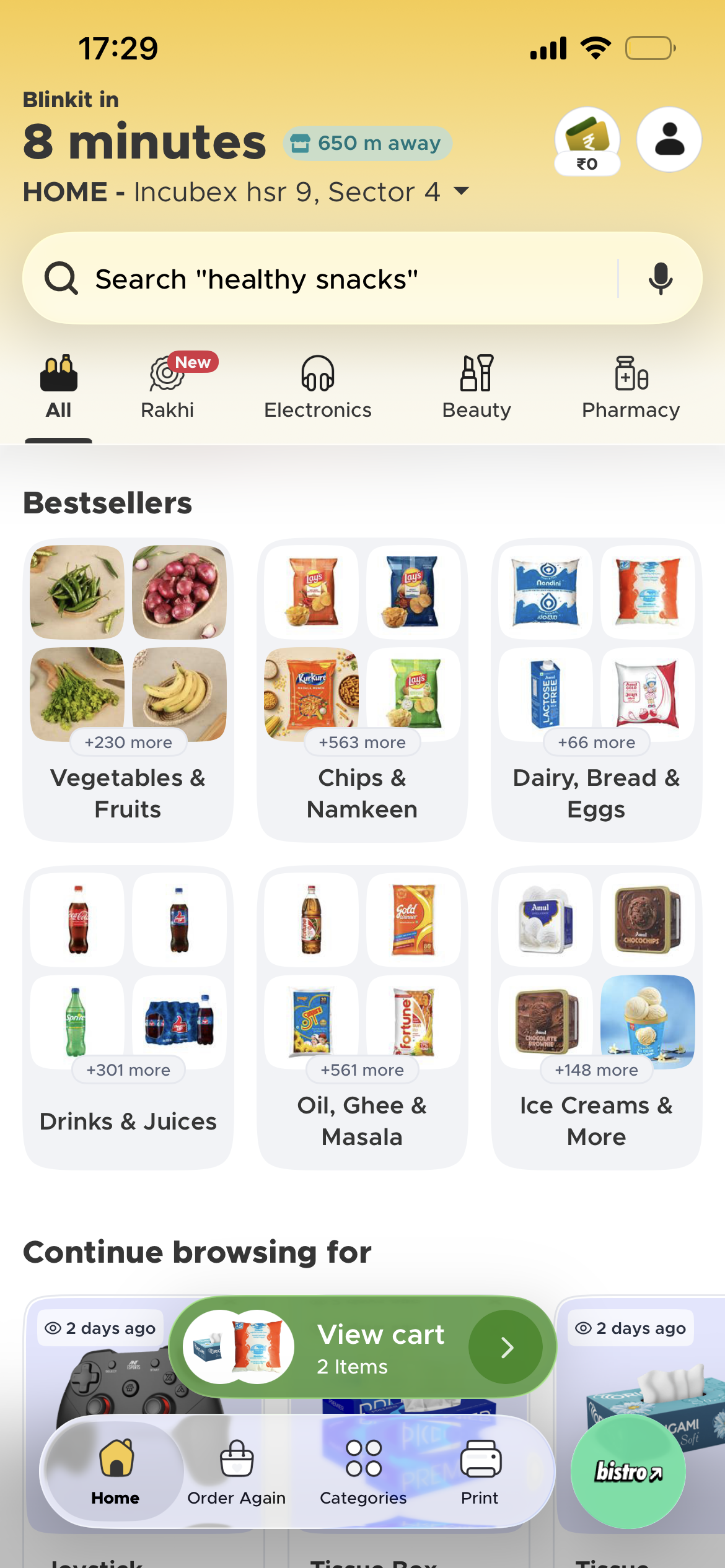
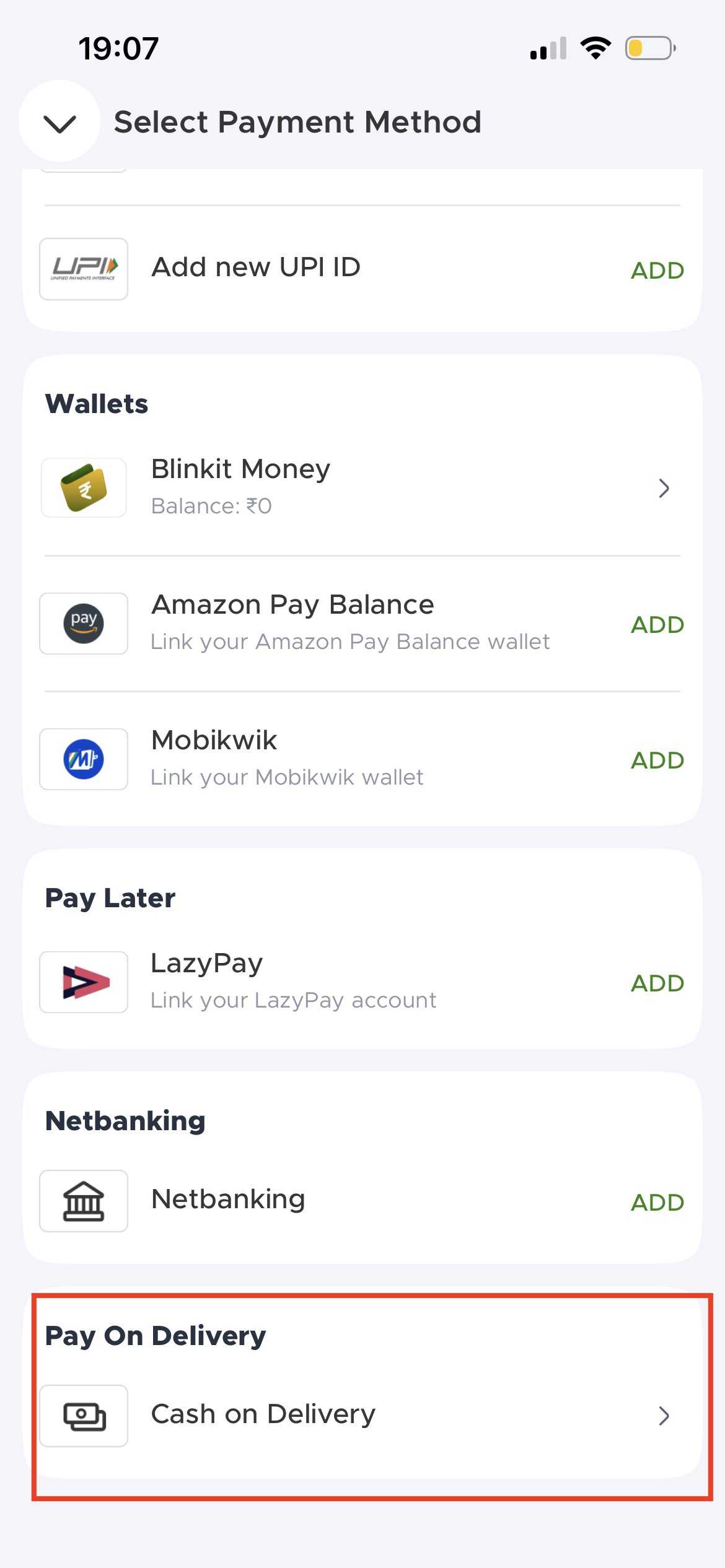
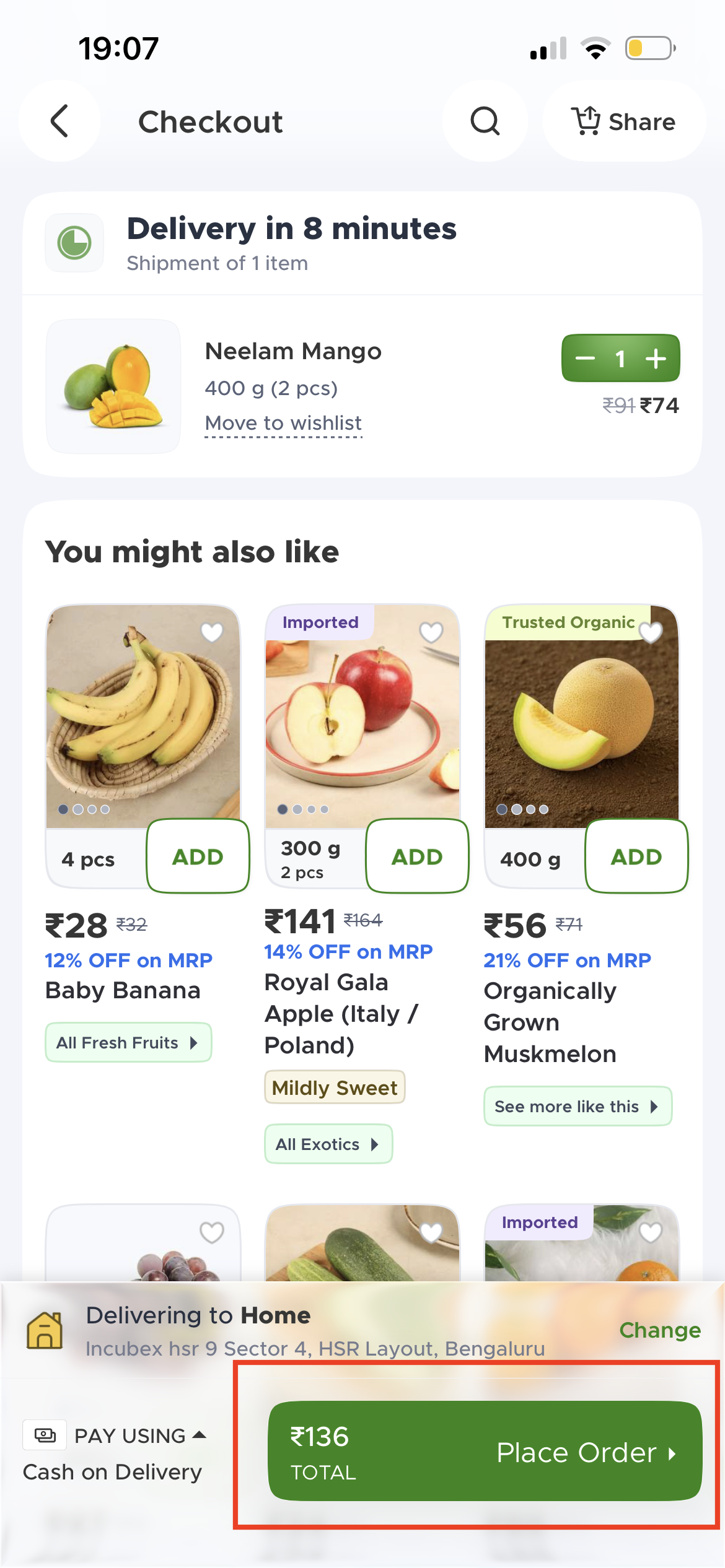
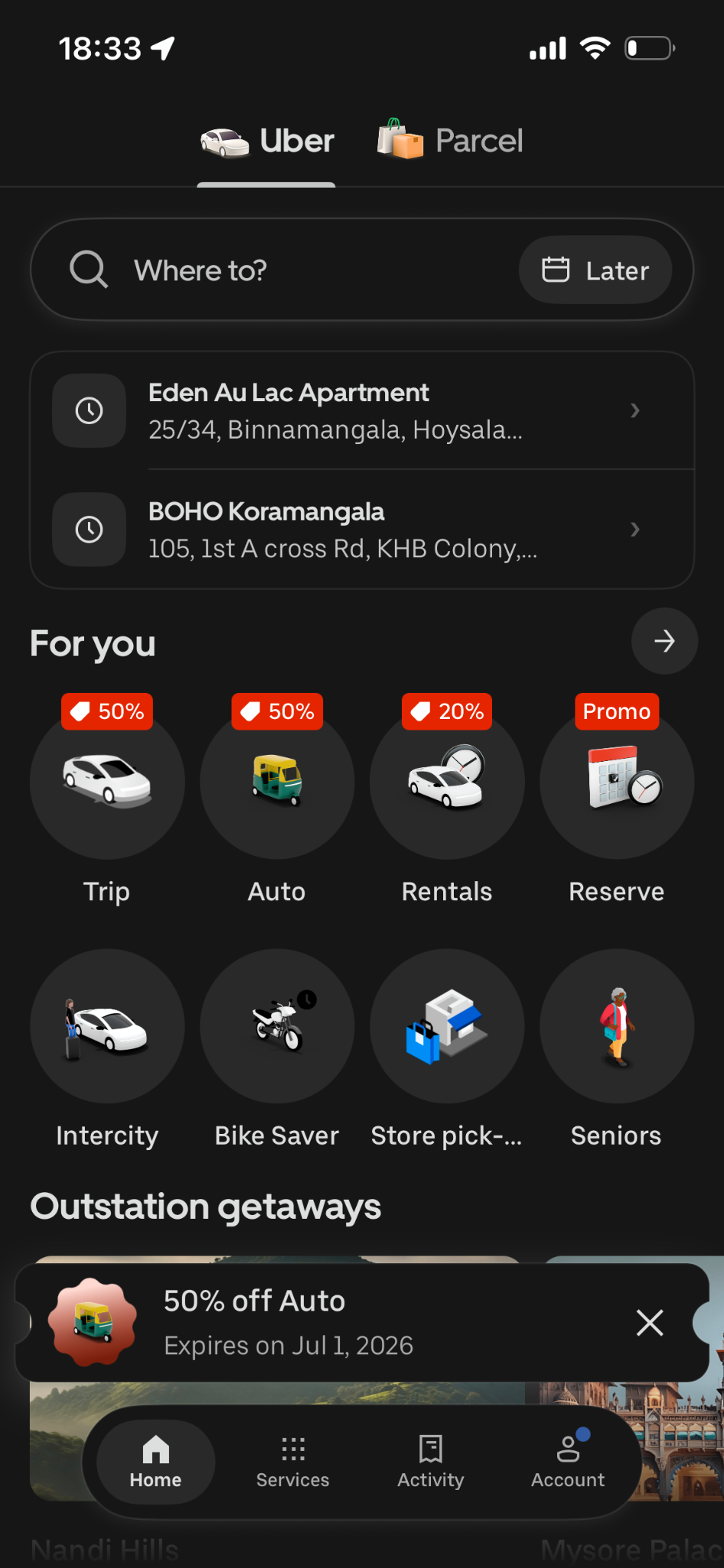
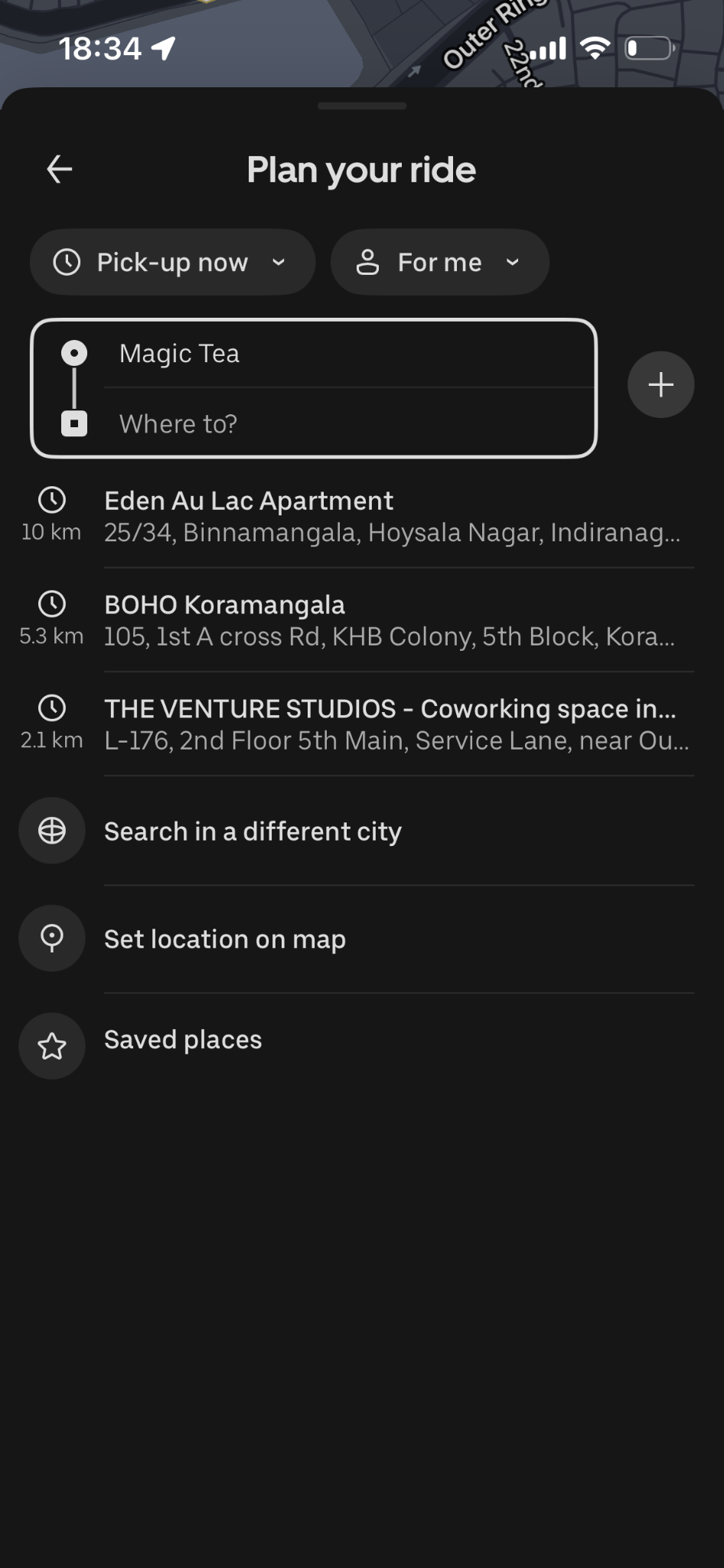
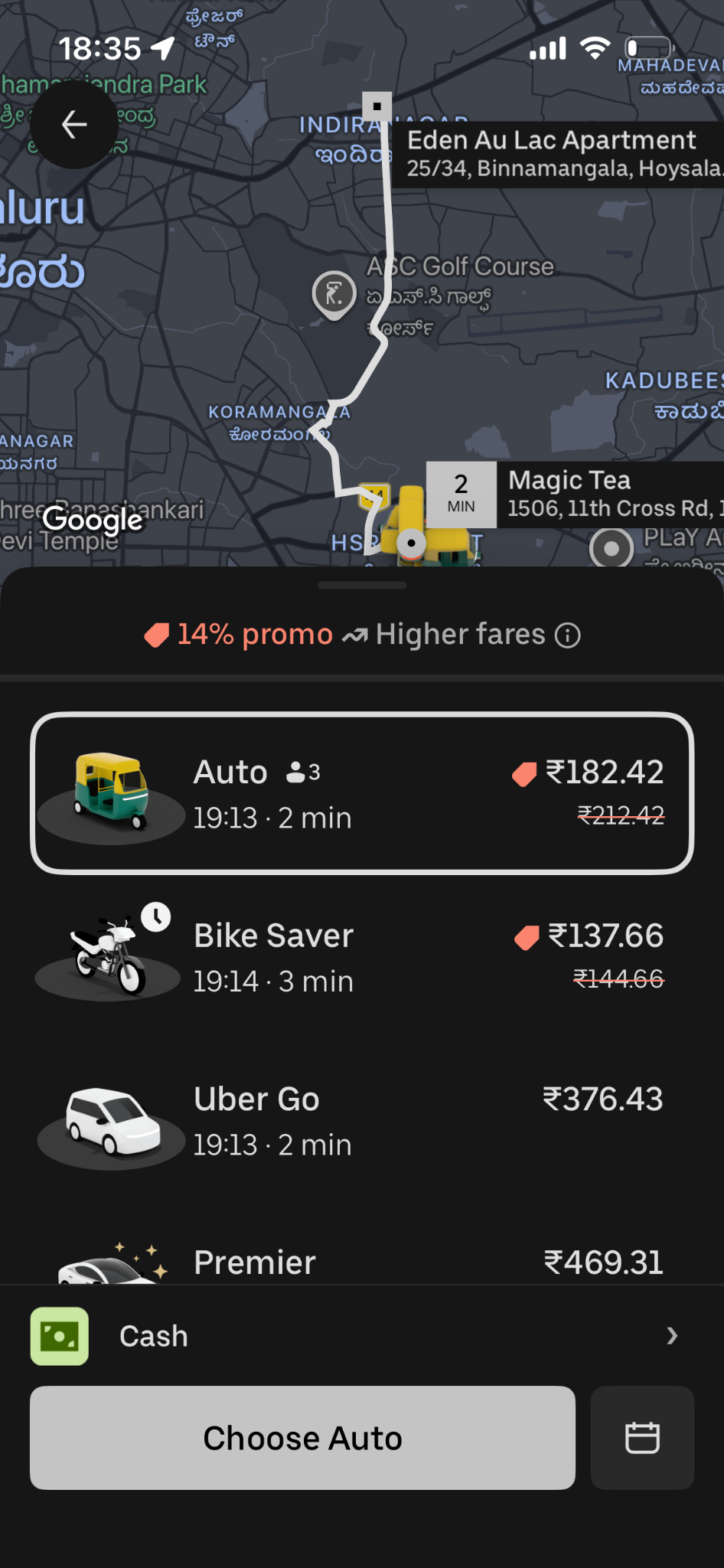
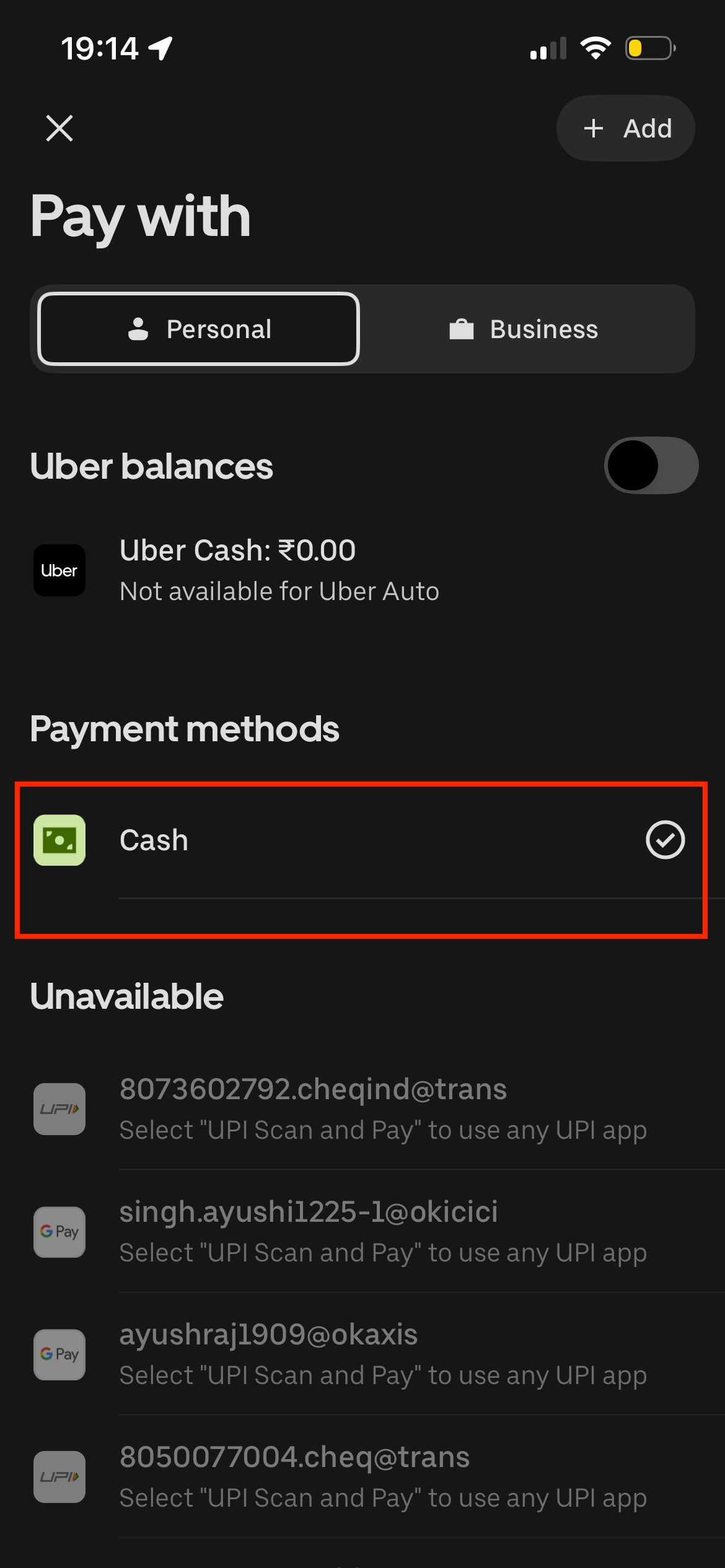
Ride-hailing is a common trap for first-time visitors. Uber in India does not accept CheqUPI or any other UPI wallet, only regular UPI linked to an Indian bank account. A foreign card is your main Uber option, and it carries the same fee stack as any other swipe.
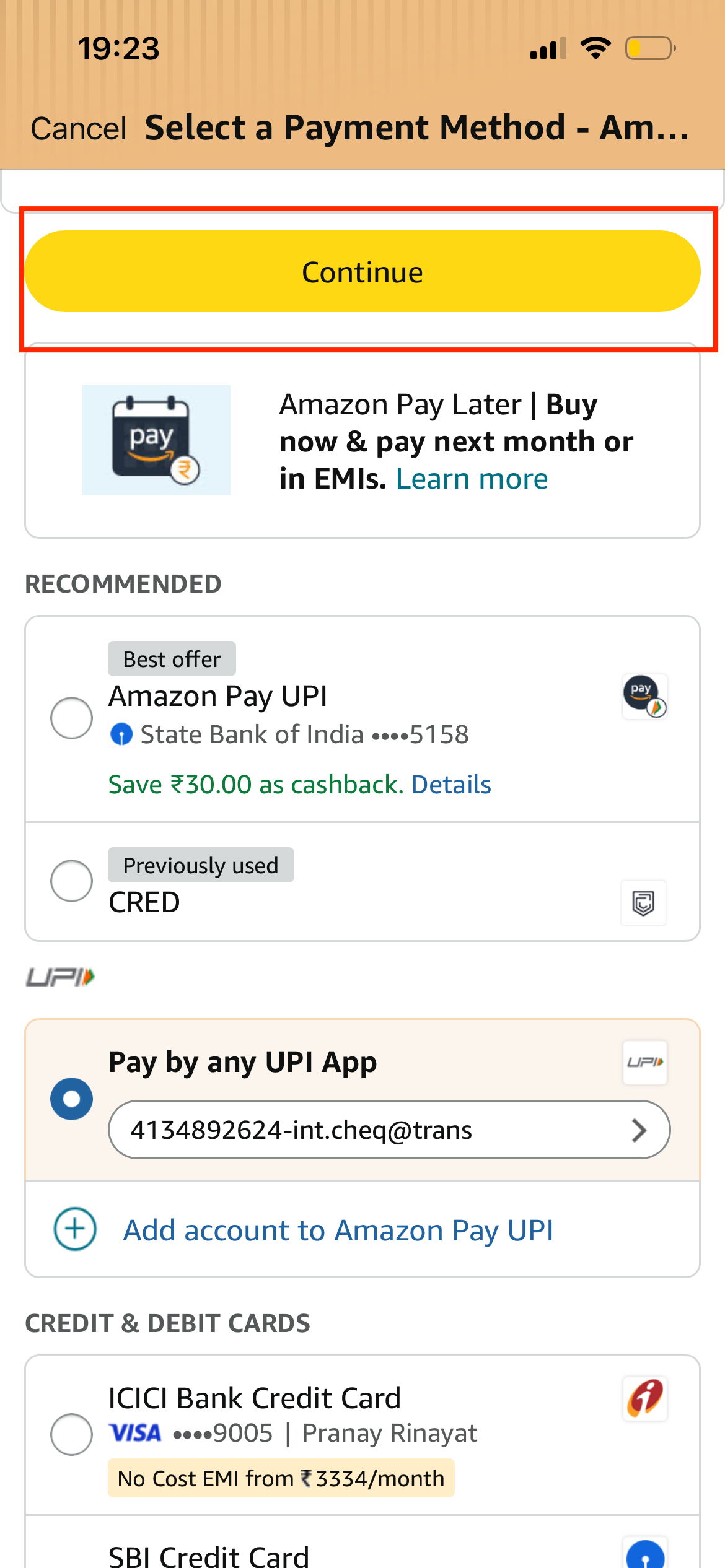
Rapido works differently. It lets you top up its in-app Rapido Wallet directly using CheqUPI, so once the wallet is loaded, rides cost nothing extra. In Goa specifically, Uber, Ola, and Rapido all skip the market, and the local app GoaMiles fills the gap instead.
One traveller's account of surviving on only a foreign card in India is worth reading first. It shows exactly where a card-only trip gets stuck.
A $1,500 trip: the real cost breakdown
Picture ten days in India with roughly $1,000 spent on card swipes at hotels and restaurants. Add another $500 withdrawn in cash for autos, stalls, and small vendors along the way.
| Spend type | Amount | Typical extra cost with a US card |
| Card swipes (hotels, restaurants) | $1,000 | $10 to $30, more if DCC is accepted |
| ATM cash withdrawals | $500 | $20 to $45 across fees and spread |
| UPI-only stalls, autos, small vendors | Not payable by card | Cash or a UPI wallet required |
The card alone can quietly add $30 to $75 in fees before a single UPI-only purchase even happens. None of that street-stall or auto spending is possible with the card at all, DCC declined or not.
How CheqUPI narrows the gap
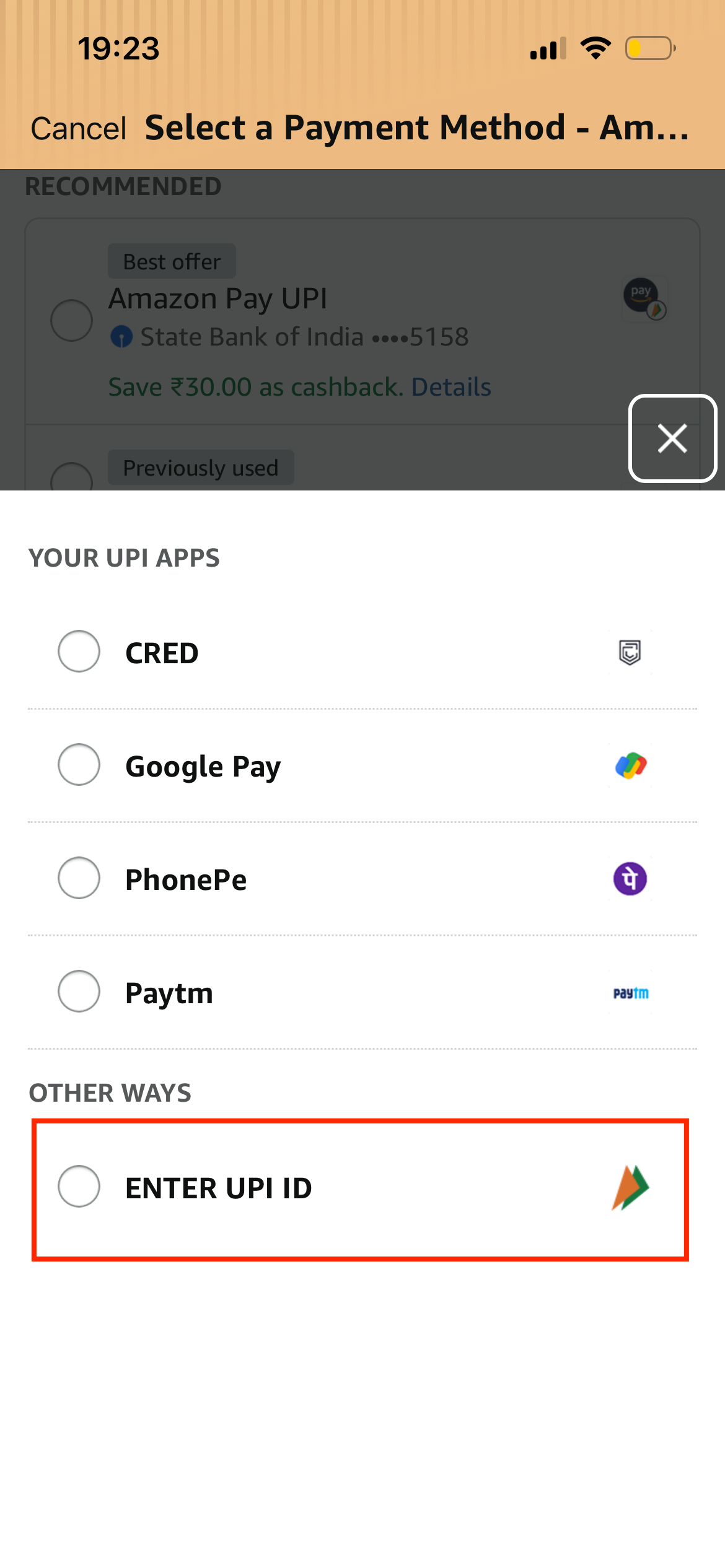
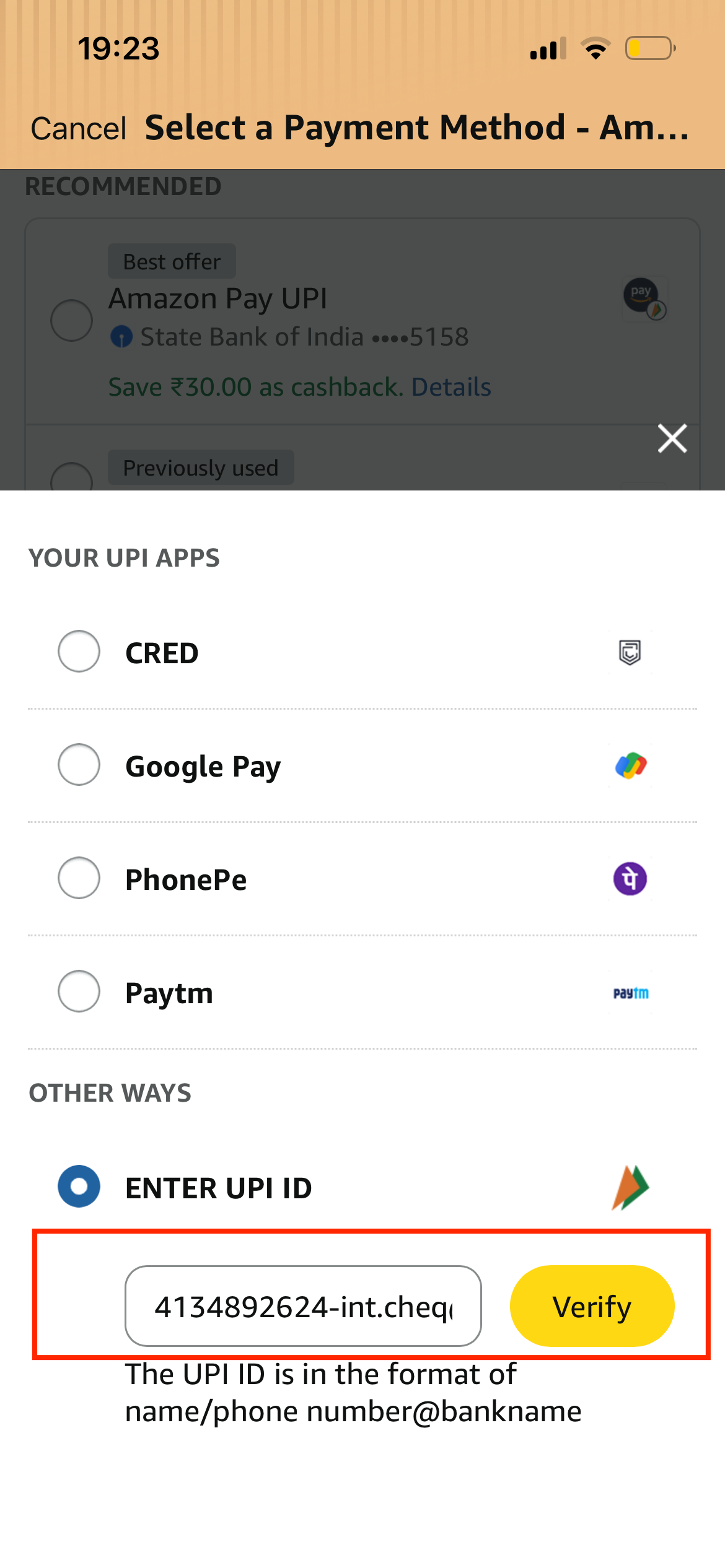
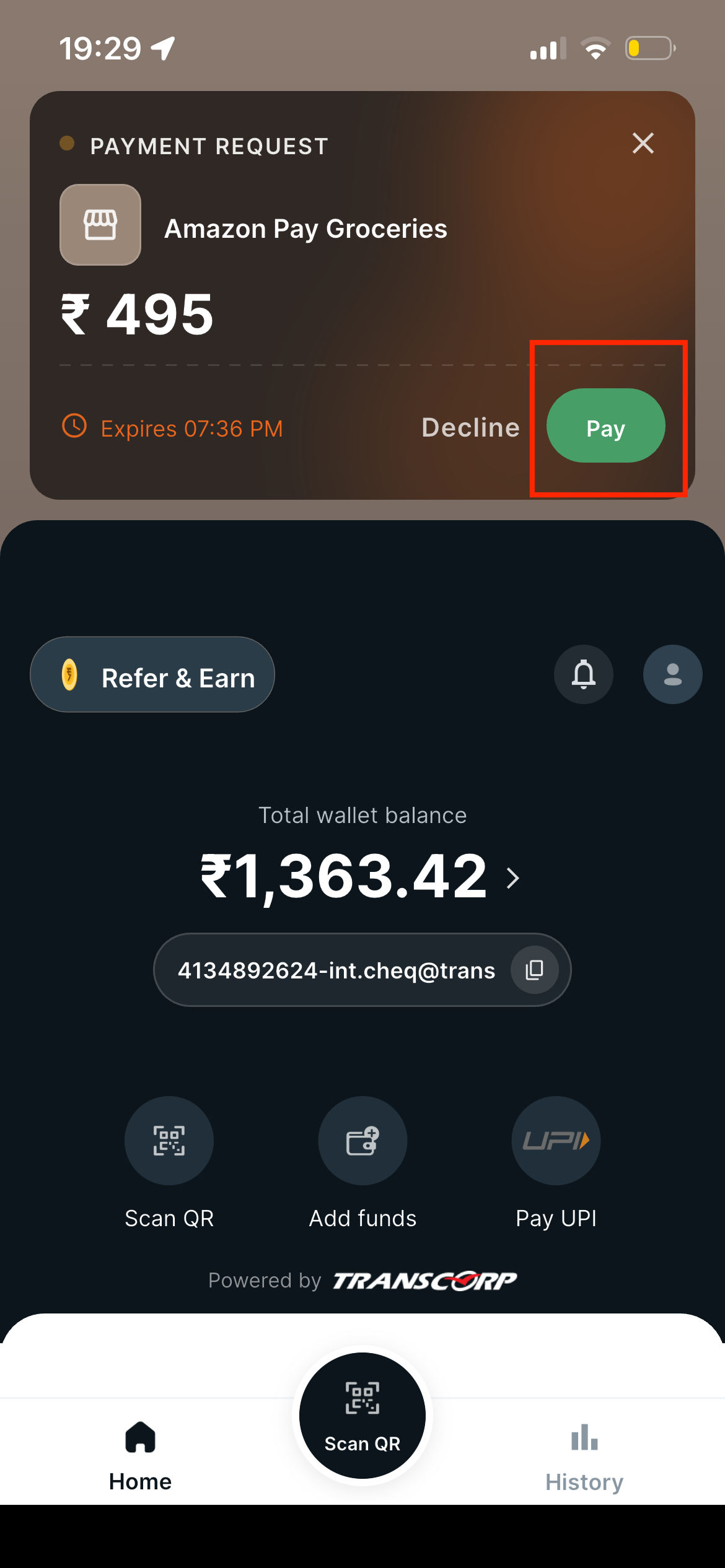
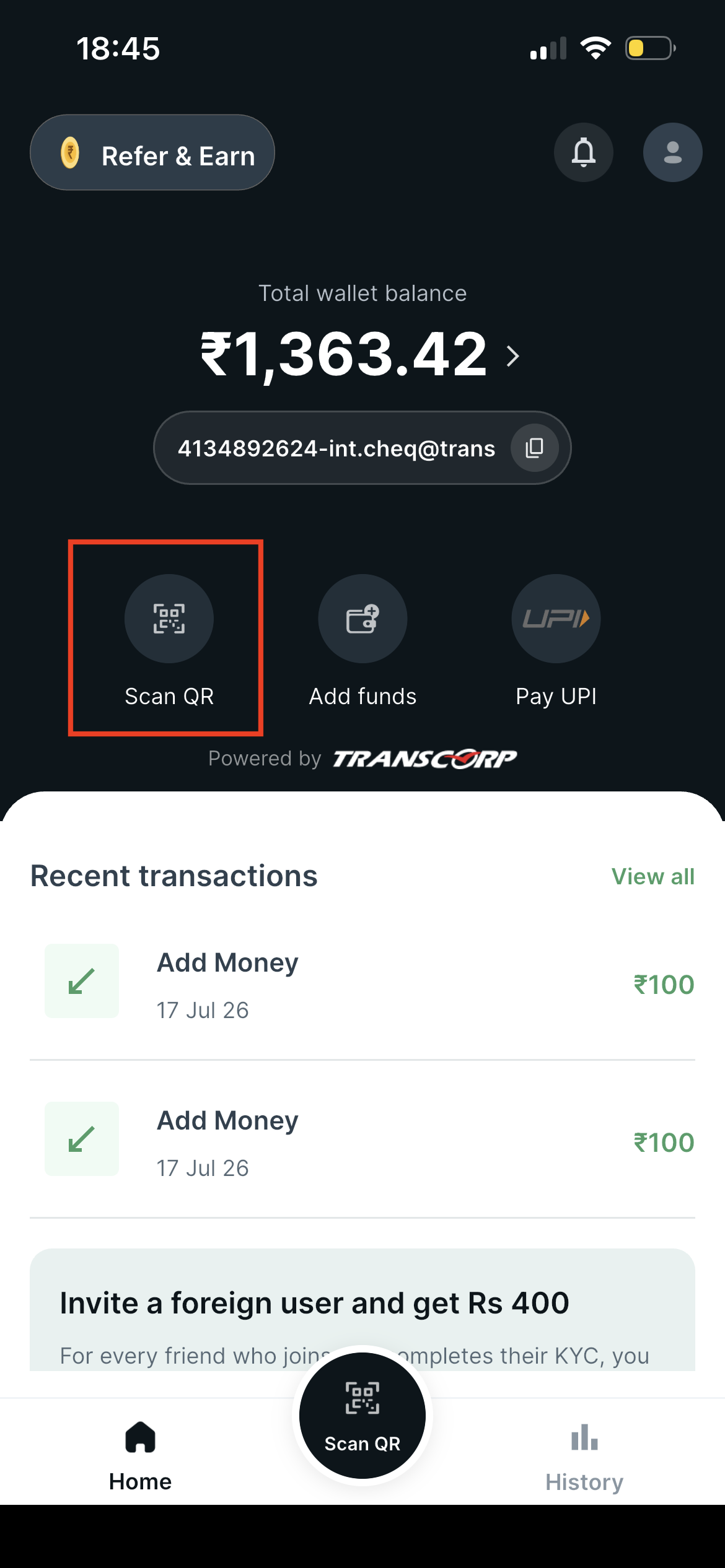
CheqUPI is free to join for all eligible nationalities, with a loading fee of 2.95% + applicable taxes and a 0% merchant payment fee. You load your US Visa or Mastercard onto the wallet once. Every payment after that, from a five-star hotel to a roadside chai stall, costs nothing extra.
Our UPI payment guide for foreign tourists walks through the full setup from start to finish. You can set it up from home before your flight and complete verification at your earliest convenience after reaching your hotel or by visiting a city branch.
CheqUPI is a prepaid payment instrument, not a bank account. It supports payments to merchants only, so peer-to-peer transfers are not supported through the app.
Simple ways to trim the fee stack either way
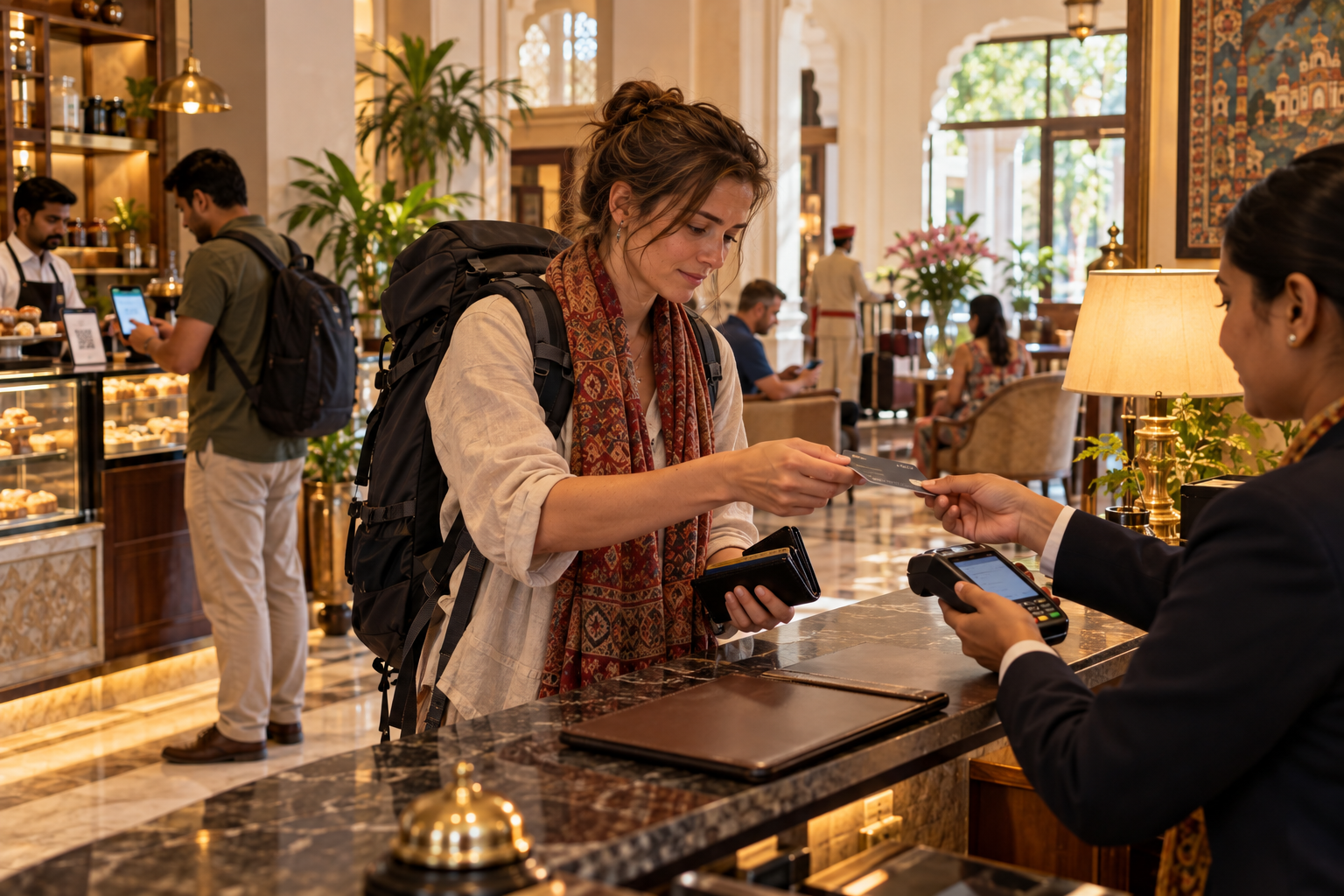
A few habits cut the damage before you even land. Call your US card issuer and ask whether foreign transaction fees apply. Some travel cards waive this fee entirely.
Always choose to pay in local currency, never in US dollars, at ATMs and checkout terminals. This one habit alone avoids the 3% to 5% DCC charge every time it is offered. Carry a second card from a different network as backup.
Pair a fee-light card with a loaded wallet for daily spending. The card handles hotels and larger stores, and the wallet handles anything running on a UPI QR code.
Disputing a wrong or duplicate charge
If your statement shows a charge you do not recognize, or an ATM withdrawal billed twice, contact your card issuer directly. Bring your transaction receipt and the ATM or merchant slip as proof. Banks generally investigate faster with dated proof in hand, and recourse is difficult to secure without it.
Keep every receipt during the trip, even the small paper slips from ATMs. Hold onto them until your card statement is fully reconciled back home.
Conclusion
A US credit card works almost everywhere in India that accepts cards, but the fee stack behind every swipe adds up fast. The bigger cost is what a card cannot pay for at all. UPI-only stalls, autos, and small vendors make up a large share of daily spending. Loading a wallet like CheqUPI once removes both problems for the rest of the trip.
FAQs
1. Does my US credit card work in India?
Most Visa and Mastercard cards work at hotels, restaurants, and larger stores. Street stalls, autos, and small vendors typically only accept UPI QR payments.
2. What is a foreign transaction fee?
It is a charge your US bank adds for purchases made outside the country. It typically runs 1% to 3% of the transaction amount.
3. Should I accept dynamic currency conversion at a terminal?
No. Always choose to pay in Indian rupees. Accepting USD billing usually adds 3% to 5% more through a weaker exchange rate.
4. How much do Indian ATMs charge foreign cards?
Private bank ATMs charge Rs 200 to Rs 335 (approx $2 to $3.5) per transaction. Your home bank adds its own fees on top.
5. Can I use my US credit card at UPI QR codes?
No. UPI QR codes only accept UPI-linked payments. A US Visa or Mastercard cannot pay a QR code directly.
6. Does Uber accept a UPI wallet in India?
Uber does not accept CheqUPI or other UPI wallets, only regular UPI. Rapido is different and lets you top up its wallet through CheqUPI.
7. What happens if my card gets declined in India?
Declines happen for many reasons, from fraud flags to network issues. Carry a backup card and some cash or a loaded wallet.
8. Is it cheaper to carry cash or use a card in India?
Airport money changers mark up rates 8% to 9%, often worse than a card's fees. A loaded UPI wallet usually beats both.
9. Can I dispute a wrongly charged DCC fee?
Yes, contact your card issuer with the receipt showing the charge. Keep documentation, since disputes rarely succeed without proof of the terms offered.
10. How does CheqUPI reduce these hidden costs?
It charges 2.95% plus applicable taxes once when you load your card. Every UPI merchant after that costs 0%, avoiding per-swipe fees entirely.
“Download CheqUPI and avoid the extra fees and payment gaps that come with relying on a US card across India.”
-883ff238b2.jpeg)